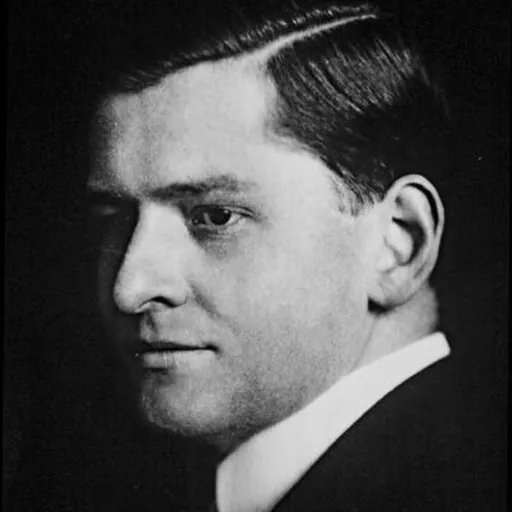
About Richard Kuhn
Lived 1900 – 1967 (aged 66). Richard Kuhn was an Austrian and German biochemist, chemist, university teacher and physician.
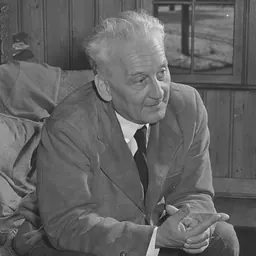
Richard Johann Kuhn (; 3 December 1900 – 31 July 1967) was an Austrian-German biochemist who was awarded the Nobel Prize in Chemistry in 1938 "for his work on carotenoids and vitamins".
Biography
Early life Kuhn was born in Vienna, Austria, where he attended grammar school and high school. His interest in chemistry surfaced early; however he had many interests and decided late to study chemistry. Between 1910 and 1918 he was a schoolmate of Wolfgang Pauli, who was awarded the Nobel Prize in Physics for 1945. Beginning in 1918, Kuhn attended lectures at the University of Vienna in chemistry. He finished his chemistry studies at the Ludwig-Maximilians-Universität München (LMU Munich) and received his doctoral degree in 1922 with Richard Willstätter for a scientific work on enzymes.
After graduating, Kuhn continued his scientific career, first in Munich, then at the ETH Zurich and from 1929 onwards at the University of Heidelberg, where he was head of the chemistry department beginning in 1937. In 1928 he married Daisy Hartmann and the couple subsequently had two sons and four daughters.
Research
Kuhn's areas of study included: investigations of theoretical problems of organic chemistry (stereochemistry of aliphatic and aromatic compounds; syntheses of polyenes and cumulenes; constitution and colour; the acidity of hydrocarbons), as well as extensive fields in biochemistry (carotenoids; flavins; vitamins and enzymes). Specifically, he carried out important work on vitamin B2 and the antidermatitis vitamin B6.
In 1929 he became Principal of the Institute for Chemistry at the newly founded Kaiser Wilhelm Institute for Medical Research (which, since 1950, has been renamed the Max Planck Institute for Medical Research in Heidelberg). By 1937 he also took over the administration of this Institute.
In addition to these duties he also served as of Professor of Biochemistry at the University of Heidelberg, and for one year he was at the University of Pennsylvania, Philadelphia, as a Visiting Research Professor for Physiological Chemistry.
He was subsequently awarded the Nobel Prize in Chemistry in 1938 for his "work on carotenoids and vitamins," but rejected the prize as Hitler had forbidden German citizens to accept it. In a handwritten letter, he even described the awarding of the prize to a German as an invitation to violate a decree of the Führer. He received the award after World War II. Kuhn is also credited with the discovery of the deadly nerve agent Soman in 1944.
Kuhn was editor of Justus Liebigs Annalen der Chemie from 1948.
Kuhn died in 1967 in Heidelberg, Germany, aged 66.
Nazi era Kuhn collaborated with high-ranking Nazi officials and denounced three of his Jewish co-workers in 1936.
Honours and awards 1938: Nobel Prize in Chemistry 1952: Wilhelm Exner Medal 1960: Honorary doctorate from the University of Vienna 1961: Austrian Decoration for Science and Art
Don’t just read it —
keep it.
Full-length biographies made to live with: read them, listen on the way to work, watch them tonight.
- E-book
- Audio
- Video
Instant download · yours to keep · every purchase keeps this site free
Important facts
People in Richard Kuhn's life
Named in this biography and alive at the same time

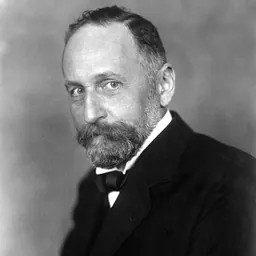


Related people
Same field, nearest in time
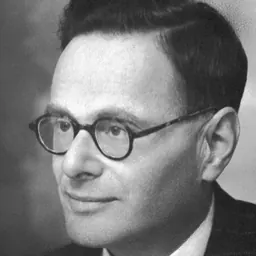



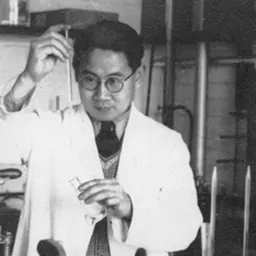
Contemporaries
People whose lives overlapped Richard Kuhn's




Frequently asked questions
Who was Richard Kuhn?
Austrian-German biochemist (1900-1967)
When was Richard Kuhn born?
Richard Kuhn was born on 3 December 1900 in Vienna.
When did Richard Kuhn die?
Richard Kuhn died on 31 July 1967 in Heidelberg.
What was Richard Kuhn's occupation?
Richard Kuhn was a biochemist, chemist, university teacher and physician.
What nationality was Richard Kuhn?
Richard Kuhn was Austrian and German.
Sources & further reading
Cite this page
APA: Biography.guide. (2026). Richard Kuhn. https://biography.guide/richard-kuhn/
MLA: "Richard Kuhn." Biography.guide, https://biography.guide/richard-kuhn/.
Chicago: "Richard Kuhn." Biography.guide. https://biography.guide/richard-kuhn/.
Data last updated: 2026-09-21 · Spot an error? Report a correction.
Portrait: Wikimedia Commons · author & licence
Page generated 2026-09-27 04:59 UTC