
About Richard K.A. Kletting
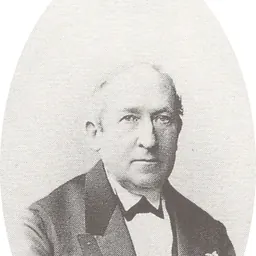
Lived 1858 – 1943 (aged 85). Richard K.A. Kletting was an American architect.
Richard Karl August Kletting (July 1, 1858 – September 25, 1943) at Unterböhringen, in the Kingdom of Württemberg, Germany. He was one of 16 children. He first decided that he wanted to become an architect when he was fifteen, while working in a stone yard where he cut stone. A year later, he became a junior draftsman on railroad construction work. When Kletting was sixteen he arrived in Paris and learned modern architectural design from a big contracting firm. He served in the German army for one year.
Career
Richard K. A. Kletting contributed on several "major European projects, including Bon Marche, Credit de Lyonais, and Sacre Coeur at Montmarte, all in France, before coming to the United States and settling in Utah in 1883".
Richard K.A. Kletting was hired as an architect and worked on many Salt Lake City buildings, both residential and commercial. He became a very well known architect in Utah.
He worked in the East before coming to Salt Lake City, where he worked for John H. Burton drafting plans for the old University of Utah. Kletting's design was ultimately selected. Utah granite and Georgia marble were common materials throughout the capitol building. It had a large dome and twenty four columns in its colonnade. The total cost for the project was $2,739,528.
Kletting built many other buildings, including the Mcintyre Building which is claimed to be Utah's first fire-proof building. The building was of constructed of concrete and steel. The interior included metal railings, metal windows and trim, and plaster and marble walls and floors. It was constructed for $180,000. It was the first and only "skyscraper" in Utah until two years later, when the Boston and Newhouse Buildings were constructed. Richard Kletting was a well-accomplished architect, but he was also interested in forestry.
Over his career, Kletting hired several young architects who later went on to be prominent Utah architects in their own right. These included Richard C. Watkins, Carl M. Neuhausen, and Leslie S. Hodgson.
Richard Kletting designed many well-known buildings, including the Utah State Capitol and the original Saltair Pavilion in Utah. He designed several other buildings such as the Territorial Insane Asylum, Albert Fisher Mansion and Carriage House, Reed O. Smoot House, Lehi Tabernacle, Riverton LDS Meetinghouse, LeRoy Cowles Building, Utah Commercial and Savings Bank Building, Beaver County Courthouse, Henry Dinwoody House, Gibbs-Thomas House, J. R. Allen House, and the original Salt Palace.
Works Works include (with variations in attribution): Beaver County Courthouse (1882) (what reliable source says Kletting designed this? Its NRHP doc says "architect unknown".) Territorial Insane Asylum (1885), planned by architect John H. Burton during 1881 until his death, after which his intern/employee/colleague Kletting was appointed to complete the project. Karrick Block (1887), 236 S. Main St., Salt Lake City, Utah, NRHP-listed Reed O. Smoot House (1892), 183 E. 100 South, Provo, Utah, NRHP-listed Asserted to be one of relatively few surviving residential works by Kletting.
Riverton Ward Meetinghouse (1898 or 1899), demolished in 1940 Cullen Hotel (by 1901 ), 33 West 200 South, Salt Lake City, designed by Kletting for Matthew Cullen. A five-story hotel. Demolished. Lehi Tabernacle (1901-1910) (no longer standing) Four University of Utah Circle buildings, University of Utah campus, Salt Lake City, NRHP-listed Originally built to house the normal school. James Talmage Building (1902) Originally constructed as a museum. contributing building in NRHP-listed Exchange Place Historic District Utah State Capitol/Capitol Building (1912–16), Capitol Hill, Salt Lake City, NRHP-listed
Forestry
On February 22, 1897, Richard Kletting organized the first forest reserve in Utah, called the Utah Forestry Association. It helped in the management and preservation of Utah's forests and mountains. In 1964, Kletting Peak, standing at 12,055 feet, in Summit County, Utah, was named for Richard K.A. Kletting. He died on September 25, 1948, in Salt Lake City, Utah.
Gallery
Don’t just read it —
keep it.
Full-length biographies made to live with: read them, listen on the way to work, watch them tonight.
- E-book
- Audio
- Video
Instant download · yours to keep · every purchase keeps this site free
Important facts
People in Richard K.A. Kletting's life
Named in this biography and alive at the same time



Related people
Same field, nearest in time



Contemporaries
People whose lives overlapped Richard K.A. Kletting's

Frequently asked questions
Who was Richard K.A. Kletting?
American architect
When was Richard K.A. Kletting born?
Richard K.A. Kletting was born on 1 July 1858 in Kingdom of Württemberg.
When did Richard K.A. Kletting die?
Richard K.A. Kletting died on 25 September 1943 in Salt Lake City.
What was Richard K.A. Kletting's occupation?
Richard K.A. Kletting was an architect.
What nationality was Richard K.A. Kletting?
Richard K.A. Kletting was American.
Sources & further reading
· Wikipedia: Richard K.A. Kletting
· DBpedia: Richard K. A. Kletting
Cite this page
APA: Biography.guide. (2026). Richard K.A. Kletting. https://biography.guide/richard-k-a-kletting/
MLA: "Richard K.A. Kletting." Biography.guide, https://biography.guide/richard-k-a-kletting/.
Chicago: "Richard K.A. Kletting." Biography.guide. https://biography.guide/richard-k-a-kletting/.
Data last updated: 2026-09-20 · Spot an error? Report a correction.
Page generated 2026-09-27 05:19 UTC