
About Richard I of Normandy
Lived 933 – 996 (aged 63). Richard I of Normandy was a feudatory.
Richard I (28 August 932 – 20 November 996), also known as Richard the Fearless (French: Richard Sans-Peur; Old Norse: Jarl Rikard), was the count of Rouen from 942 to 996. Dudo of Saint-Quentin, whom Richard commissioned to write the "De moribus et actis primorum Normanniae ducum" (Latin, "On the Customs and Deeds of the First Dukes of Normandy"), called him a dux. However, this use of the word may have been in the context of Richard's renowned leadership in war, and not as a reference to a title of nobility. Richard either introduced feudalism into Normandy or he greatly expanded it. By the end of his reign, the most important Norman landholders held their lands in feudal tenure.
Birth Richard was born to William Longsword, princeps (chieftain or ruler) of Normandy, and Sprota, He was also the grandson of the famous Rollo. William was told of the birth of a son after the battle with Riouf and other Viking rebels, but his existence was kept secret until a few years later when William Longsword first met his son Richard. After kissing the boy and declaring him his heir, William sent Richard to be raised in Bayeux. Richard was about ten years old when his father was killed on 17 December 942.
Life
With the death of Richard's father in 942, King Louis IV of West Francia installed the ten year old Richard as Duke of Normandy. An attempt to revive paganism was made a year after his father's death when the Scandinavian Setric and his followers landed in Normandy and induced a number of Christian Viking settlers to apostatize; among them, one Turmod who sought to make a pagan of the young duke. to place him in the custody of the count of Ponthieu. However, the king reneged and seized the lands of the Duchy of Normandy. He then split up the duchy, giving its lands in lower Normandy to Hugh the Great. Louis IV thereafter kept Richard in close confinement at Lâon.
Upon hearing that Richard was being held in captivity, the boy's foster Osmond de Centville and Bernard the Dane formed a mob of knights and peasants across town and marched to the King's palace. They threatened the king to force him to return Richard. Louis protested that he had kept Richard in his domain to train him in courtliness. Bernard de Senlis and Ivo de Bellèsme also assisted in Richard's release, along with pagan Norse forces led by Harald of Bayeux.
In 946, at the age of 14, Richard allied himself with the Norman and Viking leaders in France and with men sent by Harald Bluetooth. A battle was fought after which Louis IV was captured. Hostages were taken and held until King Louis the treaty of Gerberoy A period of peace ensued, Louis dying in 954, 13 year old Lothair becoming king. The middle-aged Hugh appointed Richard as guardian of his 15-year-old son, Hugh Capet in 955. Lothair, the king of the West Franks, was fearful that Richard's retaliation could destabilize a large part of West Francia so he stepped in to prevent any further war between the two. In 987, Hugh Capet became King of the Franks.
For the last 30 years of his reign, Richard concentrated on Normandy itself, and participated less in Frankish politics and its petty wars. In lieu of building up the Norman Empire by expansion, he stabilized the realm and reunited the Normans, forging the reclaimed Duchy of his father and grandfather into West Francia's most cohesive and formidable principality.
Richard died of natural causes in Fécamp on 20 November 996. He was buried at Fécamp Abbey, which he had founded. However, in 2016, what was believed to be his tomb was opened by Norwegian researchers who discovered that the interred remains could not have been those of Richard, as testing revealed that they were much older. Although it is not in doubt that Richard was buried in the Abbey in 996, it is known that his remains were moved within the Abbey several times after his burial.
His daughters forged valuable marriage alliances with powerful neighboring counts as well as to the king of England. restoring their lands and refounding or enlarging a number of churches and abbeys including St. Ouen and an early version of the cathedral in Rouen, Mont-Saint-Michel, and Fécamp Abbey. However progress was slow and from a low base and by the end of his reign in 996 only four monasteries had been founded. His further reign was marked by an extended period of peace and tranquility.
Marriages and issue
Richard's first marriage in 960 was to Emma, daughter of Hugh the Great and Hedwige of Saxony. Richard finally married her to legitimize their children:
Richard II "the Good", Duke of Normandy Mauger, Count of Corbeil William, Count of Eu ( – 26 January 1057 or 58), Papia
Don’t just read it —
keep it.
Full-length biographies made to live with: read them, listen on the way to work, watch them tonight.
- E-book
- Audio
- Video
Instant download · yours to keep · every purchase keeps this site free
Important facts
more
Richard Sans-Peur, Richard of Normandy, Richard, Count of Rouen, Ricard, Ricardus, Ricardus senior, Ricardus uetusPeople in Richard I of Normandy's life
Named in this biography and alive at the same time
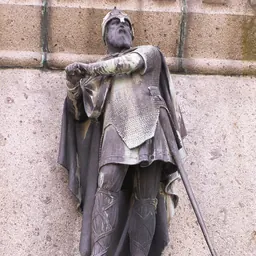
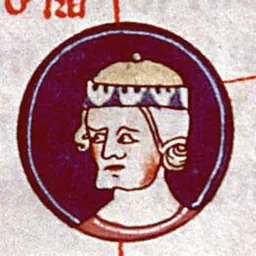



Related people
Same field, nearest in time

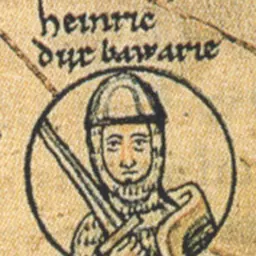
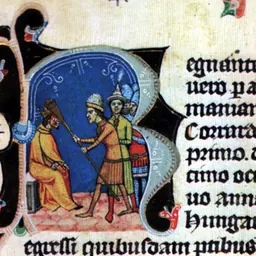

Contemporaries
People whose lives overlapped Richard I of Normandy's


Frequently asked questions
Who was Richard I of Normandy?
10th-century duke of Normandy
When was Richard I of Normandy born?
Richard I of Normandy was born on 28 August 933 in Fécamp.
When did Richard I of Normandy die?
Richard I of Normandy died on 20 November 996 in Fécamp.
What was Richard I of Normandy's occupation?
Richard I of Normandy was a feudatory.
What nationality was Richard I of Normandy?
Richard I of Normandy's recorded nationality: Duchy of Normandy.
Sources & further reading
· Wikipedia: Richard I of Normandy
· DBpedia: Richard I of Normandy
Cite this page
APA: Biography.guide. (2026). Richard I of Normandy. https://biography.guide/richard-i-of-normandy/
MLA: "Richard I of Normandy." Biography.guide, https://biography.guide/richard-i-of-normandy/.
Chicago: "Richard I of Normandy." Biography.guide. https://biography.guide/richard-i-of-normandy/.
Data last updated: 2026-09-20 · Spot an error? Report a correction.
Page generated 2026-09-27 05:20 UTC