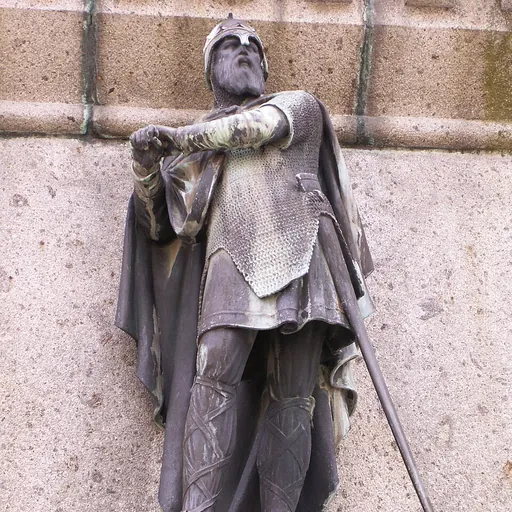
About William Longsword
Lived 905 – 942 (aged 36–37). William Longsword was a feudatory.
William Longsword (, , , ; 893 – 17 December 942) was the second ruler of Normandy, from 927 until his assassination in 942.
Titles He is sometimes referred to as a "duke of Normandy", though the title duke (dux) did not come into common usage until the 11th century. Longsword was known at the time as count (Latin comes) of Rouen. Flodoard—always detailed about titles—consistently referred to both Rollo and his son William as principes (chieftains) of the Normans. There are no contemporary accounts of William's byname, 'Longsword', either; it appears first in later eleventh-century sources.
Birth William Longsword was born "overseas" to the Viking Rollo (while he was still a pagan) and his wife more danico (a kind of non-Christian marriage), Poppa of Bayeux. Poppa's parentage is uncertain. Dudo of Saint-Quentin in his panegyric of the Norman dukes describes her as the daughter of a Count Berengar, the dominant prince of that region. In the 11th-century Annales Rotomagenses (Annals of Rouen), she is called the daughter of Guy, Count of Senlis, otherwise unknown to history. However she was a Christian and seems to have passed on her religious beliefs to her son. According to the Longsword's planctus, William was baptized a Christian probably at the same time as his father, which Orderic Vitalis stated was in 912, by Franco, Archbishop of Rouen.
Life
William succeeded Rollo (who continued to live about five more years) in 927 and, early in his reign, in 933 or 934, faced a rebellion from Normans who felt he had become too Gallicised. According to Dudo of Saint-Quentin, the leader of the rebellion was Riulf, who besieged William in Rouen. Sallying forth, William won a decisive battle, proving his authority to be duke.
In 933, William recognized King Rudolph, who was struggling to assert his authority in Northern France, as King of Western Francia. In turn, Rudolph gave him lordship over much of the lands of the Bretons including Avranches, the Cotentin Peninsula and the Channel Islands, although in practice these were lands that were outside Carolingian power. The Bretons resisted these changes, led by Alan II, Duke of Brittany, and Count Berengar of Rennes, but this ended shortly with great slaughter and Breton castles being razed to the ground; Alan fled to England and Berengar sought reconciliation.
In 935, William married Luitgarde, In addition to supporting King Rudolph, William was now a loyal ally of his father-in-law, Herbert II, both of whom his father had opposed. In January 936, Rudolph died and the 16-year-old Louis IV, who was living in exile in England, was persuaded by a promise of loyalty by William to return and became king. The Bretons returned from exile seeking to recover the lands taken by the Normans, resulting in fighting in the expanded Norman lands. William was excommunicated for his actions in destroying several estates belonging to Arnulf. William pledged his loyalty to King Louis IV when they met in 940 and, in return, he was confirmed in lands that had been given to his father.
William started the Norman monastic revival with both a posthumous reputation among monastic chroniclers and evidence from the religious charters of abbeys in Jumièges, Saint-Ouen and Mont-Saint-Michel. He took a particular interest in Jumièges Abbey, where he invited back the community which had fled Normandy from the Vikings in 841 as well as requesting monks from Aquitaine to help rebuild the monastery. The abbey was rebuilt on a grander scale and there was a tradition in Jumièges that William wanted to be a monk there himself.
Assassination In 941, a peace treaty, brokered in Rouen by King Louis IV, was signed between the Bretons and Normans, which limited Norman expansion into Breton lands. his wife more danico. Richard, then aged 10, succeeded as ruler of Normandy upon William's death in December, 942.
Don’t just read it —
keep it.
Full-length biographies made to live with: read them, listen on the way to work, watch them tonight.
- E-book
- Audio
- Video
Instant download · yours to keep · every purchase keeps this site free
Important facts
Family & relationships
Related people
Same field, nearest in time


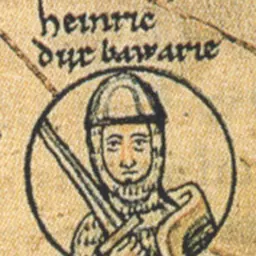
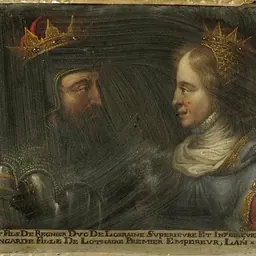
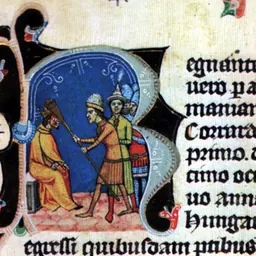
Contemporaries
People whose lives overlapped William Longsword's



Frequently asked questions
Who was William Longsword?
Count of Normandy from 927 to 942
When was William Longsword born?
William Longsword was born in 905 in Bayeux.
When did William Longsword die?
William Longsword died on 17 December 942 in Picquigny.
What was William Longsword's occupation?
William Longsword was a feudatory.
Sources & further reading
· Wikipedia: William Longsword
Cite this page
APA: Biography.guide. (2026). William Longsword. https://biography.guide/william-longsword/
MLA: "William Longsword." Biography.guide, https://biography.guide/william-longsword/.
Chicago: "William Longsword." Biography.guide. https://biography.guide/william-longsword/.
Data last updated: 2026-09-22 · Spot an error? Report a correction.
Portrait: Wikimedia Commons · author & licence
Page generated 2026-09-27 05:03 UTC