
About Richard Hoffmann
Lived 1925 – 2021 (aged 96). Richard Hoffmann was an American composer.
Richard Hoffmann (20 April 1925 – 24 June 2021) was an American composer, musicologist and educator. He served many years as a professor at Oberlin Conservatory of Music.
Early life
Hoffmann was born in Vienna, Austria, the son of Richard and Emanuela Hoffmann. In 1935, the family emigrated to New Zealand, where Hoffmann subsequently received a Bachelor of Music degree from the University of New Zealand in 1945.
Musical style About the String Trio, which was begun in 1961 (Altmünster, Austria) and, after approximately a year's interruption, completed in 1963 (Los Angeles, California) the composer wrote:
Teaching career
Hoffmann began his career as a professor at Oberlin Conservatory of Music in 1954, where he worked until 2004. He was a visiting professor at the University of California, Berkeley from 1965 to 1966, at Victoria University in 1968, at Harvard University in 1970, at the University of Iowa in 1976 and at Vienna University in 1984. His students included Jonathan Dawe, Pierre Jalbert, Stan Link, David Serkin Ludwig, Christopher Rouse, Daniel Schechter, and Robert Spano just to name a few.
Achievements
Hoffmann received awards from the Fromm Music Foundation Commission in 1960 (Orchestral Piece No. 2, 1961, Universal Edition, London (1963), UE13635LW) and National Institute of Arts and Letters in 1966. Also he was given a grant from National Education Association in 1976, 1978–1979 and Fulbright Foundation in 1984–1985.
Personal life
On December 21, 1957, Hoffmann married Joan Alfhild Flint. They have 3 children. Hoffmann died in Oberlin, Ohio, on June 24, 2021, aged 96.
Compositions
Orchestral Prelude and Double Fugue, strings, 1944 Violin Concerto, 1948 Orchestral Piece, 1952 Piano Concerto, 1953–54 – Mobart Music Publications/Schott Cello Concerto, 1956–59 – Mobart Music Publications MOB 8540/Schott Orchestral Piece [No. 2], 1961, publ. Universal Edition, London (1963), UE13635LW Music for Strings, for solo violin and string orchestra, 1970–71 – Mobart Music Publications/Schott Souffleur, for symphony orchestra without conductor, 1975–76 Vocal 3 Songs (R. M. Rilke), 1948 3 Songs (Rilke, ), soprano, piano, 1950 2 Songs (M. Maeterlink, E. St Vincent Millay), soprano, piano, 1953–54 Mutterauge (trad.), chorus, 1956 Memento mori (grave stone inscriptions), men's 48 voices, tape, 1966–69 Les adieux (R. Hoffmann), chorus, orchestra, 1980–83 2 Poems (A. Giraud), 1 voice, flute + piccolo, bass clarinet, violin, viola, cello, piano, 1986 Lacrymosa '91 (H. Heine), chorus, orchestra, 1990 2 Songs (F. Rückert, Heine), soprano, string trio, percussion, 1990 [arr. chamber orchestra, 1991] Die Heimkehr (G. Trakl), 1 voice, double chorus, orchestra, 1997 Chamber and solo String Quartet No. 1, 1947 Trio, violin, bass clarinet, piano, 1948 Duo, viola and cello, 1949 – Mobart Music Publications MOB 8550/Schott Duo, violin and piano, 1949, rev. 1965 – Mobart Music Publications/Schott Piano Quartet, 1950 String Quartet No. 2, 1950 Tripartita, solo violin, 1950 String Trio, 1961–63 Decadanse, for clarinet, bass clarinet, trumpet, trombone, violin, double bass, and percussion, 1972 – Mobart Music Publications/Schott String Quartet No. 3 'on revient toujours', 1972–74 – Mobart Music Publications/Schott Changes, for two sets of chimes, four players, 1974 – Mobart Music Publications/Schott Notturno [String Quartet No. 5], double string quartet, 1995 String Quartet No. 6 'Anbruch–Einbruch–Abbruch', 1999 Keyboard Piano Sonata, 1945–46 3 Small Pieces, piano, 1947 Fantasy and Fugue in Memoriam Arnold Schoenberg, organ, 1951 – Mobart Music Publications/Schott Variations No. 1, piano, 1951 Sonatina, piano, 1952 Passacaglia, organ, 1953 - Mobart Music Publications/Schott Variations No. 2, piano, 1959 – Mobart Music Publications MOB 8585/Schott MONO/POLY, piano, 1994 (first performance Pasadena, 13 September 1994, by Leonard Stein Electroacoustic In memoriam patris, tape, 1976 String Quartet No. 4 '(scordatura – trompe l'oreille)', string quartet, computer, 1977–78
Writings Hoffmann, Richard, "Webern: Six Pieces, op. 6, 1909", Perspectives of New Music 6 (1967–68) Schoenberg, Arnold, Von heute auf morgen, Op. 32, edited by Richard Hoffmann, with Werner Bittinger. Mainz: B. Schott's Söhne; Wien: Universal Edition, 1970.
Don’t just read it —
keep it.
Full-length biographies made to live with: read them, listen on the way to work, watch them tonight.
- E-book
- Audio
- Video
Instant download · yours to keep · every purchase keeps this site free
Important facts
People in Richard Hoffmann's life
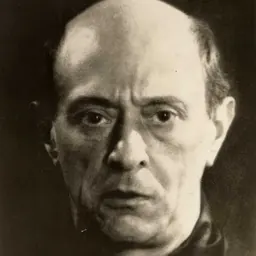
Named in this biography and alive at the same time





Related people
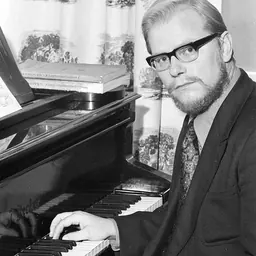
Same field, nearest in time



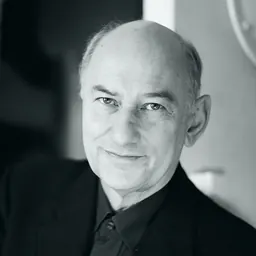
Contemporaries
People whose lives overlapped Richard Hoffmann's


Frequently asked questions
Who was Richard Hoffmann?
American composer, musicologist and educator (1925-2021)
When was Richard Hoffmann born?
Richard Hoffmann was born on 20 April 1925 in Vienna.
When did Richard Hoffmann die?
Richard Hoffmann died on 24 June 2021.
What was Richard Hoffmann's occupation?
Richard Hoffmann was a composer.
What nationality was Richard Hoffmann?
Richard Hoffmann was American.
Sources & further reading
· DBpedia: Richard Hoffmann (composer)
Cite this page
APA: Biography.guide. (2026). Richard Hoffmann. https://biography.guide/richard-hoffmann/
MLA: "Richard Hoffmann." Biography.guide, https://biography.guide/richard-hoffmann/.
Chicago: "Richard Hoffmann." Biography.guide. https://biography.guide/richard-hoffmann/.
Data last updated: 2026-09-20 · Spot an error? Report a correction.
Page generated 2026-09-27 05:01 UTC