
Richard Hare
Russian scholar
About Richard Hare
Lived 1907 – 1966 (aged 59). Richard Hare was an American.
Richard Gilbert Hare (5 September 190714 September 1966) was a British diplomat who later became the first Professor of Russian Literature at London University. His interests encompassed Russian art, literature and politics which he taught at the School of Slavonic and East European Studies. In 1936 he set up a studio with the Russian sculptor and painter, Dora Gordine in Kingston upon Thames which is now the Dorich House Museum curated by Kingston University. His obituary in The Times said of him: "Though of a rather reserved nature he was charming as a companion and was always a most courteous and considerate colleague and teacher."
Early life and education Richard Gilbert Hare was born in London on 5 September 1907, the second son of Richard Hare, 4th Earl of Listowel, Viscount Ennismore, and his wife, Freda Vanden-Bempde-Johnstone (1885–1968) the youngest daughter of the 2nd Baron Derwent. Although from an Anglo-Irish aristocratic family with estates in County Cork and Devon, he was brought up in Marylebone, London. The family seat at Convamore, Ballyhooly in Cork was burned to a ruin in 1921 during the Irish War of Independence. In a family of high achievers, all his brothers had careers in public life. William Francis Hare (1906-1997), who also went to Balliol, was the last Secretary of State for India, as well as the last Governor-General of Ghana. John Hugh Hare (1911–1982) became chairman of the Conservative Party. Alan Victor Hare (1919–1995) became chairman of the Financial Times as well as a Director of The Economist and the English National Opera.
Richard, the namesake of his father, was sent as a boarder to Rugby School differentiating him from his three brothers who all went to Eton College. A shy and sensitive child who loved art, Hare was encouraged in an academic direction by its headmaster William Wyamar Vaughan. Vaughan's wife, Margaret, had been a close friend of Virginia Woolf who was a frequent visitor to the Vaughan household and through whom Hare met the younger members of the Bloomsbury Set in London in the late 1920s. He met Dora Gordine in 1926, the year in which they parted. Gordine left for Paris and was soon commissioned by the Singapore city authorities to decorate the Town Hall with models representing people of six different ethnic backgrounds living in the Malay Peninsula. In 1930, Dora married George H. Garlick, an art collector and physician to the Sultan of Johore, Ibrahim of Johor who was considered "fabulously wealthy".
Early career, love and marriage
Hare joined the Diplomatic Service in 1930 as Third Secretary in the Paris Embassy before working at the Foreign Office.
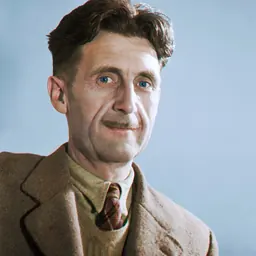
The creation of propaganda at the Ministry was thought to have influenced George Orwell whose wife worked in the Censorship Section whilst he worked at the BBC producing Ministry-approved broadcasts The Ministry published a booklet to counter ideological fears of Bolshevism, including claims that the Red Terror was a figment of Nazi imagination. This inspired George Orwell to leave the BBC and write Animal Farm, which was suppressed by the Ministry until the end of the war.
Around this time, Hare started collecting Imperial Russian art. In the years following the Second World War, he and Dora made regular trips to Europe to hunt for new pieces. Her constant and enthusiastic support nurtured and deepened his appreciation of the arts.
Richard described his main hobby as gardening, an interest shared with his brother John. Country Life magazine explained that the setting on Kingston Vale was crucial to the conception of Dorich House:
Death and legacy
Richard died of a heart attack on 14 September 1966 at Dorich House. Gordine lived on alone until her death in 1991, having survived him by nearly 25 years. After her death, Dorich House was purchased by Kingston University which renovated it and converted it into a museum. The Dorich House Museum displays Gordine’s sculpture, painting and drawing. There are also items from Hare's Imperial Russian art collection including icons, paintings, ceramics, glassware, metalwork, folk art and furniture dating from the early 18th century to the early 20th century. His wish was that their collection should be used for the enjoyment of the British nation. Dora said that their children were the artworks.
Publications Russian Literature from Pushkin to the Present Day, 1947 - introducing the British public to the literature of their wartime ally. Pioneers of Russian Social Thought, 1951 Portraits of Russian Personalities between Reform and Revolution, 1959 Maxim Gorky: Romantic Realist and Conservative Revolutionary, 1962 The Art and Artists of Russia, 1965, an illustrated survey of art in Russia before the Revolution - drawing on examples from his own collection at Dorich House. Translations of selected novels and stories of Ivan Turgenev (1947) and Ivan Bunin (1949).
Hare was also a contributor to Encyclopædia Britannica, Collier's Encyclopedia, the Slavonic Review (where he was on the editorial board), the Russian Review, History Today, the Slavic Review, The Connoisseur and the Times Literary Supplement.
Don’t just read it —
keep it.
Full-length biographies made to live with: read them, listen on the way to work, watch them tonight.
- E-book
- Audio
- Video
Instant download · yours to keep · every purchase keeps this site free
Important facts
People in Richard Hare's life
Named in this biography and alive at the same time





Contemporaries
People whose lives overlapped Richard Hare's



Frequently asked questions
Who was Richard Hare?
Russian scholar (1907-1966)
When was Richard Hare born?
Richard Hare was born on 17 January 1907 in London.
When did Richard Hare die?
Richard Hare died on 17 January 1966 in Dorich House.
What nationality was Richard Hare?
Richard Hare was American.
Sources & further reading
· DBpedia: Richard Gilbert Hare
Cite this page
APA: Biography.guide. (2026). Richard Hare. https://biography.guide/richard-hare/
MLA: "Richard Hare." Biography.guide, https://biography.guide/richard-hare/.
Chicago: "Richard Hare." Biography.guide. https://biography.guide/richard-hare/.
Data last updated: 2026-09-20 · Spot an error? Report a correction.
Page generated 2026-09-27 05:33 UTC