
About Richard Gilmour
Lived 1824 – 1891 (aged 66). Richard Gilmour was a catholic priest and catholic bishop.
Richard Gilmour (September 28, 1824 – April 13, 1891) was an American Catholic prelate who served as the second Bishop of Cleveland from 1872 until his death in 1891.
Early life and education Richard Gilmour was born on September 28, 1824, in Glasgow, Scotland. He was the only child of John and Marion (née Callander) Gilmour, who were Covenanter Presbyterians.
In 1842, through the recommendation of a Catholic friend, Gilmour enrolled at a school run by Father Patrick Rafferty, pastor of St. Francis Xavier Church at Fairmount, then a suburb of Philadelphia. He was baptized by Father Rafferty on August 15 of that year. Both of his parents later converted to Catholicism as well.
In 1844, Bishop Michael O'Connor of the Diocese of Pittsburgh accepted Gilmour as a candidate for the priesthood and enrolled him at St. Michael's Seminary. However, after the seminary was closed in 1846, Gilmour was accepted into Mount St. Mary's College at Emmitsburg, Maryland. At Mount St. Mary's, he earned his tuition as a mathematics teacher and served as prefect of the college students. He graduated with a Master of Arts degree in 1848, and then entered the seminary at the same institution.
Priesthood On August 30, 1852, Gilmour was ordained a priest by Archbishop John Baptist Purcell at the Cathedral of St. Peter in Chains in Cincinnati. He was then appointed pastor of the Church of the Nativity in Portsmouth, along with the surrounding missions. He separated the English- and German-speaking parishioners in Portsmouth, becoming pastor of Holy Redeemer Church for the former while St. Mary of the Annunciation Church was established for the latter.
In 1857, Gilmour was appointed pastor of St. Patrick's Church in Cincinnati, succeeding Father James Frederick Wood (who had been appointed Bishop of Philadelphia). As pastor, he established a parochial school. In 1869, he was appointed pastor of St. Joseph's Church in Dayton, where he remained until becoming a bishop. On February 15, 1872, Gilmour was appointed Bishop of Cleveland by Pope Pius IX. By the end of his tenure, the diocese contained 229 churches, 208 priests, and 127 parochial schools. He established a diocesan newspaper, The Catholic Universe, whose first issue was published on July 4, 1874. In 1886, he and the Jesuits founded St. Ignatius College (now John Carroll University).
Catholic education In 1873, in his first pastoral letter as bishop, Gilmour ordered every parish to establish a parochial school where possible and also authorized priests to deny the sacraments to Catholic parents who did not send their children to parochial schools without good reason. The pastoral letter sparked an anti-Catholic response from the local Cleveland Leader to the national Harper's Weekly, in which cartoonist Thomas Nast depicted Gilmour hurling thunderbolts against crouching Catholics.
In 1875, the Cuyahoga County auditor, Lanric D. Benedict, listed Cleveland's Catholic schools as delinquent in paying taxes and put them up at public auction. However, a year earlier, the Ohio Supreme Court had ruled that such property was not taxable. Upon appeal, the decision was upheld by the Ohio Supreme Court in 1883, ending the seven-year case and protecting parochial schools from taxation.
Third Plenary Council of Baltimore Gilmour attended the Third Plenary Council of Baltimore from November to December 1884. Bishops Joseph Dwenger and John Moore were originally sent to Rome to obtain the pope's approval of the council's decrees, but faced difficulties. In May 1885, the American archbishops voted to send Gilmour to Rome to assist Dwenger and Moore. He arrived in Rome the following June, and secured Pope Leo XIII's approval of the decrees in September. When the Catholic University of America, which had been authorized by the council, opened in November 1889, Gilmour delivered a sermon at the ceremony. He also believed the League was turning "our Catholic women into brawling politicians." McGlynn was a strong supporter of economist Henry George, but Gilmour opposed the a possible condemnation of George's Progress and Poverty by the Holy See, which he believed would elevate George's profile.
Conflicts with clergy and religious Gilmour was involved in a dispute with the Grey Nuns, who managed St. Vincent's Orphan Asylum in Toledo. His predecessor, Bishop Rappe, had transferred the orphanage's title to the Sisters in the belief that it would make the property more likely to remain nontaxable. When Gilmour attempted to gain the title back, the Sisters refused. In 1888, the Congregation for the Propagation of the Faith assigned Cardinal James Gibbons to resolve the dispute. from his pulpit.
Death and legacy Due to his declining health, Gilmour traveled to St. Augustine, Florida, in March 1891 to recuperate. He died there on April 13, 1891, at age 66. He is buried in the crypt of the Cathedral of St. John the Evangelist.
Gilmour Academy in Gates Mills, Ohio is named in his honor.
Don’t just read it —
keep it.
Full-length biographies made to live with: read them, listen on the way to work, watch them tonight.
- E-book
- Audio
- Video
Instant download · yours to keep · every purchase keeps this site free
Important facts
People in Richard Gilmour's life
Named in this biography and alive at the same time



Related people
Same field, nearest in time
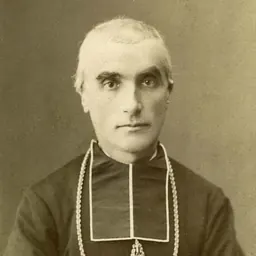

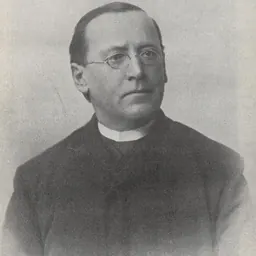
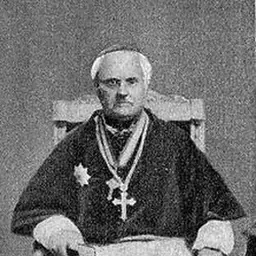

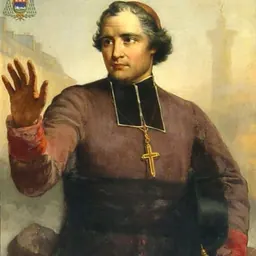
Contemporaries
People whose lives overlapped Richard Gilmour's




Frequently asked questions
Who was Richard Gilmour?
Roman Catholic bishop (1824–1891)
When was Richard Gilmour born?
Richard Gilmour was born on 28 September 1824 in Dumbarton.
When did Richard Gilmour die?
Richard Gilmour died on 13 April 1891 in St. Augustine.
What was Richard Gilmour's occupation?
Richard Gilmour was a catholic priest and catholic bishop.
What nationality was Richard Gilmour?
Richard Gilmour's recorded nationality: Scottish people.
Sources & further reading
Cite this page
APA: Biography.guide. (2026). Richard Gilmour. https://biography.guide/richard-gilmour/
MLA: "Richard Gilmour." Biography.guide, https://biography.guide/richard-gilmour/.
Chicago: "Richard Gilmour." Biography.guide. https://biography.guide/richard-gilmour/.
Data last updated: 2026-09-20 · Spot an error? Report a correction.
Page generated 2026-09-27 05:21 UTC