
About Richard Fuller
Born 1960. Richard Fuller is an Australian environmentalist.
Richard Fuller (born 1960) is an Australian-born, United States-based engineer, entrepreneur, and environmentalist known for his work in pollution remediation.
He was founder and President of the nonprofit Pure Earth (formerly known as Blacksmith Institute), Co-Chair of The Lancet Commission on Pollution and Health, Fuller also founded and serves as the president of waste management consultancy firm Great Forest. Fuller stepped down from the president and CEO roles at Pure Earth on 4 Nov 2024 and serves as an advisor to Pure Earth and directs research initiatives.
Early career
Richard Fuller graduated with a degree in Engineering from Melbourne University. In 1999, Fuller established Pure Earth (formerly known as Blacksmith Institute) to focus on pollution remediation. as well as identifying and documenting toxic sites. Pure Earth states that it has identified nearly 5,000 toxic sites throughout more than 50 countries, and offers a database outlining its findings. The index was developed in collaboration with Johns Hopkins University.
Pure Earth also offers a website which provides global data on lead pollution.
Involvement with other organizations
Global Alliance on Health and Pollution In 2012, Fuller convened the Global Alliance on Health and Pollution,
Lancet Commission on Pollution and Health In 2017, Fuller began serving as the Co-Chair of the Lancet Commission on Pollution and Health,
The Commission brought together over 40 international health and environmental authors, and produced a report in 2017 providing what it claimed to be the first comprehensive estimates of the effects of global pollution on health and economy worldwide. The report concluded that pollution is the largest environmental cause of death in the world, killing over 9 million people worldwide, threatening the "continuing survival of human societies."
The report received news coverage from outlets including the Guardian, PBS NewsHour and CNN's Fareed Zakaria.
In an open letter to mark the release of the report from The Lancet Commission on Pollution and Health, Fuller writes: "For too long, pollution has been sidelined, overshadowed, ignored by the world, in part because it is a complicated topic with many causes, and as many outcomes. Often it kills slowly, and indirectly, hiding its tracks. With this report, we bring pollution out of the shadows".
Fuller was invited to present the report's findings at the World Economic Forum meeting in Davos in February 2018. He was also invited to provide briefings of the report at the World Bank, the United Nations, the National Academies of Sciences, Engineering, and Medicine, and the OECD.
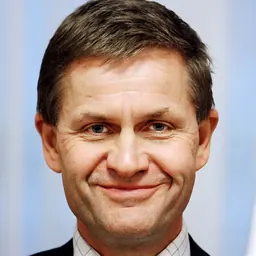
Global Observatory on Pollution and Health In October 2018, Fuller joined former EPA Administrator Gina McCarthy, Erik Solheim and Pushpam Kumar of the United Nations Environmental Programme, and Philip J. Landrigan of Boston College at the launch of the Global Observatory on Pollution and Health.
Other advocacy
Fuller's focus is not on pollution in general, but more specifically on disease-causing pollution that impacts the health of people, especially those living in low- and middle-income countries.
Through Pure Earth and the Global Alliance on Health and Pollution, Fuller lobbied the United Nations to provide more detail relating to its pollution goals in its Sustainable Development Goals (SDGs). Fuller was dissatisfied with the initial SDGs, saying that "we were all worried about a year and half ago that there was nothing listed of any substance about pollution in the SDGs. It was sparse, at best".
Publications
The Brown Agenda He is co-author of The Brown Agenda: My Mission To Clean up The World's Most Life-Threatening Pollution, alongside Damon DiMarco. The book was published in 2015 by the Santa Monica Press. The book documents Fuller's adventures at some of the world's most toxic locations, and introduces readers to the plight of the poisoned poor, suggesting specific ways in which anyone can help combat brown sites all over the world.
In a 2015 interview about the book on The Takeaway on NPR, Fuller noted the differences in approaches to climate change and pollution: "... over the last couple of decades, climate change has taken over as the key environmental issue. So now we find that the agenda of these countries is biodiversity and climate change, and pollution has simply dropped off the map. This is an extraordinary result and one we really need to turn around".
"We've already solved most of the pollution problems in the West. There aren't people dying in droves in the U.S. or in England - they're all dying overseas, in low- and middle-income countries," he told the Thomson Reuters Foundation on the publication of the book.
Other pieces In 2017, Richard Fuller co-authored a piece with Philip J. Landrigan published in the UN Perspectives series, titled "The Impact of Pollution on Planetary Health: Emergence of an Underappreciated Risk Factor".
In 2019, he co-authored Pollution and Children's Health, which noted that "pollution was responsible in 2016 for 940,000 deaths in children, two-thirds under age 5," and that "92% of pollution-related deaths in children occur in low- and middle-income countries". He concluded in the piece that "pollution prevention presents a major, largely unexploited opportunity to improve children’s health especially in low and middle-income countries".
Views Fuller believes that much of pollution can be solved. Fuller told the Associated Press in 2006 that "we have known technologies and proven strategies for eliminating a lot of this pollution". In 2010 he told Time that "there’s a finite number of polluted sites out there, and you can fix them for relatively little".
Recognition In October 2022, Richard Fuller was included in the Future Perfect 50 list from Vox, recognizing “the scientists, thinkers, scholars, writers, and activists building a more perfect future”.
In June 2018, Fuller was awarded the Order of Australia Medal (OAM) in recognition of his service to conservation and the environment.
In October 2019, Fuller received an Advance Award for Social Impact from the Australian government for his 20 years of pioneering work with Pure Earth and his leadership in tacking the issue as "a toxic pollution fighting hero".
Don’t just read it —
keep it.
Full-length biographies made to live with: read them, listen on the way to work, watch them tonight.
- E-book
- Audio
- Video
Instant download · yours to keep · every purchase keeps this site free
Important facts
People in Richard Fuller's life
Named in this biography and alive at the same time




Related people
Same field, nearest in time


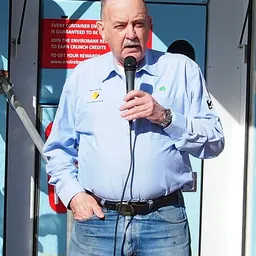
Contemporaries
People whose lives overlapped Richard Fuller's

Frequently asked questions
Who is Richard Fuller?
Australian environmentalist
When was Richard Fuller born?
Richard Fuller was born in 1960 in Australia.
What is Richard Fuller's occupation?
Richard Fuller is an environmentalist.
What nationality is Richard Fuller?
Richard Fuller is Australian.
Sources & further reading
· DBpedia: Richard Fuller (environmentalist)
Cite this page
APA: Biography.guide. (2026). Richard Fuller. https://biography.guide/richard-fuller-environmentalist/
MLA: "Richard Fuller." Biography.guide, https://biography.guide/richard-fuller-environmentalist/.
Chicago: "Richard Fuller." Biography.guide. https://biography.guide/richard-fuller-environmentalist/.
Data last updated: 2026-09-20 · Spot an error? Report a correction.
Page generated 2026-09-27 05:24 UTC