
About Richard Drauz
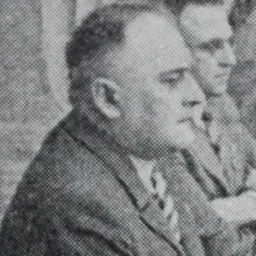
Lived 1894 – 1946 (aged 52). Richard Drauz was a German politician and mechanical engineer.
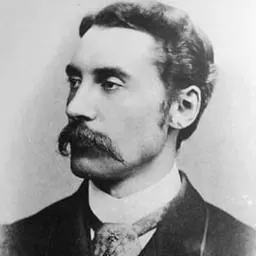
Richard Drauz (; 2 April 1894 – 4 December 1946) was a Nazi German politician and Kreisleiter of Heilbronn, Germany. He was also a member of the Reichstag from 1933 until the collapse of Nazi Germany at the end of World War II in Europe. Drauz was one of the most fanatical and violent Nazi Party leaders in the final days of the war. He was tried and executed by American occupation forces for war crimes in 1946.
Early life Drauz was born in Heilbronn in Württemberg, the son of postal official Christian Heinrich Drauz (1865–1937) and Friederike Johanna, née Dederer (1866–1938). His parents were from old Heilbronn vintner families. After attending middle and high school in Heilbronn, he became a mechanic's apprentice. He enlisted in the German Army at the start of World War I and rose to the rank of Feldwebel (Sergeant) by 1918. After the war, he studied at the Hochschule Esslingen in Esslingen am Neckar and from 1921 to 1928 worked at the Maschinenfabrik Esslingen as a refrigeration engineer. There he met Wilhelm Murr, a Nazi Party agitator who later became Gauleiter and then Reichsstatthalter of Württemberg. On 1 April 1928, Drauz joined the Nazi Party as Member number 80,730, and shortly afterwards he and his family moved to Dortmund. His employment there is unclear.
Rise to Power Feb. 1945 Masthead of Richard Drauz's propaganda mouthpiece, the Heilbronner Tagblatt. The box on the right reads: Whoever Hopes, Wins!. In 1932, Wilhelm Murr, the new Party Gauleiter of Württemberg, appointed Drauz as the Nazi Party District Leader in Heilbronn. The city, with its loyal SPD/DDP social-democratic electorate, was a problem for the Party. Drauz returned to his home city to impose "National Socialist virtue," by force if necessary. He was made director of the Nazi daily party newspaper, the Heilbronner Tagblatt, a position he used to spread propaganda, harass enemies, and make calls to action. After the Nazi Seizure of Power on 30 January 1933, Drauz pushed all other Heilbronn newspapers out of business through raids, property seizures, and advertiser intimidation. In July 1933, a large group of Sturmabteilung (SA) storm troopers attacked the former Lord Mayor Emil Beutinger, who had been critical of the Nazis. Beutinger's home was damaged, but he escaped unharmed. Police proceedings against 40 suspects were suppressed by Drauz.
By 1938, Drauz had gained significant positions on the boards of many companies, associations, and unions in Heilbronn, such as Heilbronn Maschinenbau-Gesellschaft, Glashütte Heilbronn AG, the Portland Cement Plant in Lauffen am Neckar, and even the VfR Heilbronn football club. He responded to the rejection of his request for a supervisory board position at the food manufacturer Knorr (brand) with hate mail and abusive articles in the Tagblatt. As the result of district reforms on 1 October 1938, Heilbronn became the seat of the newly created Heilbronn County and the previously independent towns of Böckingen, Sontheim, and Neckargartach were annexed.
Drauz was unpopular with many people, even within the Nazis' own ranks. There were several proceedings against him before the Party's Internal District Court. In 1934, two complainants accused him of "purely arbitrary policies of violence" and of leading "an immoral lifestyle that defies description and will harm the overall movement," pointing to notorious street drinking sessions and numerous adulterous love affairs. All proceedings ended with acquittal, probably due to the patronage of Gauleiter Wilhelm Murr. Drauz responded by insulting his internal party opponents, initiating smear campaigns, and dismissing them from any party functions he could. While his reputation may have been tarnished, his career remained unharmed: In 1943, he was appointed Oberbereichsleiter, and he acquired additional district management roles in Vaihingen an der Enz and Ludwigsburg.
Despite his arbitrary leadership, Drauz became more serious about evacuation plans for the city behind the scenes, although far too late. Initial air raids had killed about 300 people, and Drauz carefully argued to his boss, Gauleiter and now Reich Defense Commissioner Murr, that a large-scale attack on the densely populated city center would result in heavy loss of life because of its confined position on the Neckar. Murr refused to permit any evacuation, not only because it would be "defeatist" but, more practically, any evacuees would have no place to go. Drauz's prediction became a tragic reality on 4 December 1944, when a major raid completely destroyed the city center and killed over 6,500 people, including 1,000 children, the majority of whom were incinerated in a fire storm. It became the worst bombing experience of any city in Württemberg.
In the final months of the war, Drauz became increasingly desperate and violent in trying to follow Hitler's commands. As a result of the Nero Decree in March 1945, Drauz sought to turn what remained of the ruined city into scorched earth, for example, giving orders to blow up the Neckarsulm Vehicle Factory.
The final Battle of Heilbronn began on 4 April 1945. By 6 April, recognizing that the city center could not be held but refusing to accept defeat, Drauz disbanded his District Office, burned records and the Party Flag, and fled in two cars with a large escort.
Drauz's actions directly resulted in the deaths of 14 civilians, and his orders to fanatical paramilitary units to fight to the end culminated in another week of bitter hand-to-hand fighting, needlessly costing hundreds more lives and further destroying what was left of the city. Unlike Stuttgart, whose mayor Karl Strölin had quietly negotiated his city's surrender, Heilbronn was not spared this final agony because of Drauz.
In the aftermath, Heilbronn's new newspaper, the Heilbronner Stimme (Voice of Heilbronn), remarked that "he was a particularly nasty specimen of the Nazi movement". For his brutality, indiscriminate murder, and responsibility in the final agony of their city, Drauz remains a figure of contempt in Heilbronn to this day.
Don’t just read it —
keep it.
Full-length biographies made to live with: read them, listen on the way to work, watch them tonight.
- E-book
- Audio
- Video
Instant download · yours to keep · every purchase keeps this site free
Important facts
People in Richard Drauz's life
Named in this biography and alive at the same time

Related people
Same field, nearest in time






Contemporaries
People whose lives overlapped Richard Drauz's


Frequently asked questions
Who was Richard Drauz?
German politician (1894-1946)
When was Richard Drauz born?
Richard Drauz was born on 2 April 1894 in Heilbronn.
When did Richard Drauz die?
Richard Drauz died on 4 December 1946 in Landsberg am Lech.
What was Richard Drauz's occupation?
Richard Drauz was a politician and mechanical engineer.
What nationality was Richard Drauz?
Richard Drauz was German.
Sources & further reading
Cite this page
APA: Biography.guide. (2026). Richard Drauz. https://biography.guide/richard-drauz/
MLA: "Richard Drauz." Biography.guide, https://biography.guide/richard-drauz/.
Chicago: "Richard Drauz." Biography.guide. https://biography.guide/richard-drauz/.
Data last updated: 2026-09-20 · Spot an error? Report a correction.
Page generated 2026-09-27 05:28 UTC