
About Richard Corliss
Lived 1944 – 2015 (aged 71). Richard Corliss was an American journalist, film critic, screenwriter and author.
Richard Nelson Corliss (March 6, 1944 – April 23, 2015) was an American film critic and editor for Time.
He was the editor-in-chief of Film Comment and authored several books. In Talking Pictures, he challenged the auteur theory, popularized by his teacher Andrew Sarris. With his colleague Richard Schickel, he made Time'''s All-Time 100 Movies list. the son of Elizabeth Brown (née McCluskey) and Paul William Corliss.
On April 23, 2015, Corliss died under hospice care in New York City after suffering a stroke. He was 71.
Career Corliss wrote for National Review from 1966 to 1970. Despite working for the conservative publication, Corliss was a self-described "liberal".
At Film Comment, Corliss helped draw attention to the screenwriter in the creation of movies. Corliss brought Jonathan Rosenbaum to Film Comment as a Paris correspondent. In 1980, Corliss joined Time. In 1982, he profiled Steven Spielberg, covering the release of E.T. the Extra-Terrestrial and Poltergeist. Although he started as an associate editor, he was promoted to senior writer by 1985.
Corliss wrote for Time online and in print, including a column about nostalgic pop culture, That Old Feeling. He was an occasional guest on The Charlie Rose Show, commenting on new releases with Janet Maslin and David Denby. His last appearance on the show was in December 2005. Corliss also appeared on A&E Biography to talk about the life and work of Jackie Chan and appeared in Richard Schickel's documentary about Warner Brothers.
Corliss attended the Cannes Film Festival along with Roger Ebert and Todd McCarthy for the longest period of any US journalist. He also attended festivals in Toronto and Venice. Corliss used to work on the board of the New York Film Festival but resigned in 1987 after longtime head Richard Roud was fired due to his challenging of editorial direction of the festival. He was fond of word play; in a 1993 review of The Crying Game, he spelled out a subtle spoiler with the first letters of each paragraph. Lolita, Corliss's third book, was a study of Vladimir Nabokov's novel and Stanley Kubrick's film. Later Corliss wrote an introductory essay for Crouching Tiger, Hidden Dragon: A Portrait of the Ang Lee Film.
Corliss admired animation, particulalry Pixar. With the release of Ratatouille, Corliss had access to the studio's inner workings. Pixar director Brad Bird said that he has "got nothing against critics" and that he had "done very well with them, over the years." Corliss and Martin Scorsese first came up with the idea for the issue on "guilty pleasures".
Corliss and Richard Schickel made Time's All-Time 100 Movies list. Corliss created lists of the 25 greatest villains, the 25 best horror films and the 25 most important films on race. In addition Corliss was on the 2001 jury for AFI's 100 Greatest movies list.
In the 2012 Sight & Sound poll, Corliss cast votes for Chungking Express, Citizen Kane, Historie(s) du Cinema, The Lady Eve, Mouchette, Pyaasa, The Searchers, The Seventh Seal and WALL-E.
Conflict and criticism Corliss was critical of the escalating expenditure on action films, writing in his review of Terminator 2: Judgment Day (1991) that "the cost of the product is not passed on to the consumer. Moviegoers pay as much for a ticket to a no-budget documentary like Paris Is Burning (1990) as they do for admission to any superspectacle."
Corliss had movies on his top ten lists that fellow Time critic Richard Schickel rated the worst of the year. These included 2001's Moulin Rouge!, 2003's Cold Mountain and 2004's Eternal Sunshine of the Spotless Mind. In August 2004, Stephen King, criticizing what he saw as a growing trend of leniency towards films by critics, included Corliss among a number of "formerly reliable critics who seem to have gone remarkably soft – not to say softhearted and sometimes softheaded – in their old age."
Corliss appears in the 2009 documentary film For the Love of Movies: The Story of American Film Criticism, confessing that he was the film critic who, in the 1970s, coined the term "Paulettes" for the ardent followers of Pauline Kael, a label which has stuck.
Corliss criticized Siskel and Ebert in Film Comment with "All Thumbs?: Or, Is There a Future For Film Criticism?", and Ebert responded with "All Stars: Or Is There a Cure For Criticism?" Corliss praised Ebert in a June 23, 2007 article "Thumbs up for Roger Ebert." Corliss's dialogue with Ebert in Film Comment was reprinted in Ebert's Awake in the Dark: The Best of Roger Ebert. Corliss appeared in the Ebert documentary Life Itself, where he praised Ebert's "polymathic genius."
Number Ones from Corliss' Top-Tens Best English language film in parentheses: 1969: Midnight Cowboy1980: Mon Oncle d'Amerique (The Elephant Man) 1981: The Mystery of Oberwald (Thief) 1982: E.T. the Extra-Terrestrial1983: Berlin Alexanderplatz (The Big Chill) 1991: My Father's Glory and My Mother's Castle (The Simpsons: "Lisa's Substitute") 1992: The Simpsons: "Black Widower" 2001: Kandahar (Moulin Rouge!) 2002: Talk to Her (Gangs of New York) 2003: Lord of the Rings: The Return of the King2004: Hero and House of Flying Daggers (Sideways) 2005: The White Diamond (The Squid and the Whale) 2006: Pan's Labyrinth (Borat) 2012: Amour (Beasts of the Southern Wild) 2013: Gravity2014: The Grand Budapest HotelBibliography
BooksGreta Garbo (1974)Lolita (1995)Mom in the Movies: The Iconic Screen Mothers You Love (and a Few You Love to Hate) (2014)
Articles
Don’t just read it —
keep it.
Full-length biographies made to live with: read them, listen on the way to work, watch them tonight.
- E-book
- Audio
- Video
Instant download · yours to keep · every purchase keeps this site free
Important facts
People in Richard Corliss's life
Named in this biography and alive at the same time

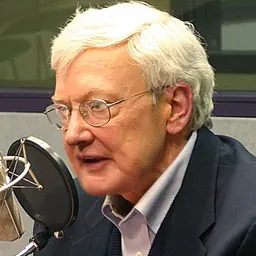

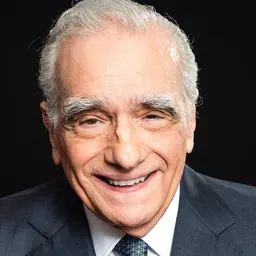



Related people
Same field, nearest in time

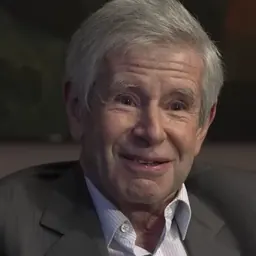


Contemporaries
People whose lives overlapped Richard Corliss's


Frequently asked questions
Who was Richard Corliss?
American editor for Time Magazine (1944-2015)
When was Richard Corliss born?
Richard Corliss was born on 6 March 1944 in Philadelphia.
When did Richard Corliss die?
Richard Corliss died on 23 April 2015 in New York City.
What was Richard Corliss's occupation?
Richard Corliss was a journalist, film critic, screenwriter and author.
What nationality was Richard Corliss?
Richard Corliss was American.
Sources & further reading
Cite this page
APA: Biography.guide. (2026). Richard Corliss. https://biography.guide/richard-corliss/
MLA: "Richard Corliss." Biography.guide, https://biography.guide/richard-corliss/.
Chicago: "Richard Corliss." Biography.guide. https://biography.guide/richard-corliss/.
Data last updated: 2026-09-22 · Spot an error? Report a correction.
Page generated 2026-09-27 05:28 UTC