
About Richard Chorley
Lived 1927 – 2002 (aged 74). Richard Chorley was a British geographer and university teacher.
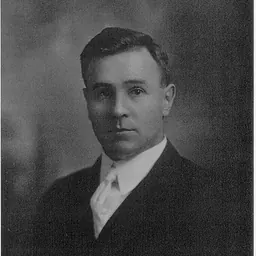
Richard John Chorley (4 September 1927 – 12 May 2002) was an English geographer, and professor of geography at Cambridge University, known as leading figure in quantitative geography in the late 20th century, who played an instrumental role in bringing in the use of systems theory to geography.
Biography Early education Chorley was born in Minehead, Somerset in an area known as the West Country, with roots in Exmoor and the Vale of Taunton Deane. He was a product of a local primary school and Minehead Grammar School. Later on, Chorley began studying Geomorphology as an undergraduate at the School of Geography at Oxford. He served with the Royal Engineers from 1946 to 1948 and made it Lieutenant. Afterwards he went up to Exeter College, where he obtained his BA with Honours in 1951. Later in 1954 he also obtained his MA at Oxford University, and in 1974 his Sc.D. at Cambridge University.
At Oxford he was greatly influenced by R.P. Beckinsale, who advised Chorley to go on to graduate study in the United States. He made a transatlantic move in 1951 as a Fulbright Scholar to Columbia University where he was a graduate student in the Geology Department and explored the quantitative approach to land form evolution.
Career development Chorley started his academic career as instructor in geography at Columbia University, New York in 1952. In 1954 he moved to Brown University, Providence, USA, where he was appointed Instructor in Geology. In 1957, Chorley needed to return to Britain for family reasons. In 1958 he was appointed a Demonstrator at Cambridge University and proceeded to move rapidly up the university hierarchy with a readership in 1970 and ad hominem chair in 1974.
During his career Chorley published few geomorphology studies; among them one about comparative morphometry in 1962 and a review papper dealing with the methods of Strahler and Horton in 1966. In the opinion of Eiju Yatsu, Chorley was more of a science philosopher than a geomorphologist.
Cambridge contained a strong group in physical geography with colleagues that encouraged Chorley's ideas. It also provided a good environment for him to conduct his experiments. Chorley produced volumes of scientific papers in physical geography that codified his approach and allowed him to ask new questions about earth surface processes and ways they can be studied. Central to these was the concept of system dynamics, and his production of Physical Geography: A Systems Approach (1971) and Environmental Systems (1978) that influenced a generation of scholars.
Chorley's studies ranged into climatology and hydrology where he cooperated with Colorado meteorologist Roger Barry on the text, Atmosphere, Weather and Climate (1968). Many of his writings were jointly authored or edited, including Water, Earth and Man (1969). In addition, Chorley launched in 1964 the first of a series of text on The History of the Study of Landforms. Two further volumes were published in 1973 and 1991. At the time of Chorley's death, Volume 4 was nearing completion.
Progress in Geography Instead of confining himself to physical geography, Chorley took a broad approach to change in geography as a whole. He did this first through a series of annual summer conferences held at Madingley Hall near Cambridge, where his lectures helped form a basis of a series of volumes (notably Models in Geography, 1967) that influenced the discipline.
The second was by founding an annual series, "Progress in Geography", later converted into two influential quarterly journals, in which changes over the whole discipline could be recorded and assessed.
Selected publications Chorley, Richard J. Geomorphology and general systems theory. Washington, DC: US Government Printing Office, 1962. Chorley, Richard J., and Peter Haggett, eds. Socio-economic models in geography. Vol. 249. Methuen, 1968. Haggett, Peter, and Richard J. Chorley. Network analysis in geography. Vol. 67. London: Edward Arnold, 1969. Chorley, Richard J., and Barbara A. Kennedy. Physical geography: a systems approach. London: Prentice-Hall, 1971. Barry, Roger G., and Richard J. Chorley. Atmosphere, weather and climate. Routledge, 1992, 2009.
Don’t just read it —
keep it.
Full-length biographies made to live with: read them, listen on the way to work, watch them tonight.
- E-book
- Audio
- Video
Instant download · yours to keep · every purchase keeps this site free
Important facts
People in Richard Chorley's life
Named in this biography and alive at the same time




Related people
Same field, nearest in time

Contemporaries
People whose lives overlapped Richard Chorley's



Frequently asked questions
Who was Richard Chorley?
English geographer (1927-2002)
When was Richard Chorley born?
Richard Chorley was born on 4 September 1927 in Minehead.
When did Richard Chorley die?
Richard Chorley died on 12 May 2002 in Cambridge.
What was Richard Chorley's occupation?
Richard Chorley was a geographer and university teacher.
What nationality was Richard Chorley?
Richard Chorley was British.
Sources & further reading
Cite this page
APA: Biography.guide. (2026). Richard Chorley. https://biography.guide/richard-chorley/
MLA: "Richard Chorley." Biography.guide, https://biography.guide/richard-chorley/.
Chicago: "Richard Chorley." Biography.guide. https://biography.guide/richard-chorley/.
Data last updated: 2026-09-25 · Spot an error? Report a correction.
Page generated 2026-09-27 05:13 UTC