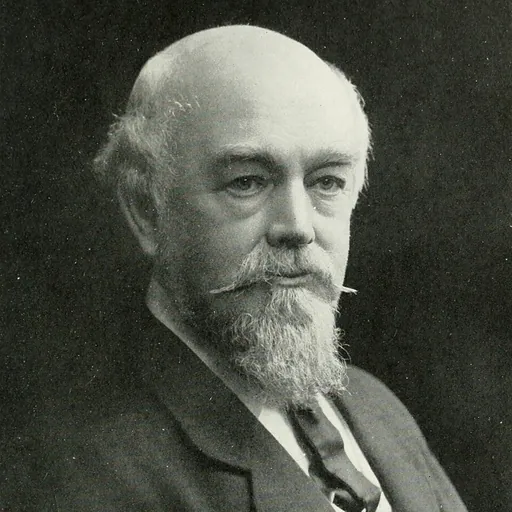
About Richard Caton
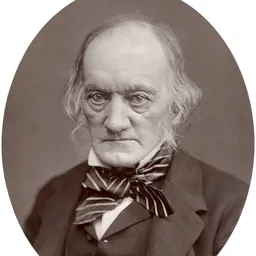
Lived 1842 – 1926 (aged 83). Richard Caton was a British physician, surgeon, physiologist and neuroscientist.
Richard Caton (1842, Bradford – 1926), of Liverpool, England, was a British physician, physiologist and Lord Mayor of Liverpool who was crucial in discovering the electrical nature of the brain and laid the groundwork for Hans Berger to discover alpha wave activity in the human brain.
Early life and education Richard Caton was born in Bradford, son of Richard Caton M.D. and Mary Fawcett. He had a younger sister, Sarah (1846–1872). His father gave up his medical practice through ill health and moved to Scarborough where he died. Following this, the family returned to his mother's former home of Halifax. Caton became a boarder at Scarborough Grammar School where he developed a life-long love of the classics, reflected in later life when he wrote a number of papers on Ancient Greek medicine. Leaving school at sixteen, he worked in the Halifax and Huddersfield Bank but had to leave due to ill health. The medical treatment he received sparked an interest in practising medicine himself. In 1863 after receiving a small legacy from an aunt, he and his mother were able to move to Scotland where he attended Edinburgh Medical School qualifying MB in 1867, FRCP in 1868, and MD in 1870.
University College (1882–1902)
Dr Richard Caton played a key role in establishing higher education in Liverpool. In November 1877, a joint meeting was held between the Liverpool Association for the Promotion of Higher Education and the Council of the School of Medicine to look to establishing a University in Liverpool. That same year, Experimental physics was included in the syllabus for London University degrees, which Liverpool could not provide. Thus, University College Liverpool was established by Royal charter in 1881. The Royal Infirmary School of Medicine initially kept its independence, but in 1884 became the Faculty of medicine when University College was affiliated to Victoria University, along with Owen's College, Manchester and Yorkshire College, Leeds. Victoria University had the power to award medical degrees with its own syllabus requirements.
Caton worked as part-time Professor of Physiology from 1882 to 1891. When George Holt, the shipping line owner, endowed the Chair of Physiology at University College Liverpool in 1891 as a full-time appointment, Caton resigned in favour of Francis Gotch (1853–1913) who was succeeded in 1895 by Charles Scott Sherrington (1857–1952). An appeal for funds in 1887, which included £50 from Caton, allowed the construction of the Victoria Building in 1892 on the site of the former lunatic asylum on Brownlow Hill.
University of Liverpool (1903–1924)
Dr Richard Caton was on the Court of Governors of the University from the start. He and others lobbied hard for an independent University of Liverpool which was achieved in 1903. Manchester and Leeds followed in 1904. In 1903, women were also granted the opportunity to be awarded degrees.
Caton was the first representative of Liverpool University on the General Medical Council— an office that he occupied until his death. He was a Pro-vice-chancellor of the University from 1921 to 1924, and served for a time as Dean of the Faculty of Medicine.
Educational activities included the presenting of both cases and specimens on a variety of medical and surgical subjects. Students presented papers on a range of topics including women in medicine, the medicinal benefits of corsets, germ theory and the theories of Lister's anti-sepsis, miasma theory, Spiritualism, galvanism and grammar school education.
Caton's enthusiasm for his students' education is demonstrated in 1875 when he describes what "excellent exercise it was to place their thoughts on paper and thoroughly to investigate any subject for the benefit of their fellow Student."
Personal life In 1869, Dr Richard Caton moved from Edinburgh to Liverpool, where he lived for the rest of his life. His mother died at his house in Abercromby Square in 1873. In 1885 he married Annie Ivory (1855–1912), daughter of an Edinburgh Solicitor. They had two daughters, Anne Rose and Mildred Robina, the former of whom became her father's companion in later years. Mildred married Henry Arderne Ormerod (1886–1964), Professor of Ancient History at Liverpool University. Their son W.E. Omerod preserved Caton's papers for posterity; these can be seen in the University of Liverpool Special Collections and Archives.
Caton lived at a number of addresses including Livingstone Drive Sefton Park, Balmoral Road Fairfield, Lea Hall Gateacre, and Sunnyside Princes Park. For his practice he had consulting rooms at 36 and 78 Rodney Street, Liverpool. His health worsening, with increasing sciatica, Caton moved to Surrey for warmer climes. He died in Haslemere on 2 January 1926. He was buried at All Saints' Church, Childwall, Liverpool, on 6 January 1926. His gravestone commemorates both him and his wife.
Don’t just read it —
keep it.
Full-length biographies made to live with: read them, listen on the way to work, watch them tonight.
- E-book
- Audio
- Video
Instant download · yours to keep · every purchase keeps this site free
Important facts
People in Richard Caton's life
Named in this biography and alive at the same time


Related people
Same field, nearest in time



Contemporaries
People whose lives overlapped Richard Caton's

Frequently asked questions
Who was Richard Caton?
British scientist (1842-1926)
When was Richard Caton born?
Richard Caton was born on 26 July 1842 in Bradford.
When did Richard Caton die?
Richard Caton died on 2 January 1926 in Haslemere.
What was Richard Caton's occupation?
Richard Caton was a physician, surgeon, physiologist and neuroscientist.
What nationality was Richard Caton?
Richard Caton was British.
Sources & further reading
Cite this page
APA: Biography.guide. (2026). Richard Caton. https://biography.guide/richard-caton/
MLA: "Richard Caton." Biography.guide, https://biography.guide/richard-caton/.
Chicago: "Richard Caton." Biography.guide. https://biography.guide/richard-caton/.
Data last updated: 2026-09-22 · Spot an error? Report a correction.
Page generated 2026-09-27 05:09 UTC