
Richard C. Mangrum
Assistant Commandant of the Marine Corps, Marine aviator - Navy Cross recipient for the Battle of Guadalcanal
About Richard C. Mangrum
Lived 1906 – 1985 (aged 78). Richard C. Mangrum was an American military officer.
Richard C. Mangrum (October 27, 1906 – September 28, 1985) was a United States Marine Corps lieutenant general who served as Assistant Commandant of the Marine Corps from 1965 to 1967. Mangrum was a Marine Corps aviator who was awarded the Navy Cross and the Distinguished Flying Cross for his actions during the Guadalcanal Campaign in World War II.
On October 1, 1965, Mangrum became the "Gray Eagle" of Naval Aviation, and is the first Marine Aviator to attain this distinction.
Biography Richard C. Mangrum was born on October 27, 1906, in Seattle, Washington. He graduated from the University of Washington in 1928. Mangrum then enlisted in the United States Marine Corps to become a naval aviator. He completed flight training on August 20, 1929, and was commissioned a second lieutenant shortly thereafter.
On December 7, 1941, Mangrum, then with VMSB-232, was at Pearl Harbor. Twenty of his squadron's SBD Dauntless dive bombers were destroyed on the tarmac at Marine Corps Air Station Ewa. During the early months of the Guadalcanal Campaign in 1942, he commanded VMSB-232, the first scout bomber squadron to join the Cactus Air Force. On August 20, Mangrum's dozen Douglas SBD Dauntless dive bombers launched from the deck of the USS Long Island (CVE-1) escorted by Grumman F4F Wildcats from Maj John Smith's VMF-223 to become the first Marine planes to land on the new airfield that had just been constructed. They were met on the tarmac by Alexander Vandegrift then commanding general of the 1st Marine Division. He was awarded the Navy Cross and Distinguished Flying Cross for successful attacks on Japanese naval units during engagements such as the Battle of the Eastern Solomons. During his first 29 days ashore during the battle, Mangrum flew 28 missions including ten strikes, eight searches and seven reconnaissance patrols in support of both ground and naval forces. Maj John L. Smith, LtCol Richard C. Mangrum, and Capt Marion E. Carl c. 1942 Mangrum left Guadalcanal on October 14, 1942, as the only pilot from his squadron able to walk away from Henderson Field. Seven had been killed, four were wounded and all of the others had been flown out for hospitalization. Returning to the United States, he served as commanding officer, Cadet Regiment at Naval Air Training Center, Corpus Christi, Texas from 1943 to 1944. He commanded Marine Aircraft Group 93 from May to October 1944, then returned to overseas duty in the Pacific, serving as chief of staff, 3rd Marine Aircraft Wing until January 1945. Mangrum was awarded the Legion of Merit as commanding officer of Marine Aircraft Group 45, based on Ulithi, Western Caroline Islands, until October 1945. Later, he was awarded the Navy Commendation Medal with Combat "V" as First Marine Aircraft Wing liaison officer to Headquarters, 5th Air Force in Seoul, Korea, in 1952.
Returning to the United States, Mangrum served as deputy director, Marine Corps Educational Center, Marine Corps Schools, Marine Corps Base Quantico, Virginia, from 1952 to 1954. He commanded Marine Corps Air Station Miami from 1954 to 1955 and Marine Aircraft Group 31 (MAG-31) (Reinforced) from 1955 to 1956. He also commanded the Marine Air-Ground Landing Force in Atlantic Fleet amphibious exercises before going to Washington, D.C., in June 1956.
He was promoted to brigadier general on July 1, 1956, and served as deputy assistant chief of staff, G-3, for strategic plans and Joint Chiefs of Staff matters. The Visit of Chiang Kai-shek during the fleet exercise on March 27, 1960. From left to right: Mangrum (CG, 1st MAW), RADM Charles O. Triebel (Commander, Amphibious Group ONE), Chiang Kai-shek, Thomas A. Wornham (CG, FMFPac) and MG Robert B. Luckey (CG, 3rd Marine Division). Mangrum served with the 1st Marine Aircraft Wing in Japan, February 1959, as assistant wing commander. He was promoted to major general on November 1, 1959, and served as the commanding general of the 1st Marine Aircraft Wing until April 1960. becoming the first Marine Aviator to attain this distinction. The "Gray Eagle" is the earliest designated aviator on active duty in the Navy and Marine Corps. Mangrum was designated a Naval Aviator in August 1929.
His daughter, Dr. Harriet Mangrum Howe, is married to retired Navy Admiral Jonathan Trumbull Howe.
Decorations and awards LtGen. Mangrum's awards include:
Naval Aviator BadgeNavy CrossNavy Distinguished Service MedalDistinguished Flying CrossLegion of Merit w/ 2 award stars & valor deviceAir Medal w/ 2 award starsNavy and Marine Corps Commendation Medal w/ valor deviceNavy Presidential Unit Citation w/ 1 service starSelected Marine Corps Reserve Medal w/ 1 service star American Defense Service Medal w/ 1 claspAmerican Campaign MedalAsiatic-Pacific Campaign Medal w/ 4 service starsWorld War II Victory MedalNational Defense Service Medal w/ 1 service starKorean Service Medal w/ 3 service starsKorean Presidential Unit CitationUnited Nations Korea Medal
Navy Cross citation The President of the United States takes pleasure in presenting the Navy Cross to Richard C. Mangrum (0-4412), Lieutenant Colonel, U.S. Marine Corps, for extraordinary heroism and distinguished service in the line of his profession Leader and as a Pilot in Marine Scout-Bombing Squadron Two Hundred Thirty-Two (VMSB-232), Marine Air Group Twenty-Three (MAG-23), First Marine Aircraft Wing, in aerial combat with enemy Japanese forces in the Solomon Islands Area from 20 August 1942 to 15 September 1942. Commanding a Navy and Marine Corps striking force of sixteen planes, Lieutenant Colonel Mangrum intercepted and attacked an enemy task force of surface craft which was planning to attack our beachhead on Guadalcanal. Striking with lightning-like precision, his planes dropped all their bombs before the enemy surface craft could initiate evasive action, making a direct hit on the largest transport, blasting men and debris into the water, and setting the ship on fire. After a cruiser was also hit and left burning, later to disappear, the Japanese were forced to withdraw and abandon their mission. Lieutenant Colonel Mangrum's high quality of leadership and the aggressive spirit of his command in action contributed in large measure to the success achieved by our forces and were in keeping with the highest traditions of the United States Naval Service.
Don’t just read it —
keep it.
Full-length biographies made to live with: read them, listen on the way to work, watch them tonight.
- E-book
- Audio
- Video
Instant download · yours to keep · every purchase keeps this site free
Important facts
People in Richard C. Mangrum's life
Named in this biography and alive at the same time
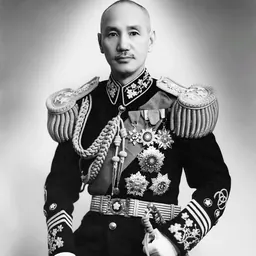

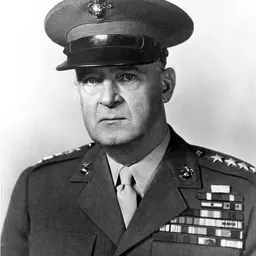

Related people
Same field, nearest in time



Contemporaries
People whose lives overlapped Richard C. Mangrum's

Frequently asked questions
Who was Richard C. Mangrum?
Assistant Commandant of the Marine Corps, Marine aviator - Navy Cross recipient for the Battle of Guadalcanal (1906-1985)
When was Richard C. Mangrum born?
Richard C. Mangrum was born on 27 October 1906 in Seattle.
When did Richard C. Mangrum die?
Richard C. Mangrum died on 28 September 1985 in Southern Pines.
What was Richard C. Mangrum's occupation?
Richard C. Mangrum was a military officer.
What nationality was Richard C. Mangrum?
Richard C. Mangrum was American.
Sources & further reading
· Wikipedia: Richard C. Mangrum
Cite this page
APA: Biography.guide. (2026). Richard C. Mangrum. https://biography.guide/richard-c-mangrum/
MLA: "Richard C. Mangrum." Biography.guide, https://biography.guide/richard-c-mangrum/.
Chicago: "Richard C. Mangrum." Biography.guide. https://biography.guide/richard-c-mangrum/.
Data last updated: 2026-09-20 · Spot an error? Report a correction.
Page generated 2026-09-27 05:24 UTC