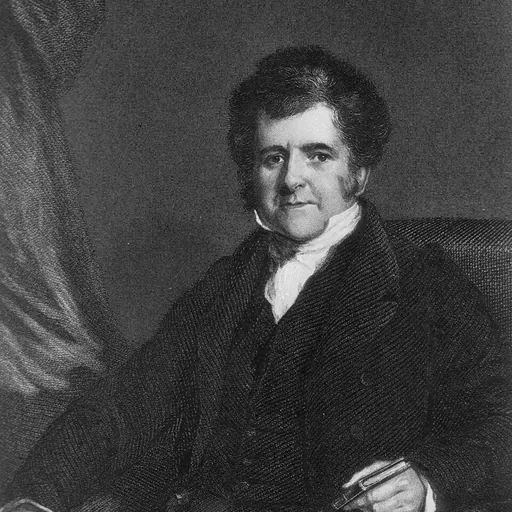
About Richard Bright
Lived 1789 – 1858 (aged 69). Richard Bright was a British physician, pathologist, anatomist and geologist.
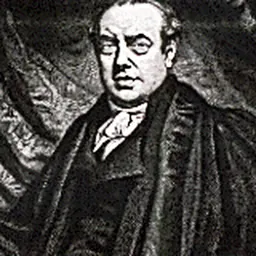
Richard Bright (28 September 1789 – 16 December 1858) was an English physician and early pioneer in the research of kidney disease. He is particularly known for his description of Bright's disease.
Biography Richard Bright was born in Bristol, Gloucestershire, the third son of Sarah and Richard Bright Sr., a wealthy merchant and banker. Bright Sr. shared his interest in science with his son, encouraging him to consider it as a career. In 1808, Bright Jr. joined the University of Edinburgh to study philosophy, economics and mathematics, but switched to medicine the following year. In 1810, he accompanied Sir George Mackenzie on a summer expedition to Iceland where he conducted naturalist studies. Bright then continued his medical studies at Guy's Hospital in London and in September 1813 returned to Edinburgh to be granted his medical doctorate. His thesis was De erysipelate contagioso (On contagious erysipelas).
During the 1820s and 1830s Bright again worked at Guy's Hospital, teaching, practising and researching medicine. There he worked alongside two other celebrated medical pioneers, Thomas Addison and Thomas Hodgkin. His research into the causes and symptoms of kidney disease led to his identifying what became known as Bright's disease. For this, he is considered the "father of nephrology". He was elected a Fellow of the Royal Society in 1821. He was President of the Royal Medical and Chirurgical Society in 1837.
Bright had a special affection for Hungary and in 1815 he lived in Festetics Castle in Keszthely, where there is a large plaque: "To the memory of the English physician scientist and traveller who was one of the pioneers in the accurate description of Lake Balaton.”
He delivered the Lumleian Lectures in 1837 on "Disorders of the Brain" and the Gulstonian lectures in 1833 on the "Function of the Abdominal Viscera" at the Royal College of Physicians.
Death On 11 December 1858, Bright became severely ill due to complications of heart disease and was unable to recover. This address was the filming location of the tailor's shop in the Kingsman films and the plaque can be seen outside.
Artistic recognition
A bust of Bright is held at the Royal College of Physicians of Edinburgh.
Don’t just read it —
keep it.
Full-length biographies made to live with: read them, listen on the way to work, watch them tonight.
- E-book
- Audio
- Video
Instant download · yours to keep · every purchase keeps this site free
Important facts
People in Richard Bright's life
Named in this biography and alive at the same time
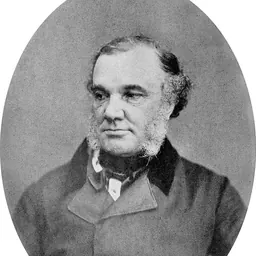
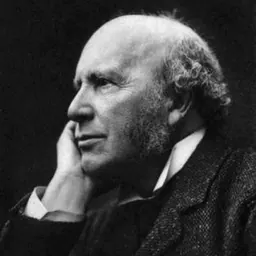
Related people
Same field, nearest in time




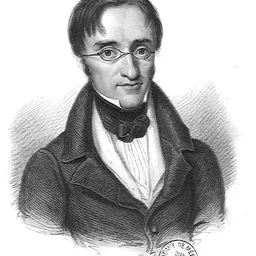
Contemporaries
People whose lives overlapped Richard Bright's




Frequently asked questions
Who was Richard Bright?
British pathologist (1789–1858)
When was Richard Bright born?
Richard Bright was born on 28 September 1789 in Bristol.
When did Richard Bright die?
Richard Bright died on 16 December 1858 in London.
What was Richard Bright's occupation?
Richard Bright was a physician, pathologist, anatomist and geologist.
What nationality was Richard Bright?
Richard Bright was British.
Sources & further reading
· DBpedia: Richard Bright (physician)
Cite this page
APA: Biography.guide. (2026). Richard Bright. https://biography.guide/richard-bright-physician/
MLA: "Richard Bright." Biography.guide, https://biography.guide/richard-bright-physician/.
Chicago: "Richard Bright." Biography.guide. https://biography.guide/richard-bright-physician/.
Data last updated: 2026-09-22 · Spot an error? Report a correction.
Portrait: Wikimedia Commons · author & licence
Page generated 2026-09-27 05:03 UTC