
About Richard Brandt
Lived 1910 – 1997 (aged 86). Richard Brandt was an American philosopher.
Richard Booker Brandt (17 October 1910 – 10 September 1997) was an American philosopher working in the utilitarian tradition in moral philosophy.
Education and career
Brandt was originally educated at Denison University, a Baptist institution he was shepherded to by his minister father, and graduated in 1930 with majors in philosophy and classical studies. In 1933 he earned another B.A., this time in the philosophy of religion, from Cambridge University. He received his Ph.D. in philosophy from Yale University in 1936. He taught at Swarthmore College before becoming Chair of the Department of Philosophy the University of Michigan in 1964, where he taught with Charles Stevenson and William K. Frankena and spent the remainder of his career. The expressivist moral philosopher Allan Gibbard has mentioned his great intellectual debt to Brandt.
Brandt gave the John Locke Lectures at Oxford University in 1974–75, material that later appeared in A Theory of the Good and the Right (1979).
Philosophical work
Brandt wrote Ethical Theory (1959), an influential textbook in the field. He defended a version of rule utilitarianism in "Toward a credible form of utilitarianism" (1963) and performed cultural-anthropological studies in Hopi Ethics (1954). In A Theory of the Good and the Right, Brandt proposed a "reforming definition" of rationality, that one is rational if one's preferences are such that they survive cognitive psychotherapy in terms of all relevant information and logical criticism. He argued also that the morality such rational persons would accept would be a form of utilitarianism.
Brandt believed that moral rules should be considered in sets which he called moral codes. A moral code is justified when it is the optimal code that, if adopted and followed, would maximise the public good more than any alternative code would. The codes may be society-wide standards or special codes for a profession like engineering.
Don’t just read it —
keep it.
Full-length biographies made to live with: read them, listen on the way to work, watch them tonight.
- E-book
- Audio
- Video
Instant download · yours to keep · every purchase keeps this site free
Important facts
People in Richard Brandt's life
Named in this biography and alive at the same time





Related people
Same field, nearest in time
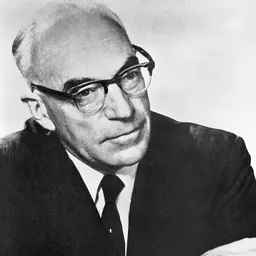
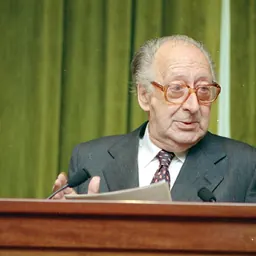



Contemporaries
People whose lives overlapped Richard Brandt's






Frequently asked questions
Who was Richard Brandt?
American philosopher (1910–1997)
When was Richard Brandt born?
Richard Brandt was born on 17 October 1910 in Wilmington.
When did Richard Brandt die?
Richard Brandt died on 10 September 1997 in Ann Arbor.
What was Richard Brandt's occupation?
Richard Brandt was a philosopher.
What nationality was Richard Brandt?
Richard Brandt was American.
Sources & further reading
Cite this page
APA: Biography.guide. (2026). Richard Brandt. https://biography.guide/richard-brandt/
MLA: "Richard Brandt." Biography.guide, https://biography.guide/richard-brandt/.
Chicago: "Richard Brandt." Biography.guide. https://biography.guide/richard-brandt/.
Data last updated: 2026-09-20 · Spot an error? Report a correction.
Page generated 2026-09-27 05:09 UTC