
About Richard Artschwager
Lived 1923 – 2013 (aged 89). Richard Artschwager was an American painter, sculptor, draftsperson and visual artist.
Richard Ernst Artschwager (December 26, 1923 – February 9, 2013) was an American painter, illustrator and sculptor. His work has associations with pop art, conceptual art, and minimalism.
Early life and art Artschwager was born in Washington, D.C., to European immigrant parents. His father, Ernst Artschwager, was a Protestant botanist born in Prussia, who suffered greatly from tuberculosis. His mother, Eugenia (née Brodsky), an amateur artist and designer who studied at the Corcoran School of Art, He was quite successful until 1958, when a fire destroyed his entire studio and all its contents. and to seek a mode of artistic expression more consistent with his identity as a craftsman. During this period, he built a series of small wall objects in wood and Formica, a decorative staple of American kitchens.
At the end of 1963, Artschwager was very productive. Chair, a substitute geometric version, is a work very representative of this period, with the red Formica used to mimic the back rest.
In the mid-'60s, Artschwager made small framed objects from Formica. He sought to incorporate, for the first time, human presence into his sculptures. His paintings on Celotex during this period show essentially opposite characters. His diptychs show his first attempt to incorporate space in the table. From 1964, his paintings depict images of the environment, carefully framed with Formica. He met gallerist Leo Castelli and his gallery director Ivan Karp and, which were enlargements of punctuation marks produced in such media as wood, horsehair, and paint that embody the artist's growing taste for linguistic references. The blps were the sole subject of his first solo exhibit in Europe at the Konrad Fischer Gallery in Düsseldorf in 1968.
At the end of 1968, he participated in the annual exhibit of sculpture at the Whitney Museum of American Art.
In 1970, he participated in the group exhibit Information at The Museum of Modern Art.
Architectural works In the 1970s, Artschwager began to work on architectural motifs. During the first half of the decade, he employed two processes—fragmentation and expansion. His theme was domestic interiors. He also included associations of various styles of furniture, gradually moving away from the rudimentary nature of them.
During the years 1971, 1972 and 1973, he explored the theme of very bourgeois interiors, which gave him a sense of stability while working on other paintings during this time of instability. Artschwager included the dissolution of any visual design on six Celotex paintings in 1972, In the 1990s Artschwager made an extensive series of sculptures in the form of shipping crates. Of Artschwager's body of work and recent shows, art critic John Yau notes that the artist has always been "interested in domesticity—tables, chairs—right from the first things ... paintings that were about interiors, houses, but always domesticity was held at a kind of arm's length, and now it seems to me something changed in this most recently completed body of work, which has people in it; it's a different view of domesticity and time."
Artschwager's "Osama" painting of Osama bin Laden was included in his 2003 exhibition at Gagosian Gallery in London, however, it was not reproduced in the catalog because of its “potentially politically incendiary nature.” The painting was reproduced in a French catalog from Domaine de Kerguehennec (2003) opposite a portrait of George W. Bush. that later traveled to Institute of Contemporary Art, Philadelphia; Contemporary Arts Museum, Houston; and La Jolla Museum of Contemporary Art, California, through 1980. In 1982, the Van Buren/Brazelton/Cutting Gallery in Cambridge, MA put on a show of his drawings from the "Door Window Table Basket Mirror Rug" series. The Whitney Museum of American Art produced its second Artschwager retrospective in 1988–89, at the time he had been linked to the new Neo-Geo movement. Artschwager's work has since been the subject of many important surveys, including the Centre Pompidou, Paris (1989); Neues Museum, Nuremberg, Germany (2001, traveled to Serpentine Gallery, London); Museum of Applied Arts, Vienna (2002); Museum of Contemporary Art, North Miami (2003); Deutsche Guggenheim, Berlin (2003); Kunstmuseum Winterthur (2003), and Kent Fine Art (2004).
Collections Artschwager's work is included in many museum collections worldwide, including the Museum of Modern Art, New York; Art Institute of Chicago; Museum Ludwig, Cologne; Museum für Moderne Kunst, Frankfurt; Lehmbruck Museum, Duisburg; Kunstmuseum Basel; and Fondation Cartier pour l'Art Contemporain, Paris.
Richard Artschwager estate is represented by Xavier Hufkens, Brussels, Sprüth Magers, Berlin, and Gagosian Gallery, New York.
Personal life Artschwager lived and worked in New York City with his wife, Ann (Sebring). The couple met in 1991, while Ann was working at the Mary Boone Gallery.
Artschwager died February 9, 2013, in Albany, New York after a stroke he had weeks earlier. He was 89. He was survived by his wife; his children Eva, Clara and Augustus Theodore, and by his sister, Margarita Kay.
Don’t just read it —
keep it.
Full-length biographies made to live with: read them, listen on the way to work, watch them tonight.
- E-book
- Audio
- Video
Instant download · yours to keep · every purchase keeps this site free
Important facts
People in Richard Artschwager's life
Named in this biography and alive at the same time
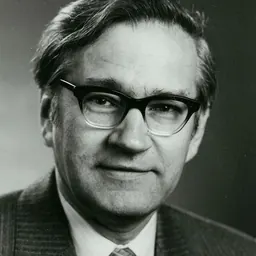

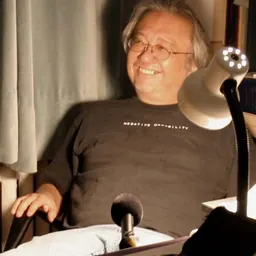





Related people
Same field, nearest in time

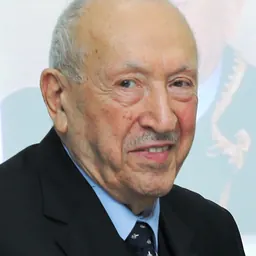
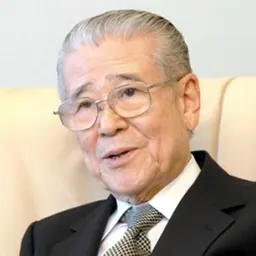
Contemporaries
People whose lives overlapped Richard Artschwager's




Frequently asked questions
Who was Richard Artschwager?
American artist (1923-2013)
When was Richard Artschwager born?
Richard Artschwager was born on 26 December 1923 in Washington, D.C..
When did Richard Artschwager die?
Richard Artschwager died on 9 February 2013 in Albany.
What was Richard Artschwager's occupation?
Richard Artschwager was a painter, sculptor, draftsperson and visual artist.
What nationality was Richard Artschwager?
Richard Artschwager was American.
Sources & further reading
· Wikipedia: Richard Artschwager
· DBpedia: Richard Artschwager
Cite this page
APA: Biography.guide. (2026). Richard Artschwager. https://biography.guide/richard-artschwager/
MLA: "Richard Artschwager." Biography.guide, https://biography.guide/richard-artschwager/.
Chicago: "Richard Artschwager." Biography.guide. https://biography.guide/richard-artschwager/.
Data last updated: 2026-09-20 · Spot an error? Report a correction.
Page generated 2026-09-27 04:59 UTC