
About Richard Adolf Zsigmondy
Lived 1865 – 1929 (aged 64). Richard Adolf Zsigmondy was an Austrian physicist, chemist, inventor and professor.
Richard Adolf Zsigmondy (; 1 April 1865 – 23 September 1929) was an Austrian-born chemist. He was known for his research in colloids, for which he was awarded the Nobel Prize in Chemistry in 1925, as well as for co-inventing the slit-ultramicroscope, and different membrane filters. The crater Zsigmondy on the Moon is named in his honour.
Biography
Early years Zsigmondy was born in Vienna, Austrian Empire, to a Hungarian gentry family. His mother Irma Szakmáry, a poet born in Martonvásár, and his father, Adolf Zsigmondy Sr., a scientist from Pressburg (Pozsony, today's Bratislava) who invented several surgical instruments for use in dentistry. Zsigmondy family members were Lutherans. They originated from Johannes Sigmondi (1686–1746, Bártfa, Kingdom of Hungary) and included teachers, priests and Hungarian freedom-fighters. Richard was raised by his mother after his father's early death in 1880, and received a comprehensive education. He enjoyed hobbies such as climbing and mountaineering with his siblings. His elder brothers, Otto (a dentist) and Emil (a physician), were well-known mountain climbers; his younger brother, Karl Zsigmondy, became a notable mathematician in Vienna. In high school, Richard developed an interest in natural science, especially in chemistry and physics, and experimented in his home laboratory.
He began his academic career at the University of Vienna Medical Faculty, but soon moved to the Technical University of Vienna, and later to the Ludwig-Maximilians-Universität München, to study chemistry under Wilhelm von Miller (1848–1899). At the Ludwig-Maximilians-Universität München, he conducted research on indene and received his PhD from the University of Erlangen in 1889.
Career In 1885, Zsigmondy published his very first article as a joint publication with his Viennese professor Rudolf Benedikt on a method of determining glycerin. His 1887 article Neue Lüster und Farben auf Glas (about colours on glass) marked the beginning of a research area on which he would work for another 30 years. There he also completed his habilitation in 1893.
Zsigmondy left Schott Glass in 1900, but remained in Jena as private lecturer to conduct his research. Together with the optical instrument manufacturer Zeiss, he developed the slit ultramicroscope. His scientific career continued in 1908 at the University of Göttingen, where he stayed for the rest of his professional career as professor of inorganic chemistry. In 1925, Zsigmondy received the Nobel Prize for Chemistry for his work on colloids and the methods he used, such as the ultramicroscope upon which based his investigation on the Purple of Cassius.
Before Zsigmondy finished his PhD thesis in organic chemistry, he published research on colouring glass with silver salts and dissolved silver particles, which he recovered by dissolving the glass in hydrofluoric acid.
During his stay in Graz, Zsigmondy accomplished his most notable research work, on the chemistry of colloids. The exact mechanism which yields the red colour of the Cranberry or Ruby glass was a result of his studies of colloids.
In later years he worked on gold hydrosols and used them to characterize protein solutions. While in Jena, he developed the slit ultramicroscope together with Henry Siedentopf. After moving to Göttingen, Zsigmondy improved his optical equipment for the observation of finest nanoparticles suspended in liquid solution. As a result, he introduced the immersion ultramicroscope in 1912.
Together with Wilhelm Bachmann, Zsigmondy developed a new membrane filter (1916). He later transferred his patents to a company established by him, other shareholders and Sartorius AG which was incorporated to Sartorius in the late 1970s.
Private life
In 1903, Zsigmondy married Laura Luise Müller, with whom he had two daughters, Annemarie and Käthe.
Richard Zsigmondy died due to his arteriosclerosis only a few months after retiring from his position at the University of Göttingen in early March.
He was a cousin of the architect Frigyes Schulek, whose mother was Auguszta Zsigmondy. He is also related to the violinist Dénes Zsigmondy.
Ancestry
+Zsigmondy Richard Zsigmondy, Vienna (A) 1862–Göttingen (D) 1929 scientist, Nobel Prize Winner in chemistry 1925 Father:Adolf ZsigmondyPressburg/ Pozsony, (HUN) 1816– Vienna (A) 1880 Grandfather:Sámuel ZsigmondyPilis, (HUN) 1788–1833 Pressburg/ Pozsony (HUN) Great-grandfather:G. Zsigmondy Körmöcbánya (HUN) 1748-Pilis (HUN) 1799 Great-great-grandfather:J. Zsigmondy Bártfa (HUN) ca 1700-Körmöcbánya(HUN) 1765 Great-great-grandmother:Zsuzsanna KossovitsBesztercebánya (HUN) ? -Lónyabánya (HUN) 1790 Great-grandmother:Judit Polereczky Alberti (Now Albertirsa) (HUN) 1756–1833 Pressburg/Pozsony (HUN) Grandmother:Friderika Fábry1793 Pressburg/ Pozsony (HUN)–1868 Pressburg/Pozsony (HUN) grandmother's father:István Fábry Hrussó (HUN) 1751 – Pressburg/ Pozsony (HUN) 1817 grandmother's mother:Terézia Bayer Mother:Irma von SzakmáryMartonvásár (HUN) 1835Vienna 1900 Mothers father:N.N. von Szakmáry(1818–1888) Mother's grandfather :N.N.: Mothers mother:Mária Gegus von Kisgessény ? 1800 Pressburg/ Pozsony (HUN) 18 September 1883 N.N. :Sámuel Gegus
Honours Nobel Prize in Chemistry (1925, awarded in 1926) the Austrian Academy of Sciences and academies/academic societies in Valencia and Harlem. Graz University of Technology (1928), and the medical faculty of the University of Königsberg.
Selected publications
alt=Title page to Zur Erkenntnis der Kolloide. Uber irreversible Hydrosole und Ultramikroskopie (1905) Title page to Zur Erkenntnis der Kolloide. Uber irreversible Hydrosole und Ultramikroskopie (1905)
Don’t just read it —
keep it.
Full-length biographies made to live with: read them, listen on the way to work, watch them tonight.
- E-book
- Audio
- Video
Instant download · yours to keep · every purchase keeps this site free
Important facts
People in Richard Adolf Zsigmondy's life
Named in this biography and alive at the same time

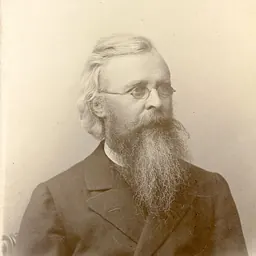



Related people
Same field, nearest in time
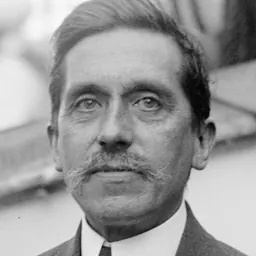
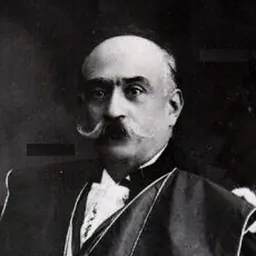

Contemporaries
People whose lives overlapped Richard Adolf Zsigmondy's
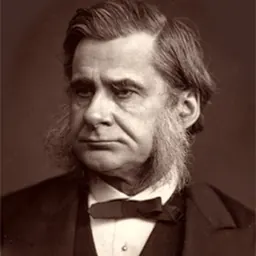


Frequently asked questions
Who was Richard Adolf Zsigmondy?
Austrian chemist (1865-1929)
When was Richard Adolf Zsigmondy born?
Richard Adolf Zsigmondy was born on 1 April 1865 in Vienna.
When did Richard Adolf Zsigmondy die?
Richard Adolf Zsigmondy died on 23 September 1929 in Göttingen.
What was Richard Adolf Zsigmondy's occupation?
Richard Adolf Zsigmondy was a physicist, chemist, inventor and professor.
What nationality was Richard Adolf Zsigmondy?
Richard Adolf Zsigmondy was Austrian.
Sources & further reading
· Wikipedia: Richard Adolf Zsigmondy
· DBpedia: Richard Adolf Zsigmondy
Cite this page
APA: Biography.guide. (2026). Richard Adolf Zsigmondy. https://biography.guide/richard-adolf-zsigmondy/
MLA: "Richard Adolf Zsigmondy." Biography.guide, https://biography.guide/richard-adolf-zsigmondy/.
Chicago: "Richard Adolf Zsigmondy." Biography.guide. https://biography.guide/richard-adolf-zsigmondy/.
Data last updated: 2026-09-20 · Spot an error? Report a correction.
Page generated 2026-09-27 05:28 UTC