
About Rice Owen Clark
Lived 1816 – 1896 (aged 79–80). Rice Owen Clark was a New Zealand businessperson.
Rice Owen Clark (1816 – 16 June 1896) was an English settler in New Zealand, establishing a brickworks at Hobsonville that was the origin of Crown Lynn and Ceramco.
Biography Clark was baptised in Great Marlow, Buckinghamshire, England, on 19 September 1816, the son of Josiah and Ann Clark and the brother of engineers Edwin Clark and Josiah Latimer Clark. Clark worked as an underwriter for Lloyd's. He emigrated to New Zealand on the Gertrude, arriving at Port Nicholson on 31 October 1841. Clark may have emigrated to escape a marriage, leading to him being charged with bigamy by the Supreme Court. Clark was found not guilty of the charge. Clark worked as a sawyer, Māori interpreter, land surveyor before eventually running a church school in Wellington, after it was destroyed by an earthquake in 1848 he moved to Auckland. After moving to Auckland Clark initially worked as a clerk. Topographic map of Hobsonville. Clark established his pottery works at Limeburners Bay. In 1854 Clark bought land in Hobsonville, becoming one of the first European settlers in the area. Originally he try his hand at farming, but finding the land needing heavy drainage, he made his own field tiles to help, using clay, tree branches and a hot fire; the resulting tiles facilitated the effective draining of his fields. Seeing his success, neighbouring farmers began asking him if he would make field tiles for their property's, and thus Clark's affiliation with clay work began and soon after outshone his farming prospects. It was there that he set up a prosperous business making drain pipes, bricks and tiles for the increasing number of settlers. Much of the clay he used was being sourced from Limeburners Bay, which is now an archaeological site. In the 1860s he was importing equipment from England to keep up with demand. In 1876 his son, Rice Owen Clark II, joined the business. By the 1880s the business had an office on Customs Street and its own barge for transporting goods.
Clark died at his home in Hobsonville on 16 June 1896, and was buried at Hobsonville Cemetery.
Legacy In 1908 Clark's Potteries became R.O. Clark Limited. His great-grandson, Tom Clark, inherited the business setting up a ceramics company which eventually became known as Crown Lynn Potteries Ltd.
Don’t just read it —
keep it.
Full-length biographies made to live with: read them, listen on the way to work, watch them tonight.
- E-book
- Audio
- Video
Instant download · yours to keep · every purchase keeps this site free
Important facts
People in Rice Owen Clark's life
Named in this biography and alive at the same time


Related people
Same field, nearest in time

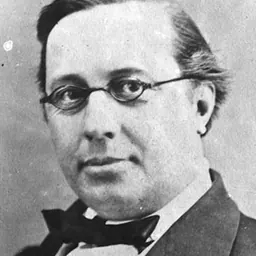

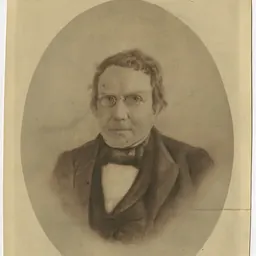
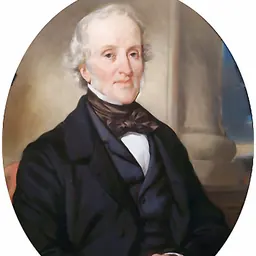
Contemporaries
People whose lives overlapped Rice Owen Clark's



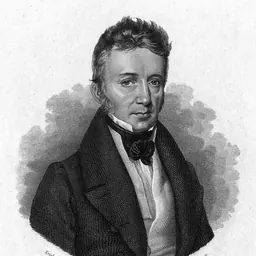
Frequently asked questions
Who was Rice Owen Clark?
19th century English settler in New Zealand
When was Rice Owen Clark born?
Rice Owen Clark was born in 1816 in Marlow.
When did Rice Owen Clark die?
Rice Owen Clark died on 16 June 1896 in Hobsonville.
What was Rice Owen Clark's occupation?
Rice Owen Clark was a businessperson.
What nationality was Rice Owen Clark?
Rice Owen Clark was New Zealand.
Sources & further reading
Cite this page
APA: Biography.guide. (2026). Rice Owen Clark. https://biography.guide/rice-owen-clark/
MLA: "Rice Owen Clark." Biography.guide, https://biography.guide/rice-owen-clark/.
Chicago: "Rice Owen Clark." Biography.guide. https://biography.guide/rice-owen-clark/.
Data last updated: 2026-09-24 · Spot an error? Report a correction.
Page generated 2026-09-27 05:05 UTC