
About Ricardo Arjona
Born 1964. Ricardo Arjona is a Guatemalan musician, basketball player, singer-songwriter, actor and singer.
Edgar Ricardo Arjona Morales (born 19 January 1964), known as Ricardo Arjona , is a Guatemalan singer and songwriter. He is one of the most successful and best-selling Latin American artists of all time, with more than 20 million records sold. His music ranges from ballads to Latin pop, rock, pop rock, Cuban music, and more recently a cappella performances and a mixture of Tejano music and Norteño music, and Latin sounds. Arjona is noted for his lyrical style, and often addresses topics such as love, sexuality, violence, racism and immigration.
As of 2016, Arjona had released sixteen studio albums, one live album, nine compilation albums and forty-three singles. Four Arjona albums reached number one on the Billboard Top Latin Albums, and ten reached number one in Argentina. Four albums had charted on the Billboard 200. Four singles had reached number one on the Billboard Latin Songs chart and seven had done the same on Latin Pop Songs. His work earned him numerous awards and accolades, including one Grammy Award, one Latin Grammy Award, the Latin Heritage Award as well as awards from the American Society of Composers, Authors and Publishers; a silver and golden torch and two silver seagulls from the 2010 Viña del Mar International Song Festival, two Billboard Latin Music Awards, and a "Latin Trajectory of the Year" Award at the Orgullosamente Latino Awards of 2010.
Early life Edgar Ricardo Arjona Morales was born on 19 January 1964, in Jocotenango, Guatemala, to parents Ricardo Arjona Moscoso and Mimi Morales de Arjona. He spent most of his childhood in Guatemala City, where he began his musical instruction. At age twelve, he participated in the contest "Festival Infantil Juventud 74" with "Gracias al Mundo", a song composed by his father, finally winning the event. Although he initially enrolled in architecture and engineering at the Universidad de San Carlos de Guatemala (USAC), he graduated with a degree from the School of Communication Sciences.
Sports career
Arjona was a talented basketball player who played for Leones de Marte and TRIAS. He toured Central America as a member of the Guatemala national basketball team. Until 2005, he held the record for the most points scored (79) in a single game by a Guatemalan. He also taught at a primary school (called Santa Elena III), This earned him a visit from a Ministry of Education representative, who was sent to evaluate his pupils. The representative found that the students' education was actually above average. and distributed by PolyGram, and released his debut album Déjame Decir Que Te Amo in 1985. The label attempted to portray Arjona as a stereotypical Latin lover. The title track was released as a single, "Déjame Decir Que Te Amo". This album failed to chart, but received moderate praise from critics, with Allmusic awarding it three stars out of five. Because of his negative experience recording the album and its commercial failure, he decided to abandon music to teach school. He later covered the song in his compilation album, Trópico (2009), alongside Melina León. Animal Nocturno, Arjona's fourth studio album, was released in 1993. The album contained the hit singles "Mujeres" (No. 6 on Latin Songs) and "Primera Vez" (No. 6 on Latin Songs) Animal Nocturno sold 500,000 copies in 1994, and carried Arjona to fame along with his work on the Mexican telenovela Alcanzar Una Estrella, which allowed him to showcase his songwriting and singing skills. His fourth and fifth studio albums were the best-selling of his career.
In 1996, he released his sixth studio album, Si El Norte Fuera El Sur. This was the first album in which Arjona ventured beyond the theme of love to explore nationalism and globalization, among other sociopolitical topics. Its four singles were "Si El Norte Fuera El Sur" (No. 9 on Latin Pop Songs), Billboard named it the Rock Album of the Year in 1997. Si El Norte Fuera El Sur received multiple Platinum certifications in the United States and Argentina.
In 1998, he released his seventh studio album, Sin Daños a Terceros. Terry Jenkins from Allmusic, on his review of the album, awarded it 4 stars, writing that "Sin Daños a Terceros continues Ricardo Arjona's streak of accomplished, affecting albums that spotlights both his melodic skills and his sharp social consciousness." His fourth consecutive album to receive critical success, Sin Daños a Terceros also enjoyed commercial success, debuting at No. 6 on Top Latin Albums, the first to reach the top 10,
2000–2005: Galería Caribe, world tour, Santo Pecado, hiatus and Adentro Arjona's eighth studio album, Galería Caribe was preceded by the single "Cuándo", which became a commercial success and reached No. 1 on both Top Latin Songs and Latin Pop Songs. The album became his first to chart on the Billboard 200, peaking at No. 136, while charting at No. 1 on Top Latin Albums and Latin Pop Albums. Argentina
Fans and critics noted connections between the lyrics of "Mesías" and the September 11 attacks on the World Trade Center, resulting in an FBI investigation. Listen filename = Arjona_Mesias.ogg title = "Mesías" description = A sample of "Mesías", displaying the first chorus of the controversial song, investigated by the FBI. Some critics argued that it was a "metaphorical attack" on capitalism and imperialism, named as "classic Arjona targets." The singer later commented that "Mesías" had no relationship to the attacks, and that the lyrics were pure coincidence. He further stated the FBI had never spoken directly to him, but instead to somebody on his team. The album contained songs from all his past studio albums. Critical reception for the album was mixed. Birchmeier noted that it was "a misleading entry point into Arjona's catalog." Despite this, the album received a Gold certification in Mexico. In an interview, the singer commented that he first "tested" Torres by sending him the "hookiest and darkest tracks" on the album, "Acompañame A Estar Solo" and "Iluso". Arjona further commented that Adentro was "a very representative and tremendously complete album," adding that "having different producers made it rich in possibilities."
2006–2007: Adentro Tour and Quién Dijo Ayer In 2006, Arjona started the first leg of his world tour, named the Adentro Tour. The tour resumed in 2007 for a second leg, in which he visited more countries. Approximately two million people attended the performances. Arjona's manager told Argentinian newspaper Clarín that "[the singer] had the idea of inviting Roberto [Sandro] for his album, he [Sandro] showed enthusiasm and manifested the same degree of appreciation to Arjona. It seemed to him that he [Arjona] was an artist who proclaims the same values he proclaimed." The second disc contained remastered versions of the hits on the first disc, but in their original versions. It was the second time Arjona collaborated with Torres.
The album became a critical and commercial success. Jason Birchmeier commented that "while only a couple of the new versions depart stylistically from the originals, the contemporary productions breathe new life into these songs, which should be well known by longtime fans", and reaching double Platinum in Argentina Two singles were released from the album. The first, "Quién", a previously unreleased song produced by Torres, failed to reach the top 20 on Latin Songs, standing at No. 21, but reached No. 4 on the Latin Pop Songs chart. "Quiero", the second single, reached No.12 on the Latin Songs chart, and No.8 on the Latin Pop Songs chart. Iñigo Zabala, chairman of Warner Music Latin America, said "He's an artist that fits perfectly with our company," and that "We are a label that has a major catalog of songwriters and quality pop and rock from the likes of Maná, Alejandro Sanz, Laura Pausini, and now, Arjona." the United States, Spain, Argentina, Venezuela, Colombia, Guatemala, and several other countries. It debuted at No. 1 on Top Latin Albums, becoming his second chart-topper on that list, and sold more than one million copies worldwide. The album received a Grammy Award nomination for Best Latin Pop Album and a Latin Grammy Award nomination for Best Singer-Songwriter Album. The album received positive critical response. Birchmeier gave it three-and-a-half stars out of five, saying that "More typical than exceptional for Arjona at this point in his career, 5to Piso isn't as grand an album as his past few... Yet it's a great album all the same, particularly the opening run of songs that culminates with 'Cómo Duele', and it finds Arjona still at the top of his craft."
While Warner Music released his new studio album, Sony Music released a compilation album, Simplemente Lo Mejor. This led to speculation that the labels were in a fight to win Arjona's fanbase and sales. Simplemente Lo Mejor contained hits from past albums, namely Sin Daños a Terceros, Si El Norte Fuera El Sur, among others. This compilation went Gold in Mexico, Spain, Argentina, Guatemala, Colombia, Venezuela and Mexico, among many other countries in Latin America, and ended on 18 June 2010.
Although many believe is a treshed topic, it isn't for a Cuban, be it on the island or Florida. The status of this dispute hasn't changed since 1959 and I've never seen something as disgusting as a rivality between people created by politics. Chávez can fight with Uribe, Fidel with Obama, but does this have to do with two third-generation cousins that inherit an enmity from a politic matter[?]. —Ricardo Arjona in a discussion about the political theme of "Puente". He received in 2010 the "Latin Tour of the Year" Billboard Latin Music Award for the tour. His performance was followed by Colombian singer Fanny Lu. One hour after Lu's performance, a 8.8 magnitude massive earthquake affected the south-central regions of Chile. On social networks, Arjona was jokingly blamed, with remarks such as "earthquakes go where he goes", making reference also to the earthquake felt in Mexico after the singer arrived. After the tour, Arjona announced his twelfth studio album, Poquita Ropa, which was released on 24 August 2010. It was preceded by the genre-mixing track "Puente", an ode to Havana, Cuba's largest and capital city. The song failed to break in the upper tier of Billboard charts, and was reportedly prohibited in Cuba. The album became his third to debut or reach No. 1 on the Top Latin Albums chart.
The album marked a change in Arjona's sound, which he called a "stripped-down version" of his music. Birchmeier gave the album a somewhat positive review, saying that it was a "stripped-down acoustic effort" yet considered it "impressive". and "Marta", an autobiographical song whose music video stars Edith González. Both, like the lead single, failed to gain much airplay in the U.S., and charted poorly.
2011–2013: Independiente, Metamorfosis and world tour Arjona released his thirteenth studio album, Independiente, on 4 October 2011. It became his fourth number-one on the Top Latin Albums chart the week ending 22 October 2011; and within a week went Gold in Chile, United States and Mexico; and Platinum in Venezuela and Argentina. Independiente was his first release as an independent artist, appearing on his Metamorfosis label, a company he created to refocus his career. The album was distributed by Warner. Billboard noted that although other groups have decided to go independent after working with major record labels, Arjona was by far the most important artist in Latin pop to do so. By the end of 2012, the album sold more than 500,000 copies in the United States and 4,000,000 copies worldwide.
"El Amor" was released in August 2011 as the lead single from Independiente; it managed to top both the US Latin Songs and Latin Pop Songs charts. "Fuiste Tú", a collaboration with Guatemalan singer Gaby Moreno, followed as second single in February 2013; it reached number two on the Latin Songs chart, and topped the Latin Pop Songs chart. On May, Arjona released the music video for "Mi Novia Se Me Está Poniendo Vieja." However, "Te Quiero" was released as third single in July 2012, and it became the second song off the album to top the Latin Songs chart. This made Independiente Arjona's first album to ever have two number-one hits on that chart. The song also topped the Latin Pop Songs chart, becoming the third song off the album to do so. "Si Tu No Existieras" was released in November 2012, and managed to peak at number 14 in Mexico.
To promote the album, Arjona embarked on the Metamorfosis World Tour. The show, his first since 2009's Quinto Piso Tour, comprised five legs across North and Latin America. It ran from January 2012 until March 2013 and included 102 shows in 18 countries, with an estimated attendance of over one million people.
Personal life In 1988, during his time in Buenos Aires, Argentina, he met Puerto Rican Leslie Torres with whom he began a long-distance relationship as Arjona had decided to stay in Mexico for a few years. Leslie occasionally visited him, until 1992 when they got married in an impromptu ceremony in Las Vegas. Before arriving in Las Vegas he decided to try his luck in a casino playing blackjack and lost almost all the money he had with him. Upon arriving in Las Vegas after settling in a hotel, with the little money he had left he tried his luck again at gambling and made a fortune.
The year they married, Torres gave birth to their daughter, Adria, who currently works as an actress; two years later in 1994, their son Ricardo was born. After ten years of marriage, they announced their separation. Although they were legally separated as of 2005, for 3 years they fought for custody of their children during which she accused him of violence.
In 2010, began his current romantic relationship with Venezuelan model Deisy Arvelo, with whom he had his third child, Nicolás Arjona Arvelo. On September 27 of that same year his father Arjona Moscoso died at the age of 78. Three years later, on December 4, 2013, his mother Nohemí Morales died at the age of 71.
Music and style Marc Anthony sang alongside Arjona on the salsa version of "Historia de Taxi". Arjona's primary musical style is Latin pop. He usually sings without the help of featured or additional singers. His style varied over the years, as Arjona took risks to keep his music from becoming stale. In contrast to the ballad-laden Déjame Decir Que Te Amo, on the following two albums Arjona experimented with a range of pop/rock styles. Animal Nocturno intersperses energetic rock songs among heartfelt ballads, and the instrumentation is heavy on guitar, synthesizer, and drums. On Historias, each song is stylistically distinct and the instrumentation is varied. Around two dozen instruments were used on the album, including horns, piano and Hammond B-3, and strings. On Si El Norte Fuera El Sur, he crafted a relatively low-key effort characterized by intimate songs about love, culture, and politics. Most of the songs were written in 1995 while Arjona was touring and are performed acoustically with Caribbean touches. Besides a couple of rockers, the songs are fairly even in tone and tempo. On Santo Pecado, Arjona explored the use of symphonic sounds on his ballads, amidst a couple of rock songs stylistically similar to those on Sin Daños a Terceros. This album included the song "La Nena (Bitácora de un Secuetro)", in which Arjona relates the story of a girl who is kidnapped by her uncle. Then, in 2005, Arjona adopted new sounds in Adentro. Gutierrez considered the instrumentation, performance, and overall sonic palette to be "minimalist" and "unassuming". On this album, Arjona included more Latin sounds, Mexican and Tejano music on "Mojado", a song about immigration; merengue and Colombian tones on "Adiós Melancolía", and some on "No Te Cambio Por Nada".
On 2007's Quién Dijo Ayer, Arjona reworked past songs to fit a new style. For example, he gave "Si El Norte Fuera El Sur" a ska beat, and performed with the aid of Panteón Rococó. He transformed "Historia de Taxi" into a salsa song, with the help of American singer Marc Anthony who commented that "It's been interesting to work with two figures from different music worlds on the interest of making good music." He further stated that "every time a reunion of this kind happens, it's a reason to celebrate." "Quiero" and "Espantapájaros" are the other two new songs on the album.
Paquita la del Barrio sang along with Arjona on ranchera "Ni Tu Ni Yo". 5to Piso is mainly driven by piano and strings. Exceptions are "La Bailarina Vecina", crafted with pure orchestral arrangements; and "Ni Tú Ni Yo", a Ranchera style song featuring Paquita la del Barrio. On 5to Piso, Arjona commented that he tried to recoup the freshness of his first albums, saying that he "tried to reconcile a little with the Ricardo Arjona from the first albums to let out some of that freshness that makes so good to the songs." Poquita Ropa offered a drastic change in which Arjona minimized the number of instruments. The result was a set of a cappella performances. Arjona commented about this album that "music and women look better with little clothes." Birchmeier gave the album a somewhat positive review, saying that it was a "stripped-down acoustic effort", considering it "impressive". He also commented that Poquita Ropa "finds Arjona at his most naked, backed by spare arrangements of acoustic guitar, piano, and Hammond B-3 along with occasional touches of strings, woodwinds, and chorus vocals." The third mixes salsa and merengue, with Cuban influences. "Puente" resembles Arjona's work on Galería Caribe.
Discography
Déjame Decir Que Te Amo (1986) Jesús, Verbo No Sustantivo (1988) Del Otro Lado del Sol (1991) Animal Nocturno (1993) Historias (1994) Si El Norte Fuera El Sur (1996) Sin Daños a Terceros (1998) Galería Caribe (2000) Santo Pecado (2002) Adentro (2005) 5to Piso (2008) Poquita Ropa (2010) Independiente (2011) Viaje (2014) Circo Soledad (2017) Blanco (2020) Negro (2021) Seco (2025)
Awards and nominations
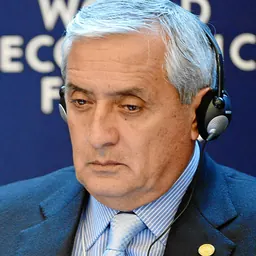
In 1993, he received the Rafael Álvarez Ovalle Order from the then President of Guatemala, Ramiro de León Carpio, for his international accomplishments. At USAC a library hall bears his name. In 2017, Arjona received the Lifetime Achievement Award at the 2017 Billboard Latin Music Awards. Arjona is also a recipient of the Order of the Quetzal, Guatemala's highest condecoration. In August 2015, Arjona returned the Order of the Quetzal, with which he had been bestowed upon by president Otto Pérez Molina in 2013, and demanded Pérez Molina's resignation, amid accusations of corruption.
Don’t just read it —
keep it.
Full-length biographies made to live with: read them, listen on the way to work, watch them tonight.
- E-book
- Audio
- Video
Instant download · yours to keep · every purchase keeps this site free
Important facts
People in Ricardo Arjona's life
Named in this biography and alive at the same time






Related people
Same field, nearest in time


Contemporaries
People whose lives overlapped Ricardo Arjona's


Frequently asked questions
Who is Ricardo Arjona?
Guatemalan musician
When was Ricardo Arjona born?
Ricardo Arjona was born on 19 January 1964 in Jocotenango.
What is Ricardo Arjona's occupation?
Ricardo Arjona is a musician, basketball player, singer-songwriter, actor and singer.
What nationality is Ricardo Arjona?
Ricardo Arjona is Guatemalan.
Sources & further reading
Cite this page
APA: Biography.guide. (2026). Ricardo Arjona. https://biography.guide/ricardo-arjona/
MLA: "Ricardo Arjona." Biography.guide, https://biography.guide/ricardo-arjona/.
Chicago: "Ricardo Arjona." Biography.guide. https://biography.guide/ricardo-arjona/.
Data last updated: 2026-09-20 · Spot an error? Report a correction.
Page generated 2026-09-27 05:22 UTC