
About Riane Eisler
Born 1931. Riane Eisler is an American and Austrian anthropologist, historian, sociologist, human rights defender, non-fiction writer and peace and conflict researcher, known for The Chalice and the Blade.
Riane Tennenhaus Eisler (born July 22, 1931) is an Austrian-born American systems scientist, futurist, attorney, and author who writes about the effect of gender and family politics historically on societies, and vice versa. She is best known for her 1987 book, The Chalice and the Blade, in which she coined the terms "partnership" and "dominator".
Eilsler has written and been interviewed in over 500 articles. Her work is covered in publications ranging from Scientific American, Behavioral Science, Futures, Political Psychology, The Christian Science Monitor, Challenge, and UNESCO Courier to Brain and Mind, Human Rights Quarterly, International Journal of Women's Studies, and World Encyclopedia of Peace, as well as chapters for books published by trade and university presses.
Early life and education Eisler was born in Vienna in 1931. In 1939, her family fled from the Nazis to Cuba. She and her parents lived in a slum in Havana for seven years, after which they emigrated to the United States, to Miami, New York, and Chicago before finally settling in Los Angeles.
Eisler has degrees in Sociology and Law from the University of California. She was part of the Phi Beta Kappa society.
Career Eisler is an attorney, legal scholar, systems scientist, and author.
Writing Eisler has published thirteen books. Her first book, published in 1977, was Dissolution: No-Fault Divorce, Marriage, and the Future of Women. Her second book, published in 1979, was on the Equal Rights Amendment.
In 1987, Eisler published her third book, The Chalice and the Blade, which drew on ten years of multidisciplinary research. Ashley Montagu called the book "The most important book since Darwin's Origin of Species."
In 1995, Eisler published Sacred Pleasure, which Gloria Steinem called "Eisler's most stunning, far-reaching, and practical gift – both to readers and to a world that must change or perish."
In 2000, she published a memoir, The Gate.
In 2002, Eisler published The Power of Partnership. Marianne Williamson said that the book provides "the map to a world that works for all of us."
In 2019, Eisler Published Nurturing Our Humanity. Jennifer Siebel Newsom described by it saying it "outlines the roadmap for a world that leads with partnership – where empathy, care, and community are valued above all, and each can fulfill our full human potential."
Eisler was the Editor-in-Chief of the Interdisciplinary Journal of Partnership Studies at the University of Minnesota.
The children's troubadour Raffi, called Eisler's book on education, Tomorrow's Children "a pathway toward a child-honoring society."
The Center for Partnership Systems In 1987, in partnership with her late husband David Elliot Loye, Eisler founded The Center for Partnership Studies, which was later renamed The Center for Partnership Systems. The organization is "dedicated to research, education, and building tools to construct economic and social systems that support human beings and the planet that sustains us."
As of 2024, the Center acts as a digital hub of resources, tools, connections, and community focused on partnership-oriented social change.
Thought
Partnership vs. domination In The Chalice and the Blade (1987) Eisler coined the terms "partnership" and "domination" to describe two underlying forms of society. These forms transcend conventional social categories like right/left, religious/secular, Eastern/Western, capitalist/socialist.
Eisler argued that partnership-oriented societies are characterized by peace, equity, gender equality, sustainability, and caring.
Eisler's research argues that the switch from partnership to domination led to a shift from in-group versus out-group attitudes. Group hierarchy and relationships were now based on factors such as sex, race, and other differences. Violence was ultimately the basis for maintaining these hierarchies, and was built into the system. The "conquest of nature," massive inequality, and devaluing the work of caring for people started to become common practice. The work of caring for our natural life-support systems was also undervalued, taken for granted, and removed from the money economy. Domination systems also normalize violence – from abusive authoritarian families, to the promotion of violence in modern politics, to destructive warfare between nations. Violence becomes a means to maintain power-over others as a social norm.
Influence Philosopher Terence McKenna referenced Eisler's work throughout his writings and talks, including in The Archaic Revival. In 1988, Eisler and McKenna gave a talk entitled "Man And Woman At The End Of History" together in Ojai CA and Mill Valley.
Eisler's term dominator culture has been used by writers ranging from bell hooks to Tao Lin.
Awards Among Eisler's awards are:
2022 Centers for Compassion, Humanitarian Award Honorary member, Club of Budapest (other honorary members include Mikhail Gorbachev) 2017 Visionary Award, Feminist Press 2014 Pioneer Award, Institute for Women's Leadership 2009 Distinguished Peace Leadership Award, Nuclear Age Peace Foundation (earlier awarded to the Dalai Lama) 2008 Honorary Ph.D. degree, Saybrook Institute 2008 Included in the award-winning Great Peacemakers book and online course 2005 Honorary Ph.D. degree, Case Western Reserve University 2000 Ethics Award, Foundation for Ethics and Meaning 1996 Humanist Pioneer Award 1996 Alice Paul ERA Education Award 1992 Shaler Adams Foundation award for work on Women's Rights as Human Rights 1990 National Women's Conference Committee Torchbearer's Award 1987 Congressional Award for Outstanding Contribution Monterey Distinguished Community Leader
Selected bibliography 1977 — Dissolution: No-Fault Divorce, Marriage, and the Future of Women. New York: McGraw-Hill. ISBN 1583480293 1979 — The Equal Rights Handbook: What ERA Means to Your Life, Your Rights, and the Future. Avon. ISBN 1583480250 1987 – The Chalice and The Blade: Our History, Our Future. New York: Harper & Row. ISBN 0062502891 1990 — The Partnership Way: New Tools for Living and Learning, Healing Our Families, and Our World. San Francisco: Harper. ISBN 0062502905 1995 – Sacred Pleasure: Sex, Myth, and the Politics of the Body. San Francisco: Harper. ISBN 0062502832 2000 — Tomorrow's Children: A Blueprint for Partnership Education in the 21st Century. Boulder: Westview Press. ISBC 0813390400 2000 — The Gate. iUniverse. ISBN 0595001858 2002 — The Power of Partnership: Seven Relationships that Will Change Your Life. New World Library. ISBN 1577311787 2007 — The Real Wealth of Nations: Creating a Caring Economy. Berrett-Koehler Publishers. ISBN 1576753883 2019 — Nurturing Our Humanity: How Domination and Partnership Shape Our Brains, Lives, and Future. with Douglas P. Fry. Oxford University Press. ISBN 0190935723 2023 - Fog Busters: Eyes of Care, a children's' story with Victoria Friedman. ISBN 1958921556
Don’t just read it —
keep it.
Full-length biographies made to live with: read them, listen on the way to work, watch them tonight.
- E-book
- Audio
- Video
Instant download · yours to keep · every purchase keeps this site free
Important facts
Family & relationships
People in Riane Eisler's life
Named in this biography and alive at the same time

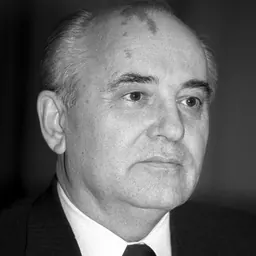

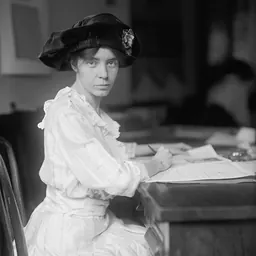




Related people
Same field, nearest in time
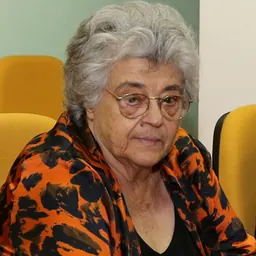

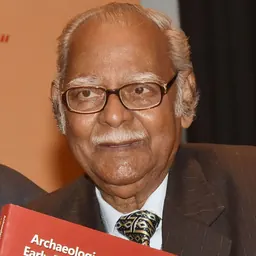

Contemporaries
People whose lives overlapped Riane Eisler's
Frequently asked questions
Who is Riane Eisler?
Austrian-American sociologist
When was Riane Eisler born?
Riane Eisler was born on 22 July 1931 in Vienna.
What is Riane Eisler's occupation?
Riane Eisler is an anthropologist, historian, sociologist, human rights defender, non-fiction writer and peace and conflict researcher.
What is Riane Eisler known for?
Riane Eisler is known for The Chalice and the Blade.
What nationality is Riane Eisler?
Riane Eisler is American and Austrian.
Sources & further reading
Cite this page
APA: Biography.guide. (2026). Riane Eisler. https://biography.guide/riane-eisler/
MLA: "Riane Eisler." Biography.guide, https://biography.guide/riane-eisler/.
Chicago: "Riane Eisler." Biography.guide. https://biography.guide/riane-eisler/.
Data last updated: 2026-09-20 · Spot an error? Report a correction.
Page generated 2026-09-27 05:18 UTC