
About Rhys Rhys-Williams
Lived 1865 – 1955 (aged 89). Rhys Rhys-Williams was a British judge, politician and barrister.
Sir Rhys Rhys-Williams, 1st Baronet, (20 October 1865 – 29 January 1955), born Rhys Williams, was a British Liberal Party politician from Wales. He later left the Liberal Party for the Conservatives.
Family Rhys-Williams was the son of Judge Gwilym Williams and Emma Eleanor Williams JP. His wife Juliet Rhys-Williams (née Glyn) was a writer and prominent Liberal politician who, like her husband, later joined the Conservative Party via the Liberal Nationals. They met in 1919 when Juliet Glyn began working for Rhys-Williams as his private secretary during his period of office as parliamentary secretary at the Ministry of Transport. They married on 24 February 1921. They had two sons and two daughters. Their son, Sir Brandon Rhys-Williams became a Conservative MP and Member of the European Parliament.
Education Rhys-Williams was educated at Eton College, which he entered in 1880, In 1915 he served for a year as Acting Military Attaché at the British Legation in Tehran. He ran an intelligence service for the Russians in their campaigns against the Turks and was awarded the Order of St. Vladimir with the Swords by the Czar in 1916. In 1917 Rhys-Williams was attached the War Office to act as Assistant Director-General Movements and Railways.
Politics Williams was first returned to Parliament as Member of Parliament (MP) for Banbury at a by-election in September 1918 and was returned unopposed at the 1918 general election as Coalition Liberal. On his appointment as Recorder of Cardiff he was obliged to resign from Parliament and fight a by-election on 22 June but he was again returned unopposed. He served on until the 1922 general election when he stood in a different seat and was defeated.
In 1919 Rhys-Williams was appointed parliamentary secretary to the Ministry of Transport under the direction of the Minister of Transport Sir Eric Geddes. However he soon fell out with Geddes and resigned just two months after being appointed.
In 1923, Rhys-Williams was approached by the Aberavon Liberal Association to stand as their candidate in the forthcoming general election in opposition to Labour leader Ramsay MacDonald but he declined. By the 1930s, Rhys-Williams had become more anti-socialist in stance. Never a great party man, in March 1931 he tried to get the Liberal candidate at the by-election at Pontypridd, Captain G Crawshay, to make a public statement that as soon as the Labour government introduced what he described as any openly socialist measure he would vote to try to turn out the government. Rhys-Williams promised Crawshay that if he would make this pledge he would do his best to get the Conservatives to stand aside and support him in a straight fight against Labour. When Crawshay refused to agree Rhys-Williams came out in support of David Evans, the Conservative candidate in the by-election. In the event the seat was easily retained by Labour, with Crawshay in second place and Evans third.
Baronetcy Rhys-Williams was created a Baronet in June 1918, shortly before entering Parliament. After his death, the baronetcy was inherited by his son Brandon Rhys-Williams, who later served for over twenty years as a Conservative MP.
Miskin Manor
Williams inherited his father's estate in Wales, Miskin Manor in Glamorgan, after which his baronetcy was named. In 1923 the manor house was partly consumed by fire which destroyed the south wing. In 1940 the manor house was taken over by the Red Cross and used as a convalescent home. Lady Williams was commandant of the Red Cross Hospital there and continued to occupy part of the building, giving the manor as her home address when writing to The Times in 1943. The manor was then passed from the Red Cross to the local health authority in 1948 for continued use as a hospital. and that it was not economic to buy the manor. Lady Williams continued to occupy the manor after her husband's death in 1955.
Sir Rhys served as the first President of Llantrisant and Pontyclun Golf Club, formed in 1927.
Death Rhys-Williams died in London aged 89 years on 29 January 1955.
Don’t just read it —
keep it.
Full-length biographies made to live with: read them, listen on the way to work, watch them tonight.
- E-book
- Audio
- Video
Instant download · yours to keep · every purchase keeps this site free
Important facts
People in Rhys Rhys-Williams's life
Named in this biography and alive at the same time

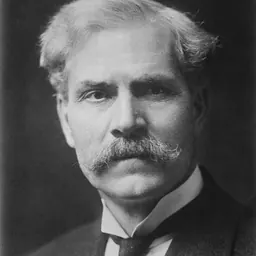
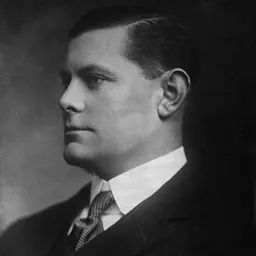

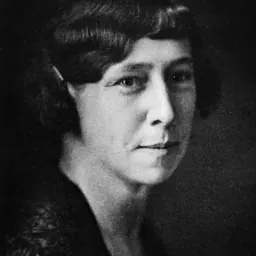



Related people
Same field, nearest in time
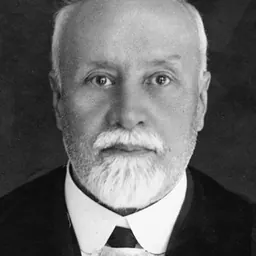

Contemporaries
People whose lives overlapped Rhys Rhys-Williams's


Frequently asked questions
Who was Rhys Rhys-Williams?
Welsh politician (1865–1955)
When was Rhys Rhys-Williams born?
Rhys Rhys-Williams was born on 20 October 1865 in Miskin.
When did Rhys Rhys-Williams die?
Rhys Rhys-Williams died on 29 January 1955 in London.
What was Rhys Rhys-Williams's occupation?
Rhys Rhys-Williams was a judge, politician and barrister.
What nationality was Rhys Rhys-Williams?
Rhys Rhys-Williams was British.
Sources & further reading
· Wikipedia: Rhys Rhys-Williams
Cite this page
APA: Biography.guide. (2026). Rhys Rhys-Williams. https://biography.guide/rhys-rhys-williams/
MLA: "Rhys Rhys-Williams." Biography.guide, https://biography.guide/rhys-rhys-williams/.
Chicago: "Rhys Rhys-Williams." Biography.guide. https://biography.guide/rhys-rhys-williams/.
Data last updated: 2026-09-20 · Spot an error? Report a correction.
Page generated 2026-09-27 04:57 UTC