
About Rhodri Morgan
Lived 1939 – 2017 (aged 77). Rhodri Morgan was a British politician.
Hywel Rhodri Morgan (29 September 1939 – 17 May 2017) was a Welsh Labour politician who was the First Minister of Wales and the Leader of Welsh Labour from 2000 to 2009. He was also the Assembly Member for Cardiff West from 1999 to 2011 and the Member of Parliament for Cardiff West from 1987 to 2001. He remains the longest-serving First Minister of Wales, having served in the position for 9 years and 304 days. He was Chancellor of Swansea University from 2011 until his death in 2017.
Early life and education Hywel Rhodri Morgan was born at Mrs Gill's Nursing Home in Roath,Efn|In 2017, following Morgan's death, the website for the community of Radyr and Morganstown claimed that he was born in Radyr. In his 1994 book Cardiff: Half-and-half a Capital, Morgan states that he was in fact born in Roath and that Radyr was where he was raised. In his 2017 autobiography Rhodri: A Political Life in Wales and Westminster, Morgan specifies that he was born at Mrs Gill's Nursing Home, which was located at 88 Connaught Road, Roath. He was the younger of two children born to the Welsh writer and academic Thomas John (T.J.) Morgan and his wife Huana Morgan (née Rees), a writer and schoolteacher. Morgan was born into a Welsh-speaking academic family. His native language was Welsh, though he later became fluent in English, French and German as well. He would grow up to become a history professor at Swansea University. Until the age of 21, he lived with his family at 32 Heol Isaf, He also had a lifelong love for gardening which began when he watched his father grow vegetables for the wartime dig for victory campaign. Radyr did, however, avoid the conflict's worst hardships.
In 1944, Morgan started attending Radyr Primary School. Having begun his education near the end of World War II, Morgan found his class in the first year of primary school was mostly populated by evacuees. He attended Whitchurch Grammar School, becoming one of the few children from Radyr to attend a school in Whitchurch at the time. At the grammar school, Morgan achieved high results in most subjects but science. after winning a place at St John's College, Oxford on an open exhibition for the study of modern languages. His second class honours was enough to secure him a place at Harvard to read a Master of Arts degree in government. He graduated from the Harvard Graduate School of Arts and Sciences with a Master of Arts degree in government in 1963, before coming back to the United Kingdom in that year's summer. and is said to have discouraged other students at Oxford from joining Plaid Cymru. By the time Morgan finished his studies at Harvard, he had decided to pursue his political interests practically rather than academically. In the 1964 general election, Morgan campaigned with Edwards, Kinnock and Kinnock's partner Glenys in support of James Callaghan, the Labour MP for Cardiff South East who later became prime minister. In 1966, Morgan was considered for selection as the Labour Party's prospective parliamentary candidate for Cardiff North, though he was ultimately not selected. He also contributed to the creation of the Driver and Vehicle Licensing Centre in Wales, as well as the relocation of the Royal Mint and a part of the Inland Revenue to Wales. In addition to his work as a research officer at Cardiff City Council, Morgan was also a junior town planner. where he worked for Christopher Chataway as an economic adviser.
Morgan's work had permitted him to keep living in Cardiff while staying politically active as a neutral civil servant. Morgan won the seat with a majority of 4,045 votes (9.1%). He increased his majority to 9,291 (20.3%) in the 1992 general election and 15,628 (38.8%) in the 1997 general election. He was sponsored by the Transport and General Workers' Union and shared an office at Transport House with Alun Michael, the Labour MP for Cardiff South and Penarth, following their election to parliament in 1987. He was joined in parliament by his wife Julie following the 1997 general election, when she was elected as the Labour MP for Cardiff North.
Morgan made his maiden speech in the House of Commons on 8 July 1987, during a debate on a Finance Bill. The media developed a liking for Morgan; The Times reviewed the maiden speeches of the 1987 parliamentary intake and placed Morgan's maiden speech into joint-first place. In line with the majority of backbench MPs from Wales, Morgan aligned himself with the soft left of the Labour Party. He also had an interest in freedom of information. Labour Party leader Neil Kinnock and Labour MP for Cardiff South and Penarth Alun Michael, whose constituency included the site where the new bay would be formed, both supported the project. However, the constituency Labour Party for Cardiff West, Morgan's own constituency, had voted to oppose the barrage, and the local Labour Party branches for Riverside and Canton were also against it. Morgan was concerned about the differing opinions from geologists on the barrage's possible effects.
Shadow ministerial career In his first year in parliament, Morgan worked on standing committees for the Finance Bill, the Housing Bill and the Steel Privatisation Bill. He became a junior shadow minister for energy, where he was given responsibility for Labour's response to the government's electricity privatisation policy. When taking the role, Morgan said he intended to scrutinise the government's plans for electricity privatisation as he found "no virtues in converting a public monopoly into a private sector monopoly" and wanted to find "a better deal for consumers". During Morgan's tenure, the shadow energy team opposed electricity privatisation. He spoke beyond his brief, asking why Wales received less investment than Cornwall and Devon and exploring a now disproven conspiracy theory that the Spandau prisoner believed to be Nazi German deputy Führer Rudolf Hess was an imposter.
In the shadow energy team, Morgan initially worked under Tony Blair, the shadow secretary of state for energy from 1988 to 1989. He then worked under Frank Dobson, the shadow energy secretary from 1989 to 1992. According to The Independent, Morgan and Blair worked "harmoniously" together. Morgan himself believed that he was "highly regarded" by Blair. He remained in this post after Tony Blair became Labour leader in 1994. At first, Morgan worked under Ann Clwyd, the shadow secretary of state for Wales from July 1992 to November 1992. He then worked under Ron Davies, the shadow welsh secretary from November 1992, serving as his deputy.
In the Welsh affairs brief, Morgan targeted quangos in Wales for their alleged cronyism, unaccountability and lack of democracy. Quangos came to dominate Wales. When William Hague was Welsh secretary, Morgan staged a protest with other Welsh Labour MPs outside the 1996 Conservative Party Conference, where he claimed that the total cost of the quangos in Wales had reached £51.5 million.
To tackle the cost of the Welsh quangos, Morgan stated in 1996 that a devolved Welsh Assembly established by a Labour government would combine four quangos, the Welsh Development Agency, the Cardiff Bay Development Corporation, the Development Board for Rural Wales and the Land Authority for Wales to create an "economic powerhouse". The idea of establishing a devolved Welsh Assembly had been supported by Morgan, who was one of its leading proponents. He was involved in talks with the upper ranks of the Labour Party on devolution, He was a member of the Campaign for the Welsh Assembly
Morgan's opposition to the Welsh quangos, as well as his attempts to stop the construction of the Cardiff Bay Barrage, alienated the traditionalists within the Labour Party in Wales. These actions also made him a known troublemaker towards the Welsh political establishment. In Cardiff, Morgan faced hostility from the local political establishment in the Labour Party. Morgan had been aspiring to become a government minister since at least 1994, and when Labour returned to government he was expected to be given a role in the Welsh Office as a junior minister. Ron Davies, the Welsh secretary in the new government, had wanted to keep Morgan in his team as a junior minister, but Blair refused to appoint him to such a role. At the time, Blair's official explanation was that Morgan, aged 57, was too old for a ministerial career. However, in a 2017 interview with BBC News, Blair revealed that he did not appoint Morgan to the government because they disagreed on policy, adding that he viewed himself as a progressive politician bringing change while he viewed Morgan as a traditionalist.
In his later parliamentary career as a backbencher, Morgan provoked the Labour government for its hesitance to ban the advertising of cigarettes, its unenthusiastic approach to freedom of information and for the party's parliamentary selection process. In the 1997 Welsh devolution referendum, Morgan campaigned for the Yes vote. He was also considering standing for election to the assembly if the referendum passed.
Following the result of the 1997 devolution referendum, Morgan immediately decided to run for the leadership of the Labour Party in Wales. Leading the assembly had been a long-held ambition of Morgan's. In March 1998, Davies announced his intention to stand for a seat in the assembly and run for the post of first secretary. Morgan then called for a leadership election to determine who the party's candidate for first secretary would be. Senior figures in the Labour Party in Wales feared that a leadership election could split the party and instead preferred to avoid an election, with Davies running for the post of first secretary unopposed. However, Morgan continued to insist on a leadership election, stating that he had already announced his intention to become first secretary before Davies did. In his leadership pitch, Morgan cited his administrative experience in London, Europe, local government and the Welsh Office. Morgan also presented himself as the "democratic" candidate, as he had campaigned for the election to be held under the one member, one vote electoral system. Support for Davies came from the large trade unions such as Unison and the Transport and General Workers' Union and from the majority of Labour MPs, MEPs and Welsh assembly candidates. Support for Morgan came from the smaller trade unions, the constituency membership and the party grassroots. Morgan had won the most nominations from the constituency Labour parties,
Michael was duly elected to the leadership but resigned a little more than a year later, amid threats of an imminent no-confidence vote and alleged plotting against him by members of not only his own party, but also Assembly groups and Cabinet members. Morgan, who had served as Minister for Economic Development under Michael, became Labour's new nominee for First Secretary, and was elected in February 2000, later becoming First Minister on 16 October 2000 when the position was retitled. He was also appointed to the Privy Council in July 2000.
Morgan stepped down from the House of Commons at the 2001 General Election.
Morgan's leadership was characterised by a willingness to distance himself from a number of aspects of UK Labour Party policy, particularly in relation to plans to introduce choice and competition into public services, which he has argued do not fit Welsh attitudes and values, and would not work effectively in a smaller and more rural country. In a speech given in Swansea to the National Centre for Public Policy in November 2002, Morgan stated his opposition to foundation hospitals (a UK Labour proposal), and referred to the "Clear Red Water" separating policies in Wales and in Westminster.
Second Assembly (2003) Rhodri Morgan meets U.S. Ambassador Robert Tuttle on 7 October 2005 in Cardiff. On 1 May 2003, Labour under Morgan's leadership was re-elected in the Assembly elections. Morgan managed to win enough seats to form a Labour-only administration (the election was held under proportional representation, and Labour won 30 of the 60 seats in the Assembly and the overall majority was achieved when Dafydd Elis-Thomas AM was elected Presiding Officer of the Assembly) and named his cabinet on 9 May. In that election, Labour easily took back all of the former strongholds they lost to Plaid Cymru at the height of Alun Michael's unpopularity in 1999.
In his second term, Morgan's administration continued its theme of "Welsh solutions for Welsh problems", a marked contrast to the Blairite public service reform agenda. Instead of competition, Welsh Labour emphasised the need for collaboration between public service providers.
Third Assembly (2007) Labour was the biggest party with 26 out of the 60 seats, five short of an overall majority. After one month of minority government, Morgan signed a coalition agreement (One Wales) with Ieuan Wyn Jones, leader of Plaid Cymru, on 27 June 2007. Morgan became the first modern political leader of Wales to lead an Assembly with powers to pass primary legislation (subject to consent from Westminster).
Retirement Morgan (left) with the newly appointed Welsh rugby coach, Warren Gatland in 2008. In July 2005, Morgan announced his intention to lead the Welsh Labour party into the 2007 general election, but retire as leader of Welsh Labour and First Minister sometime in 2009, when he would be 70. On his 70th birthday (29 September) he set the exact date as immediately following the Assembly's budget session on 8 December 2009. Counsel General Carwyn Jones, Health Minister Edwina Hart and Merthyr Tydfil and Rhymney AM Huw Lewis entered a leadership contest to elect a new Labour leader in Wales. On 1 December 2009 the winner was declared as Carwyn Jones, who assumed office as First Minister on 10 December 2009. Morgan remained a backbench AM until April 2011, when the third Assembly was dissolved before the general election on 5 May 2011.
Personal life Morgan married Julie Morgan (née Edwards) in 1967. Julie would later have her own political career as an AM and MP, joining Morgan in the House of Commons in 1997. and a Labrador named William Tell. His elder brother Prys Morgan was a history professor at Swansea University The couple also had a caravan in Mwnt, on the coast of Ceredigion, where the family holidayed each summer for at least 40 years. Morgan was a long-time friend of Neil Kinnock, leader of the Labour Party from 1983 to 1992. They shared a flat in Cardiff from 1963 to 1965.
In July 2007, Morgan had an unstable angina which caused a partial blockage in two of his arteries and a heart attack. Even though he left hospital within the week, doctors said he would not be fully recovered for a few weeks.
Death
Morgan collapsed on the evening of 17 May 2017 while cycling on Road, Wenvoe, near his home. Police and paramedics were called to the scene and he was pronounced dead. He was 77.
Morgan's family held a humanist funeral for him, in line with his humanist beliefs, at the Welsh Assembly on 31 May, which was open on a first-come first-served basis to the public, as well as broadcast on screens outside the Senedd and online. The funeral was televised and billed as a major national event. The ceremony was led by Morgan's friend and former Welsh Labour colleague Lorraine Barrett. A private service of committal was held at Thornhill Crematorium's Wenallt Chapel in Cardiff the next day.
Commemoration and legacy In July 2026, a statue outside the Pierhead Building depicting Morgan and his dog Tel was unveiled.
Honorary degrees
Morgan was awarded several honorary degrees for his service to the United Kingdom, including the following.
Country Date School Degree 26 November 2007 University of Wales Honorary Doctor of Laws (LL.D) June 2009 Bangor University Honorary Doctorate 2009 Aberystwyth University Honorary Fellow 2010 Cardiff University Honorary Doctorate 2010 Swansea University Honorary Doctorate July 2011 University of Glamorgan Honorary Doctorate
He was also appointed Chancellor of Swansea University in 2011, a post he held until his death. He had close links with the university as both his parents had graduated from it in the 1920s and his father and brother also taught there.
Don’t just read it —
keep it.
Full-length biographies made to live with: read them, listen on the way to work, watch them tonight.
- E-book
- Audio
- Video
Instant download · yours to keep · every purchase keeps this site free
Important facts
Family & relationships
People in Rhodri Morgan's life
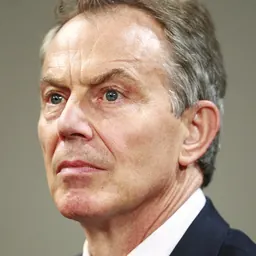
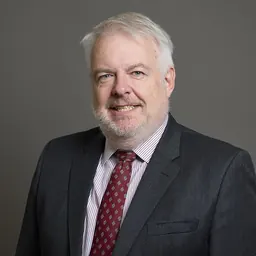
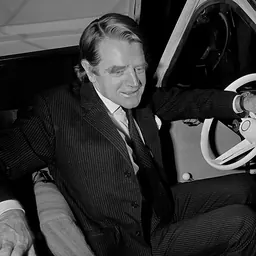
Named in this biography and alive at the same time





Related people
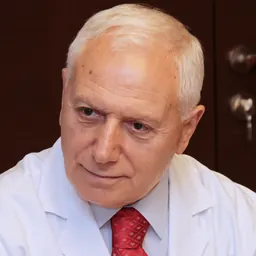
Same field, nearest in time




Contemporaries
People whose lives overlapped Rhodri Morgan's




Frequently asked questions
Who was Rhodri Morgan?
First Minister of Wales (1939-2017)
When was Rhodri Morgan born?
Rhodri Morgan was born on 29 September 1939 in Cardiff.
When did Rhodri Morgan die?
Rhodri Morgan died on 17 May 2017 in Wenvoe.
What was Rhodri Morgan's occupation?
Rhodri Morgan was a politician.
What nationality was Rhodri Morgan?
Rhodri Morgan was British.
Sources & further reading
Cite this page
APA: Biography.guide. (2026). Rhodri Morgan. https://biography.guide/rhodri-morgan/
MLA: "Rhodri Morgan." Biography.guide, https://biography.guide/rhodri-morgan/.
Chicago: "Rhodri Morgan." Biography.guide. https://biography.guide/rhodri-morgan/.
Data last updated: 2026-09-20 · Spot an error? Report a correction.
Page generated 2026-09-27 05:20 UTC