
About Rhipsime
Lived 300 – 301. Rhipsime was a nun.
Hripsime (; died ) was a martyr of Roman origin. The story of her martyrdom is connected with the traditional account of the Christianization of Armenia. She and her companions in martyrdom are venerated as some of the first Christian martyrs of Armenia. Saint Hripsime Church in Vagharshapat, where she is buried, is one of Armenia's most visited shrines.
Biography According to the traditional account recorded in the Armenian history attributed to Agathangelos, Hripsime was a woman of noble origin who was one of a group of Christian virgins who led a monastic life in Rome, led by their mother superior Gayane. Fleeing the persecution of Christians by the Roman emperor Diocletian , they come to Armenia and settle near the capital of Vagharshapat. According to the medieval historian Stepanos Orbelian, the relics of Hripsime were in the possession of the Armenian catholicoi until 1292, when the Mamluks took them to Egypt after the capture of Hromkla, then the seat of the catholicos.
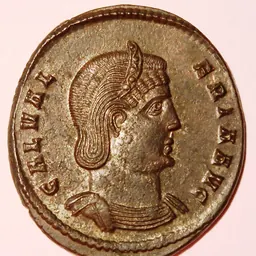
In Nicholas Adontz's opinion, the martyrology of Hripsime and Gayane (who may have been historical figures) originally existed as a separate story which was later combined with the story of Tiridates and Gregory and the conversion of Armenia. Adontz notes the story of Diocletian's wife Prisca and daughter Galeria Valeria as a possible historical basis; Prisca and Valeria supposedly converted to Christianity and were exiled to Mesopotamia by Emperor Maximinus Daza after Valeria refused to marry him. The name Hripsime is derived in Agathangelos from the Greek word 'to throw', which can refer to the exposure of children, although there is no indication in Agathangelos that Hripsime was a foundling. Nerses Akinian hypothesizes that Hripsime was a slave girl based on an unattested meaning of as 'to imprison'. Robert W. Thomson rejects the connection between Hripsime and as a folk etymology.
According to B. Outtier and M. Thierry, it is unlikely that people from Italy would choose to take refuge in a country as far from Rome as Armenia, and onomastic evidence suggests a connection more with Asia Minor than with the Latin-speaking world. It is more probable that the nuns came from Constantinople (the "New Rome") or western Asia Minor. thumb Veneration The Armenian Apostolic Church remembers Hripsime and her companions on the day after the Second Sunday of Easter (i.e. the second Monday after Easter). while the Catholic Church commemorates them on 29 September. The Coptic Orthodox Church commemoratese them on Thout 29 of the Coptic calendar (9 October on the Gregorian calendar in a common year).
In art
The hagiography of Hripsime and her companions was preserved in the Armenian histories of Agathangelos and Movses Khorenatsi and spread throughout the Christian world. In 618, the Armenian catholicos Komitas Aghtsetsi wrote a hymn (sharakan) dedicated to them on the occasion of the consecration of Saint Hripsime Church.
The earliest surviving Armenian tragedy, The Martyrdom of St. Hripsime, was written in 1668 by Louis Marie Pidou, the head of the Theatine school in Lvov. (The Armenian community of Lvov had accepted papal supremacy in 1635.) The play is written according to neoclassical dramatic conventions and preaches unity with Rome: in the epilogue, Hripsime's spirit promises intercession on behalf of the Armenians as long they remain faithful to the church of her homeland. Some later Armenian plays with the same theme appear to have drawn inspiration from this work.
Notes and references
Don’t just read it —
keep it.
Full-length biographies made to live with: read them, listen on the way to work, watch them tonight.
- E-book
- Audio
- Video
Instant download · yours to keep · every purchase keeps this site free
Important facts
People in Rhipsime's life
Named in this biography and alive at the same time


Related people
Same field, nearest in time



Frequently asked questions
Who was Rhipsime?
Armenian saint
When was Rhipsime born?
Rhipsime was born in 300 in Rome.
When did Rhipsime die?
Rhipsime died in 301 in Vagharshapat.
What was Rhipsime's occupation?
Rhipsime was a nun.
Sources & further reading
Cite this page
APA: Biography.guide. (2026). Rhipsime. https://biography.guide/rhipsime/
MLA: "Rhipsime." Biography.guide, https://biography.guide/rhipsime/.
Chicago: "Rhipsime." Biography.guide. https://biography.guide/rhipsime/.
Data last updated: 2026-09-25 · Spot an error? Report a correction.
Page generated 2026-09-27 05:11 UTC