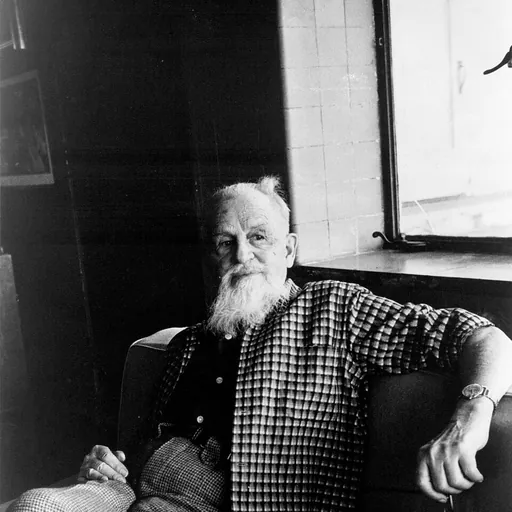
About Rex Stout
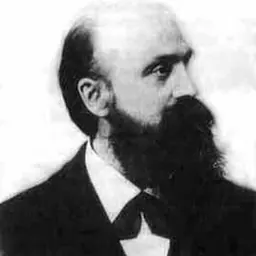
Lived 1886 – 1975 (aged 88). Rex Stout was an American writer, novelist, screenwriter, radio personality, science fiction writer and short story writer.
Rex Todhunter Stout (; December 1, 1886 – October 27, 1975) was an American writer noted for his detective fiction. His best-known characters are the detective Nero Wolfe and his assistant Archie Goodwin, who were featured in 33 novels and 39 novellas or short stories between 1934 and 1975, starting with Fer-de-Lance.
In 1959, Stout received the Mystery Writers of America's Grand Master Award. The Nero Wolfe corpus was nominated Best Mystery Series of the Century at Bouchercon XXXI, the world's largest mystery convention, and Rex Stout was nominated as Best Mystery Writer of the Century.
In addition to writing fiction, Stout was a prominent public intellectual for decades. Stout was active in the early years of the American Civil Liberties Union and a founder of the Vanguard Press. He served as head of the Writers' War Board during World War II, became a radio celebrity through his numerous broadcasts, and was later active in promoting world federalism. He was the long-time president of the Authors Guild and sought to benefit authors by lobbying for improvement of authors' rights under the copyright laws. He also served a term as president of the Mystery Writers of America in 1958.
Biography Early life Stout was born in Noblesville, Indiana, in 1886, but shortly afterwards his Quaker parents John Wallace Stout and Lucetta Elizabeth Todhunter Stout moved their family (nine children in all) to Kansas.
His father was a teacher who encouraged his son to read, leading to Rex's having read the entire Bible twice by the age of four. At age thirteen he was the state spelling bee champion. Stout attended Topeka High School, Kansas, and the University of Kansas, Lawrence. His sister, Ruth Stout, also became an author, writing several books on no-work gardening and some social commentaries.
Stout served in the U.S. Navy from 1906 to 1908 (including service as a yeoman on Theodore Roosevelt's presidential yacht) and then spent about the next four years working at a series of jobs in six states, including cigar-store clerk.
In 1910–11, Stout sold three short poems to the literary magazine The Smart Set. Between 1912 and 1918, he published more than forty works of fiction in various magazines, ranging from literary publications such as Smith's Magazine and Lippincott's Monthly Magazine to pulp magazines like the All-Story Weekly.
Stout invented a school banking system around 1916, which he promoted with his brother Robert. About 400 U.S. schools adopted his system for keeping track of the money that school children saved in accounts at school. Royalties from this work provided Stout with enough money to travel in Europe extensively during the 1920s.
In 1916, Stout married Fay Kennedy of Topeka, Kansas. They divorced in February 1932
Writings A frequent guest panelist on the NBC radio series Information Please, Stout was featured in the first of 18 RKO-Pathé short film versions that screened in American theaters. Sitting on the steps of the Radio City Music Hall lobby after the September 1939 premiere are (from left) Pathé chief Frederic Ullman Jr., Stout, director Frank P. Donovan, John Kieran, Franklin P. Adams and Dan Golenpaul, creator of the radio program.
Rex Stout began his literary career in the 1910s writing for magazines, particularly pulp magazines, writing more than 40 stories that appeared between 1912 and 1918. Stout's early stories appeared most frequently in All-Story Magazine and its affiliates, but he was also published in magazines as varied as Smith's Magazine, Lippincott's Monthly Magazine, Short Stories, The Smart Set, Young's Magazine, and Golfers Magazine. The early stories spanned genres including romance, adventure, science fiction/fantasy, and detective fiction, including two murder mystery novellas ("Justice Ends at Home" and The Last Drive) that prefigured elements of the Wolfe stories.
By 1916, Stout grew tired of writing a story whenever he needed money. He decided to stop writing until he had made enough money to support himself through other means, so he would be able to write when and as he pleased. He wrote no fiction for more than a decade, until the late 1920s, when he had saved substantial money through his school banking system. Ironically, just as Stout was starting to write fiction again, he lost most of the money that he had made as a businessman in the Great Depression of 1929.
In 1929, Stout wrote his first published book, How Like a God, an unusual psychological story written in the second person. The novel was published by the Vanguard Press, which he had helped to found. Stout published a total of four psychological novels between 1929 and 1933, the first three with Vanguard and the fourth at Farrar & Rinehart, to which he was recruited by editor John C. Farrar.
In the 1930s, Stout turned to writing detective fiction, a genre that he and Farrar thought might be more financially rewarding than his previous novels. In 1933, he wrote Fer-de-Lance, which introduced Nero Wolfe and his assistant Archie Goodwin. The novel was published by Farrar & Rinehart in October 1934, and in abridged form as "Point of Death" in The American Magazine (November 1934). The same year, Stout also published a political thriller The President Vanishes (1934), which was originally published anonymously.
Fer-de-Lance was the first of 72 Nero Wolfe stories (33 novels and 39 novellas) that Stout published from 1934 to 1975. Stout continued writing the Nero Wolfe series for the rest of his life. Beginning in 1940, Nero Wolfe began to appear in novellas as well as full-length novels, at the behest of Stout's editors at The American Magazine. Stout wrote at least one Nero Wolfe story every year through 1966. Stout's rate of production declined somewhat after 1966, but he still published four further Nero Wolfe novels prior to his death in 1975, at the age of 88.
The characters of Wolfe and Goodwin are considered among Stout's main contributions to detective fiction. Wolfe was described by reviewer Will Cuppy as "that Falstaff of detectives".
Stout also wrote several non-Wolfe mystery novels during the 1930s, but none approached the success of the Nero Wolfe books. In 1937, Stout's novel The Hand in the Glove introduced the character of Theodolinda "Dol" Bonner, a female private detective who is an early and significant example of the female PI as fictional protagonist. Bonner would also appear as a character in some later Nero Wolfe stories. Stout also created two other detective protagonists, Tecumseh Fox (who appeared in three books) and Alphabet Hicks (one book). His novel Red Threads featured Inspector Cramer, a familiar character from the Wolfe books, working on his own. After 1938, Stout wrote no fiction but mysteries, and after 1941, almost entirely Nero Wolfe stories.
During World War II, Stout cut back on his detective writing to focus on war-related activities. For four years, he chaired the Writers' War Board, which coordinated the volunteer services of American writers to help the war effort. He also joined the Fight for Freedom organization and hosted three weekly radio shows. After the war, in addition to continuing to write the Nero Wolfe books, Stout supported democracy and world government. He served as president of the Authors Guild and of the Mystery Writers of America, which in 1959 presented Stout with its Grand Master Award – the pinnacle of achievement in the mystery field.
Stout was a longtime friend of British humorist P. G. Wodehouse, writer of the Jeeves novels and short stories. Each was a fan of the other's work, and parallels are evident between their characters and techniques. Wodehouse contributed the foreword to Rex Stout: A Biography, John McAleer's Edgar Award-winning 1977 biography of the author (reissued in 2002 as Rex Stout: A Majesty's Life). Wodehouse also mentions Rex Stout in several of his Jeeves books, as both Bertie and his Aunt Dahlia are fans.
Public activities In the fall of 1925, Roger Nash Baldwin appointed Rex Stout to the board of the American Civil Liberties Union's powerful National Council on Censorship; Stout served one term. He had been told that the magazine was primarily committed to bringing arts and letters to the masses, but he realized after a few issues "that it was Communist and intended to stay Communist", and he ended his association with it.
On August 9, 1942, Stout conducted the first of 62 wartime broadcasts of Our Secret Weapon on CBS Radio. The idea for the counterpropaganda series had been that of Sue Taylor White, wife of Paul White, the first director of CBS News. Research was done under White's direction. "Hundreds of Axis propaganda broadcasts, beamed not merely to the Allied countries but to neutrals, were sifted weekly", wrote Stout's biographer John McAleer. "Rex himself, for an average of twenty hours a week, pored over the typewritten yellow sheets of accumulated data ... Then, using a dialogue format – Axis commentators making their assertions, and Rex Stout, the lie detective, offering his refutations – he dictated to his secretary the script of the fifteen-minute broadcast." By November 1942, Berlin Radio was reporting that "Rex Stout himself has cut his own production in detective stories from four to one a year and is devoting the entire balance of his time to writing official war propaganda." Newsweek described Stout as "stripping Axis short-wave propaganda down to the barest nonsensicals ... There's no doubt of its success."
During the later part of the war and the post-war period, he also led the Society for the Prevention of World War III which lobbied for a harsh peace for Germany. When the war ended, Stout became active in the United World Federalists.
House Committee on Un-American Activities chairman Martin Dies called him a Communist, and Stout is reputed to have said to him, "I hate Communists as much as you do, Martin, but there's one difference between us. I know what a Communist is and you don't."
Stout was one of many American writers closely watched by J. Edgar Hoover's FBI. Hoover considered him an enemy of the bureau and either a Communist or a tool of Communist-dominated groups. Stout's leadership of the Authors League of America during the McCarthy era was particularly irksome to the FBI. About a third of Stout's FBI file is devoted to his 1965 novel The Doorbell Rang.
Later years and death
Stout continued writing until just before his death. He died on October 27, 1975, at the age of 88 at his estate, High Meadow, on the New York/Connecticut border. He was survived by his wife Pola, two daughters Barbara Stout and Rebecca Stout Bradbury, two sisters Ruth Stout and Mary Stout, and five grandchildren.
Reception and influence
Awards and recognition In his 1941 work, Murder for Pleasure, crime fiction historian Howard Haycraft included the first two Nero Wolfe novels, Fer-de-Lance and The League of Frightened Men, in his list of the most influential works of mystery fiction. In 1958, Rex Stout became the 14th president of the Mystery Writers of America. In January 1969, the Crime Writers' Association selected Stout as recipient of its Silver Dagger Award for The Father Hunt, which it named "the best crime novel by a non-British author in 1969." "He read Hegel, Heidegger and Sartre, as well as Dashiell Hammett, Rex Stout and Georges Simenon," the Times Higher Education Supplement wrote of Magritte. "Some of his best titles were 'found' in this way." Magritte's 1942 painting Les compagnons de la peur ("The Companions of Fear") bears the title given to The League of Frightened Men (1935) when it was published in France by Gallimard (1939). It is one of Magritte's series of "leaf-bird" paintings, created during the Nazi occupation of Brussels. It depicts a stormy, mountainous landscape in which a cluster of plants has metamorphosed into a group of vigilant owls.
Stout is also mentioned in Ian Fleming's James Bond book On Her Majesty's Secret Service (1963).
Rex Stout Archive The archival papers of Rex Stout anchor Boston College's collection of American detective fiction. The Rex Stout papers were donated to the Burns Library by the Stout family in 1980 and includes manuscripts, correspondence, legal papers, personal papers, publishing contracts, photographs, and ephemera. The collection also includes first editions, international editions, and archived reprints of Stout's books, as well as volumes from Stout's personal library. the Rex Stout collection of bibliographer Judson C. Sapp, and a collection of Nero Wolfe's magazine appearances donated by Ed Price. March 28, 1939 NBC 30 min. Information Please Cast: Clifton Fadiman (host), John Kieran, Franklin P. Adams, Rex Stout, Moss Hart September 26, 1939 NBC 30 min. Information Please Cast: Clifton Fadiman (host), John Kieran, Franklin P. Adams, Rex Stout, Carl Van Doren Speakers: Eleanor Roosevelt, Thornton Wilder, Robert Sherwood, Edna Ferber, Rex Stout, Alice Duer Miller, Dr. Frank Kingdon, Katharine Hepburn, Marc Connelly, Elmer Rice, Frank Sullivan, Henry Curren April 17, 1941 NBC 15 min. Speaking of Liberty Stories of memorable events in the lives of America's founders First of an estimated 29 weekly broadcasts continuing through December 11, 1941, produced in cooperation with the Council for DemocracyGuests include Louis Adamic, Herbert Agar, Pearl S. Buck, Erskine Caldwell, Carl Carmer, Stuart Chase, Frank Craven, Carl Crow, Ève Curie, Max Eastman, Edward Ellsberg, Clifton Fadiman, Louis Fischer, Dorothy Canfield Fisher, Frank Gervasi, Florence Jaffray Harriman, Fannie Hurst, Margaret Leech, Walter Millis, Bertrand Russell, John R. Tunis, Carl Van Doren, Pierre van Paassen, Thornton Wilder, Alexander Woollcott, Lin YutangCast: Rex Stout (host), Milton Cross and others (announcers) April 18, 1941 NBC 30 min. Information Please Cast: Clifton Fadiman (host), John Kieran, Franklin P. Adams, Rex Stout, Henry H. Curran (chief magistrate of Manhattan) January 1942 CBS 30 min. Invitation to Learning Discussion of The Adventures of Sherlock HolmesCast: Mark Van Doren (moderator), Rex Stout, Jacques Barzun, Elmer Davis April 8, 1942 WMCA 15 min. The Voice of Freedom Broadcasting anonymously, Stout inaugurates this weekly commentary series presented by Freedom House "Program packs plenty of punch … handled expertly by 'Mister X'" (Billboard) August 9, 1942 CBS 15 min. Our Secret Weapon Counterpropaganda series in which "lie detective" Stout rebuts the most entertaining Axis shortwave lies of the weekFirst of 62 weekly broadcasts continuing through October 8, 1943, produced by Paul White for CBS and Freedom HouseCast: Rex Stout, Paul Luther, Guy Repp, Ted Osborne, John Dietz (director) January 23, 1943 CBS 30 min. The People's Platform "Is Germany Incurable?"Writers' War Board panel discussion marking the tenth anniversary of Adolf Hitler's rise to powerCast: Rex Stout, Alexander Woollcott, Marcia Davenport, Hunter College president George Shuster, Brooklyn College president Harry Gideonse March 30, 1943 Mutual 30 min. This Is Our Enemy Series produced by Frank Telford for the United States Office of War Information "Axis Propaganda Methods"Stout introduces dramatizations that show how the enemy uses propaganda to weaken American moraleCast: Rex Stout, Jackson Beck, Arnold Moss, Charlotte Holland, Irene Hubbard, Lenny Hoffman, Peter Capell, Ian Martin, Bill Martin, Ed Latimer, Ted Jewett, Guy Repp, Nathan Van Cleve (composer, conductor) April 27, 1943 Mutual 30 min. This Is Our Enemy "March to the Gallows"Stout addresses the audience at the end of a program dramatizing the stories of well-known traitors including Vidkun Quisling February 2, 1944 WHN 30 min. Author Meets the Critics A discussion with Louis NizerCast: John K. M. McCaffrey (host), Russell Hill, Rex Stout author of Germany After Hitler October 24, 1944 ABC 30 min. Wake Up America "Does Any National Emergency Justify a Fourth Term?"Rex Stout and commentator Upton Close take questions 1945 Synd 30 min. Win the Peace Wartime roundtable discussion about the proposals for a United Nations organizationCast: Edgar Ansel Morra (foreign correspondent), Harry Gideonese, Rex Stout, Virginia Gildersleeve, William Agar (acting president of Freedom House) December 5, 1946 Mutual 30 min. Author Meets the Critics Cast: John K. M. McCaffrey (host), Paul Gallico, Virgilia Peterson, Rex Stout October 12, 1950 30 min. United World Federalists Report on the fourth annual meeting of the United World FederalistsCast: Jean Putnam, Rex Stout, William O. Douglas, Raymond Gram Swing July 30, 1951 NBC 45 min. The Eleanor Roosevelt Program Program includes an interview with Rex Stout March 11, 1965 WNYC 30 min. Authors and Critics Gathering "What do I think about book reviews and book reviewers?"Stout discusses his concerns about the copyright act and asks critics to write about itCast: Rex Stout (moderator), C. D. B. Bryan, Ralph Ellison, Muriel Resnick, Barbara Tuchman, Edward Albee February 14, 1966 WNYC 60 min. Book and Author Luncheon Program includes Rex Stout discussing The Doorbell RangCast: Maurice Dolbier (host), Helen Hayes, William O. Douglas
Select television credits Date Network Length Series Detail February 16, 1949 ABC 30 min. Critic at Large "Are Detective Stories Getting Better or Worse?"Moderator John Mason Brown; guests Clifton Fadiman, Howard Haycraft, Rex Stout and J. Scott Smart November 8, 1951 DuMont 30 min. Crawford Mystery Theatre "The Case of the Devil's Heart"Mystery writers and other guests watch a 20-minute filmed episode of the 1947–48 series Public Prosecutor and guess the solutionModerator Warren Hull; guest panelists Rex Stout, Glenn Langan and Betty Buehler December 9, 1956 ABC 90 min. Omnibus "The Fine Art of Murder" (40 minutes)"A homicide as Sir Arthur Conan Doyle, Edgar Allan Poe [and] Rex Stout would variously present it" (Time) Cast: Alistair Cooke (host), Gene Reynolds (Archie Goodwin), Robert Eckles (Nero Wolfe), James Daly (narrator), Dennis Hoey (Arthur Conan Doyle), Felix Munro (Edgar Allan Poe), Herbert Voland (M. Dupin), Jack Sydow, Rex Stout Writer Sidney Carroll received the 1957 Edgar Award for Best Episode in a TV Series Episode is in the collection of the Library of Congress (VBE 2397–2398) February 3, 1957 CBS 60 min. Odyssey "The Baker Street Irregulars" A program devoted to Sherlock Holmes that includes the first look inside The Baker Street Irregulars, with film of the organization's annual dinner January 11, 1957Includes remarks by Stout, and a dramatization of "The Red Headed League" recorded at a special BSI meeting December 14, 1956, at Cavanagh's Restaurant, New York City Preserved on kinescope Cast: Charles Collingwood (host), Rex Stout, Richard H. Hoffmann, Edgar W. Smith, Red Smith, Michael Clarke Laurence (Sherlock Holmes), Donald Marye (Wilson), Harry Gresham (Hargreave) September 16, 1957 CBS 60 min. Studio One "First Prize for Murder"At the annual banquet of the Mystery Writers of America, novelist Nathaniel Arch fails to appear to receive his award. A stranger shows up who is anxious to find the writer, who is suspected of murder.Live drama by Phil Reisman, from an idea by John D. MacDonaldCast: Darren McGavin (Johnny Quigg), Robert Simon, Barbara O'Neil (Mrs. Cory), Jonathan Harris (Master of Ceremonies), Philip Coolidge (Severns), Colleen Dewhurst, Larry Hagman, Ross Martin Appearing as themselves are Rex Stout, George Harmon Coxe, Brett Halliday, Frances and Richard Lockridge and Georges Simenon April 5, 1959 CBS 30 min. The Last Word Cast: Bergen Evans (host), Rex Stout, editor Russell Lynes September 2, 1969 ABC 60 min. The Dick Cavett Show Dick Cavett's guests include Rex Stout
Don’t just read it —
keep it.
Full-length biographies made to live with: read them, listen on the way to work, watch them tonight.
- E-book
- Audio
- Video
Instant download · yours to keep · every purchase keeps this site free
Important facts
Family & relationships
People in Rex Stout's life
Named in this biography and alive at the same time





Related people
Same field, nearest in time


Contemporaries
People whose lives overlapped Rex Stout's


Frequently asked questions
Who was Rex Stout?
American writer (1886-1975)
When was Rex Stout born?
Rex Stout was born on 1 December 1886 in Noblesville.
When did Rex Stout die?
Rex Stout died on 27 October 1975 in Danbury.
What was Rex Stout's occupation?
Rex Stout was a writer, novelist, screenwriter, radio personality, science fiction writer and short story writer.
What nationality was Rex Stout?
Rex Stout was American.
Sources & further reading
Cite this page
APA: Biography.guide. (2026). Rex Stout. https://biography.guide/rex-stout/
MLA: "Rex Stout." Biography.guide, https://biography.guide/rex-stout/.
Chicago: "Rex Stout." Biography.guide. https://biography.guide/rex-stout/.
Data last updated: 2026-09-22 · Spot an error? Report a correction.
Portrait: Wikimedia Commons · author & licence
Page generated 2026-09-27 05:02 UTC