
About René Spitz
Lived 1887 – 1974 (aged 87). René Spitz was an Austrian and American psychiatrist, psychoanalyst and psychoanalysis.
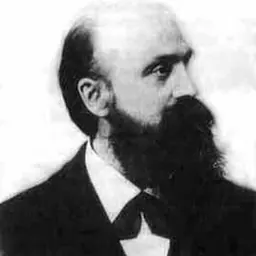
René Árpád Spitz (; January 29, 1887 – September 14, 1974 ) was an Austrian-American psychoanalyst. He is best known for his analysis of hospitalized infants in which he found links between marasmus and death with unmothered infants. Spitz also made significant contributions to the school of ego psychology. The experiences of the infants in these institutions were captured in a black-and-white documentary called Grief: A Peril in Infancy. Another study of Spitz's showed that under favorable circumstances and adequate organization, a positive child development can be achieved. He stated that the methods in foundling homes should, therefore, be carefully evaluated.
Spitz recorded his research on film. The film Psychogenic Disease in Infancy (1952) shows the effects of emotional and maternal deprivation on attachment.
Ego development Spitz noted three organizing principles in the psychological development of the child:
1) the smiling response, which appears at around three months old in the presence of an unspecified person
2) anxiety in the presence of a stranger, around the eighth month
3) semantic communication, in which the child learns how to be obstinate, which the psychoanalysts connect to the obsessional neurosis.
Works
Books
Spitz, R.A. (1957). No and yes : on the genesis of human communication. New York : International Universities Press. Spitz, R.A. (1965). The first year of life : a psychoanalytic study of normal and deviant development of object relations. New York : International Universities Press.
Articles Spitz, R.A. (1945). Hospitalism—An Inquiry Into the Genesis of Psychiatric Conditions in Early Childhood. Psychoanalytic Study of the Child, 1, 53–74. Spitz, R.A. (1951). The Psychogenic Diseases in Infancy—An Attempt at their Etiologic Classification. Psychoanalytic Study of the Child, 6, 255–275. Spitz, R.A. (1964). The derailment of dialogue: Stimulus overload, action cycles, and the completion gradient. Journal-of-the-American-Psychoanalytic-Association, 12, 752–774.
Don’t just read it —
keep it.
Full-length biographies made to live with: read them, listen on the way to work, watch them tonight.
- E-book
- Audio
- Video
Instant download · yours to keep · every purchase keeps this site free
Important facts
Related people
Same field, nearest in time



Contemporaries
People whose lives overlapped René Spitz's




Frequently asked questions
Who was René Spitz?
Austrian-American psychoanalyst
When was René Spitz born?
René Spitz was born on 29 January 1887 in Vienna.
When did René Spitz die?
René Spitz died on 11 September 1974 in Denver.
What was René Spitz's occupation?
René Spitz was a psychiatrist, psychoanalyst and psychoanalysis.
What nationality was René Spitz?
René Spitz was Austrian and American.
Sources & further reading
Cite this page
APA: Biography.guide. (2026). René Spitz. https://biography.guide/rene-spitz/
MLA: "René Spitz." Biography.guide, https://biography.guide/rene-spitz/.
Chicago: "René Spitz." Biography.guide. https://biography.guide/rene-spitz/.
Data last updated: 2026-09-22 · Spot an error? Report a correction.
Page generated 2026-09-27 05:02 UTC