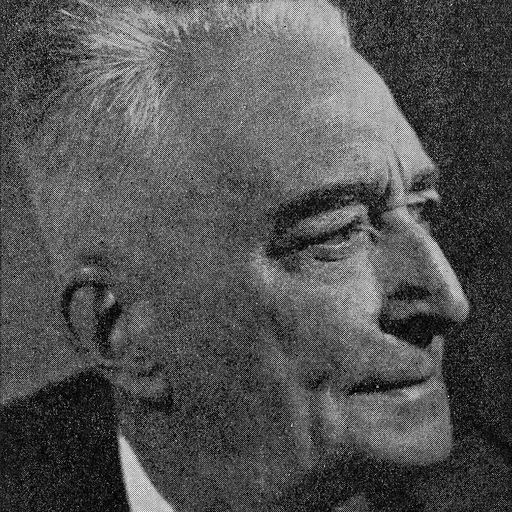
About René Sand
Lived 1877 – 1953 (aged 75–76). René Sand was a Belgian physician.
René Sand (3 January 1877 in Ixelles – 23 August 1953 in Brussels) was a Belgian doctor, social worker, promoter of social medicine, and co-founder of World Health Organization.
Sand studied medicine at the Free University of Brussels and later became interested in social issues in medicine. He worked for the Belgian Red Cross during World War I, and after the war, he became an expert on contemporary trends in social work. He founded the first national training institute for social workers in Belgium and was appointed secretary-general of the League of Red Cross Societies in 1921. Sand was arrested by the Gestapo in September 1944 and sent to Dachau concentration camp. He was freed on 29 April 1945 by American troops.
He also played a significant role in creating the World Health Organization. René Sand died in 1953, and the René Sand Prize was established in his honor.
Early life and education René Sand was born on 3 January 1877 and grew up in the Brussels district of Ixelles. His father's family was from Luxembourg, and his mother was of French descent. He attended the Institut l'Athénée school in Brussels. He then began studying medicine at the Free University of Brussels, where he won a prize in the university competition in 1898. He studied single-celled organisms in Brittany. In July 1900, he received his medical degree. Between 1901 and 1904, he worked in hospitals in Brussels. He also practised in hospitals in Berlin and Vienna.
Career Sand quickly became a member of several national learned societies, such as the Societe de Médecine légale de France and Société royale des Sciences medicales et naturelles de Bruxelles. At that time, he was the founder and secretary of the Association Belge de Médecine Sociale (since 1913). Then, he became interested in social issues in the field of medicine. As a medical consultant for a large insurance company whose main area of activity was industrial accidents, he gathered knowledge about the situation of workers. He travelled extensively around Belgium to learn about working conditions and occupational hazards.
In 1916, he returned to Belgium, and after the war's end, he travelled several times to the United States, where he analysed Taylorism. In 1919, he published his thoughts in the work La bienfaisance d'hier et la bienfaisance de demain . In it, he demanded the professionalisation of social work. He was also one of the leading figures who rebuilt the Red Cross in Belgium after World War I.
Over time, he became an expert on contemporary trends in social work in the Anglo-Saxon area. In 1919, with several influential figures in Belgium, he decided to found the first national training institute for social workers. This is how the Ecole centrale d'application de service social (later: Institut d'études sociales d'Etat ) was founded in Brussels. In 1924 he went to Chile, where he gave lectures on issues of social medicine and initiated social education in that country.
In 1919, the League of Red Cross Societies was founded, and he was appointed secretary-general in 1921. In July 1928, he was the chief organiser and secretary-general of the First International Social Work Conference in Paris. In addition to an extensive edition of conference papers, which were published in three volumes, René Sand gathered his knowledge of international social work and its contemporary trends in the author's publication Le service social à travers le monde from 1931. In the interwar period, he developed an extensive publishing activity. He took the position of ICSW secretary general from 1928 to 1932. He participated in the organization of the Second International Conference of Social Work, which took place in Frankfurt am Main in 1932. From 1930 to the outbreak of World War II, he worked at the Belgian Ministry of Health.
Sand was one of the founders of the International Association of Schools of Social Work (IASSW) and was awarded the Léon Bernard Foundation Prize in 1951.
He was active until the end of his life, and shortly before his death (at the age of 75), he visited the 6th International Social Work Conference held in Madras and published his well-known book The Advance to Social Medicine in 1952. He died unexpectedly on 23 August 1953 in Brussels.
In 1954, the René Sand Prize was founded to commemorate his merits, awarded to a social organization or individual every two years for significant contributions to social work.
Personal life In 1900, he married Marie-Thérèse Joris, and had three sons and a daughter.
Don’t just read it —
keep it.
Full-length biographies made to live with: read them, listen on the way to work, watch them tonight.
- E-book
- Audio
- Video
Instant download · yours to keep · every purchase keeps this site free
Important facts
Related people
Same field, nearest in time



Contemporaries
People whose lives overlapped René Sand's



Frequently asked questions
Who was René Sand?
Belgian doctor (1877-1953)
When was René Sand born?
René Sand was born in 1877 in Brussels.
When did René Sand die?
René Sand died on 23 August 1953.
What was René Sand's occupation?
René Sand was a physician.
What nationality was René Sand?
René Sand was Belgian.
Sources & further reading
Cite this page
APA: Biography.guide. (2026). René Sand. https://biography.guide/rene-sand/
MLA: "René Sand." Biography.guide, https://biography.guide/rene-sand/.
Chicago: "René Sand." Biography.guide. https://biography.guide/rene-sand/.
Data last updated: 2026-09-21 · Spot an error? Report a correction.
Portrait: Wikimedia Commons · author & licence
Page generated 2026-09-27 05:00 UTC