
About René Kalisky
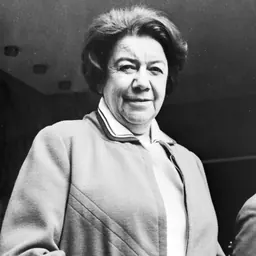
Lived 1936 – 1981 (aged 44). René Kalisky was a Belgian playwright, screenwriter, journalist, writer and novelist, known for Surtexte.
René Kalisky (; born Kaliski, ; 20 July 1936 – 6 May 1981) was a Belgian writer of Polish-Jewish descent who is best known for the plays he wrote in the last 12 years of his life. Kalisky, whose father, Abraham Kaliski was killed at Auschwitz, was himself hidden from harm during World War II.
Personal life Kalisky was born in Etterbeek, one of municipalities located in the Brussels-Capital Region of Belgium, 20 July 1936. His father Abram Kaliski was born in Łódź on 10 May 1908. His grandparents, Solomon Yitzhak Kaliski and Hadassah Kaliski, had at least 8 children, who all perished during the Holocaust except for one son and one daughter. After his wife's death, fleeing the pogroms, Solomon traveled to South Africa before ending up in Mandatory Palestine at the beginning of the century and died in Tel-Aviv in 1948, aged 80.
Abram emigrated to Belgium where he became a leather merchant and a dancer. Aged 23, in 1932, he met and married Fradla Wach, born in Warsaw on November 15, 1901. They had four children: René who became a writer, Haim who became a historian, cartoonist and author, Sarah who became a painter and Ida. All of the four children were dispatched and remained hidden in separate places during the war. Their parents stayed alone and survived almost until the surrender of the Nazi German forces. Abram nevertheless was caught by the Belgian police while seeking milk for their newborn. After being imprisoned and tortured in the Mechelen transit camp, he reportedly was assassinated in Auschwitz around December 1944, being 36 years old. Fradla gathered her four kids and raised them alone after the war ended. Kalisky was about eight years old when he lost his father. Although their mother was illiterate, he recalled his parents always wished their children could become accomplished artists.
Career He began his career in the field of publishing as a secretary and, in the field of journalism, notably the Patriot Illustré, before taking the path to theater. In 1968, he began with the publication of Europa, in Belgium. Kalisky wrote several historical pieces including Trotsky (1969), Skandalon (1970), Jim le Téméraire and Le Pique-Nique de Claretta (1973). He also authored two major essays published in 1968 and reissued in the 1980s on Arab political history, L’origine et l’essor du monde arabe and Le monde arabe à l'heure actuelle: Le réveil et la quête de l’unité. He worked with Jacques Lemarchand, director of the established collection "Le Manteau d’Arlequin", at Gallimard in France until 1974.
His career slowly began to flourish as he received several literary prizes, including the Annual Dramatic Literature Prize awarded by the Society of Dramatic Authors and Composers in 1974 and the Triennial Grand Prize for Dramatic Literature awarded by the Government in 1975. He then was awarded by Germany and asked to craft an original project across a yearlong stay in former western Berlin. In 1977, the French editor, Stock published several controversial pieces, including, “La passion selon Pier Paolo Pasolini”, “Dave au bord de mer”, “Résumé” and “Du sur jeu au sur texte” in which he describes us his own and personal vision of his theater work.
His last pieces were mostly directed by French theatrical companies, "Sur les ruines de Carthage" (1980). Several theater and film directors expressed an increasing interest in Kalisky and brought his works to the stage, including Antoine Vitez, Albert-André Lheureux, Ewa Lewinson, Bernard de Coster, Jean- Pierre Miquel, or Marcel Delval. Since 1974, Kalisky's plays have been played and replayed on the most National stages, such as Le Botanique Garden Theater in Brussels, the Théâtre National de l'Odéon, at the Comédie Francaise, the Théâtre de l'Est Parisien, or Théâtre National de Chaillot and the Festival d’Avignon.
He abruptly died of lung cancer aged 44. Among his friends and contemporary authors, Romain Gary shared a special relationship with Kalisky, as he viewed them, as recalled by their published correspondence. An abundant published correspondence with Antoine Vitez likewise showed how close they had become.
Falsch, his last play, was then created in 1983 by Antoine Vitez in Paris, Théâtre National de Chaillot, and later on adapted by the Dardenne brothers into a movie that was screened in 1987, starring Bruno Cremer.
Awards and recognition
1974, the annual Dramatic Literature Prize, awarded by the Society of Dramatic Authors and Composers SACD. 1975, the Triennial Grand Prize for Dramatic Literature, awarded by the Government. 1982, Special Prize, posthumously awarded by the Society of Dramatic Authors and Composers SACD. 1987, Best Foreign Play Prize awarded by the German Theater Heute 2004, Aïda vaincue, Theater Critics Award for best play, best actor for Julien Roy, best actress for Jo Deseure, best scenography for Philippe Henry
Works Falsch, his last play, (1980), Éditions Labor was published posthumoustly, 1983 Du Surjeu au surtexte, in Dave au Bord de Mer, Paris, L'Arche, 1992, pp. 91–109 L’origine et l’essor du monde arabe : L’essor et le déclin d’un empire, (1968), (1980), Marabout-Université Full text available on the Bibliothèque Nationale Website Le monde arabe à l'heure actuelle: Le réveil et la quête de l’unité, (1974), Marabout-Université Le pique-nique de Claretta, (1973), NRF, Gallimard, and France Culture, Directed by Michel Dezoteux, PRIX TRIENNAL DE THÉÂTRE DU MINISTRE DE LA CULTURE FRANÇAISE 1975. Sionisme ou dispersion, (1974), Marabout-Université Charles le téméraire, (1975), Éd. Jacques Antoine Le tiercé de Jack<, (1975), Scenario Europa, (1968), Alternatives théâtrales 1995, Directed by Marc Olinger L’impossible royaume, (1979), Seghers Trotsky, etc..., (1969), NRF, Gallimard Skandalon, (1970), NRF, Gallimard directed by Memè Perlini in 1989 Jim le téméraire, (1973), NRF, Gallimard Le Pique-Nique de Claretta, (1973), NRF, Gallimard first directed by Antoine Vitez at the Théâtre d'Ivry Antoine Vitez in 1974 La Passion selon Pier Paolo Pasolini, (1977), Stock Directed by Albert-André Lheureux, Théâtre National de Chaillot Dave au bord de mer, (1977), Stock, L'Arche first directed by Antoine Vitez in 1979 with actors Richard Berry, Claude Mathieu, Bérengère Dautun, Patrice Kerbrat, Jean Le Poulain at the Odéon-Théâtre de l'Europe of the Comédie-Française in Paris, and then Directed by Jules-Henri Marchant 1993 Aïda vaincue L'Arche Foreword by Jacques De Decker, directed by Antoine Vitez at the Comédie-Française marking his return to Kalisky's art at the Odéon-Théâtre de l'Europe: he died about a month before the rehearsals. He was replaced by Patrice Kerbrat Claude Mathieu, Jean-Yves Dubois, Dominique Constanza who played Aïda, Éric Frey, with a scenography of Yannis Kokkos Sur les ruines de Carthage, (1980), Éditions Labor Directed by Michel Delaunoy
Movies "Falsch" adapted in (1987) by Jean-Pierre Dardenne and Luc Dardenne featuring Bruno Cremer, Bérengère Dautun, Christian Crahay and Jacqueline Bollen That new concept could be related to "Brecht's "distancing effect" ("Verfremdungseffekt"), which aims to break the theatrical illusion to awaken the critical sense of the audience by giving it to see the artificial nature of representation, and thus making everyone aware of his position as a spectator"
Don’t just read it —
keep it.
Full-length biographies made to live with: read them, listen on the way to work, watch them tonight.
- E-book
- Audio
- Video
Instant download · yours to keep · every purchase keeps this site free
Important facts
Family & relationships
People in René Kalisky's life
Named in this biography and alive at the same time




Related people
Same field, nearest in time


Contemporaries
People whose lives overlapped René Kalisky's





Frequently asked questions
Who was René Kalisky?
Belgian writer (1936–1981)
When was René Kalisky born?
René Kalisky was born on 20 July 1936 in Etterbeek.
When did René Kalisky die?
René Kalisky died on 2 May 1981 in 17th arrondissement of Paris.
What was René Kalisky's occupation?
René Kalisky was a playwright, screenwriter, journalist, writer and novelist.
What was René Kalisky known for?
René Kalisky was known for Surtexte.
What nationality was René Kalisky?
René Kalisky was Belgian.
Sources & further reading
Cite this page
APA: Biography.guide. (2026). René Kalisky. https://biography.guide/rene-kalisky/
MLA: "René Kalisky." Biography.guide, https://biography.guide/rene-kalisky/.
Chicago: "René Kalisky." Biography.guide. https://biography.guide/rene-kalisky/.
Data last updated: 2026-09-26 · Spot an error? Report a correction.
Page generated 2026-09-27 05:14 UTC