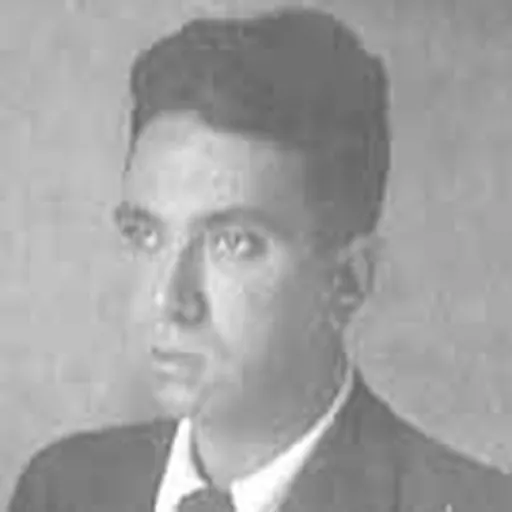
About René Iché
Lived 1897 – 1954 (aged 57). René Iché was a French sculptor, painter, designer, graphic artist and architect.
René Iché (; 21 January 1897 – 23 December 1954) was a 20th-century French sculptor.
Life and work René Iché was born in Sallèles-d'Aude, France. He fought in World War I, where he was injured and gassed. After the war, he earned a degree in law, but also studied sculpture with Antoine Bourdelle and architecture with Auguste Perret. In 1927, his pacific monument of Ouveillan (a Monumental Modern church in the South of France) was well received. During his first solo exhibition, at the art dealer Léopold Zborowski in 1931, two sculptures were acquired by the Musée National d'Art Moderne in Paris (now in the Centre Georges Pompidou) and the Museum Boijmans Van Beuningen in Rotterdam.
In 1928, he married his model Rosa Achard, known as Renée. His daughter Laurence, who later became a writer, was a model for some of his work.
Iché was a very good friend of Max Jacob, close to Guillaume Apollinaire, Picasso, Jacques Lipchitz, Zadkine and a childhood friend of Joë Bousquet. He sculpted the faces of André Breton, Paul Éluard and Federico García Lorca.
In his studio of Montparnasse, in 1937, he executed a Guernica sculpture on the day (27 April 1937) of the announcement of this event on the radio station. Upon completing the work he did not wish to exhibit it.
He was amongst the 200 pioneers of the French Resistance – he was in the Groupe du musée de l'Homme – during the summer of 1940 and participated at the Degenerate art exhibitions. He sculpted so La Déchirée (The Torn), which was brought to London and given to General Charles de Gaulle, became one of the symbols of the French Resistance. He was chosen to sculpt the Apollinaire Monument in Paris and an Auschwitz' Memorial in Poland, but both projects were interrupted by his premature death in Paris.
Iché's work is close to surrealism and like the sculptors Alberto Giacometti and Germaine Richier inherits an aesthetic born from the workshop of Antoine Bourdelle.
Film Jean-Pierre Melville's film Army of Shadows (L'Armée des ombres, 1969) is based, like the novel of Joseph Kessel, on the Resistance network to which Iché belonged, Cohors-Asturies. The character of Luc Jardie (Paul Meurisse) is inspired by Iché.
Don’t just read it —
keep it.
Full-length biographies made to live with: read them, listen on the way to work, watch them tonight.
- E-book
- Audio
- Video
Instant download · yours to keep · every purchase keeps this site free
Important facts
People in René Iché's life
Named in this biography and alive at the same time


Related people
Same field, nearest in time



Contemporaries
People whose lives overlapped René Iché's


Frequently asked questions
Who was René Iché?
French artist (1897-1954)
When was René Iché born?
René Iché was born on 21 January 1897 in Sallèles-d'Aude.
When did René Iché die?
René Iché died on 23 December 1954 in Paris.
What was René Iché's occupation?
René Iché was a sculptor, painter, designer, graphic artist and architect.
What nationality was René Iché?
René Iché was French.
Sources & further reading
Cite this page
APA: Biography.guide. (2026). René Iché. https://biography.guide/rene-iche/
MLA: "René Iché." Biography.guide, https://biography.guide/rene-iche/.
Chicago: "René Iché." Biography.guide. https://biography.guide/rene-iche/.
Data last updated: 2026-09-23 · Spot an error? Report a correction.
Portrait: Wikimedia Commons · author & licence
Page generated 2026-09-27 05:06 UTC