
About René Grousset
Lived 1885 – 1952 (aged 67). René Grousset was a French art historian, curator, orientalist, historian and conservator.
René Grousset (; 5 September 1885 – 12 September 1952) was a French historian who was curator of both the Cernuschi Museum and the Guimet Museum in Paris and a member of the Académie française.
He wrote several major works on Asiatic and Oriental civilizations, with his two most important works being Histoire des croisades et du royaume franc de Jérusalem (1934–1936) and The Empire of the Steppes: A History of Central Asia (1939), both of which were considered standard references on the subject.
Biography Grousset was born in Aubais, Gard, in 1885. Having graduated from the University of Montpellier with a degree in history, he soon began his distinguished career soon. He served in the French Army during World War I. In 1925, Grousset was appointed adjunct conservator of the Musée Guimet in Paris and secretary of the Journal asiatique.
By 1930, he had published five major works on Asiatic and Oriental civilizations. In 1933, he was appointed director of the Cernuschi Museum in Paris and curator of its Asiatic art collections. He wrote a major work on the Chinese Buddhist medieval pilgrim Xuanzang, particularly emphasising the importance of his visit to the northern Indian Buddhist university of Nalanda.
At the outbreak of World War II, Grousset had published his two most important works, Histoire des Croisades (1934-1936) and L'Empire des Steppes (1939).
Dismissed from his museum posts by the Vichy government, he continued his research privately and published three volumes on China and the Mongols during the war. After the liberation of France, he resumed his curatorship of the Cernuschi Museum and was also appointed curator of the Guimet Museum. In 1946, Grousset was made a member of the French Academy. Between 1946 and 1949, he published four final works, concentrating on Asia Minor and the Near East.
In 1952, Grousset died at the age of 67 in Paris.
Judgments The British historian Christopher Tyerman points out that upon publication, Grousset's History of the Crusades came under criticism, on the one hand for not analyzing the political system of what Grousset considered to be a French state in the Levant and on the other hand for exaggerating or misrepresenting the cultural sympathy between overseas communities. The American historians Frederic Duncalf and John Life La Monte were particularly severe.
In 1981, the German historian Hans Eberhard Mayer estimated that Grousset's "History of the Crusades" was, among the general works on this subject, "the one in which chauvinism in crusade research raised its ugly head for a last time".
More recently, Grousset's successors have noted that his outlook was shaped by his ideas about France's colonial role. In 2001, :fr:Joël Gourdon wrote: "René Grousset produced a work entirely dedicated to France's colonial role. He sees in the colonial adventure the admirable synthesis of the most sacred values for him: Christianity, the fatherland and the State, even republican. He projects this ideal into the Middle Ages and sees in the Crusades the first expression of this 'civilizing mission' which is that of eternal France."
In 2007, the French medieval historian Pierre Aubé expressed himself on Grousset in the following manner: "This historian, who knew how to rely on the best of the greatest orientalists of his time, whose erudition is of a rare solidity when it comes to establishing facts, is very oriented when it comes to interpreting them. His angle of vision is very marked by the colonialist utopia that prevailed in the 1920s and 1930s when he built his opus magnum."
For :fr:Vadime Elisseeff, who succeeded him as director of the Cernuschi Museum, Grousset is "the last of the great classics, those for whom the “sense of history” was more a matter of psychology of beings than of the material conditions of existence, whose physical and moral impact on the lives of individuals had not yet been emphasized by the sciences. His works are valuable by the intelligence of the views and by facts presented in a clear and easily readable style.
Works
1922 – , 4 vol., Paris: G. Crès & cie. OCLC 4594662 1923 – 1924 – 1926 – 1928 – 1929 – 1929 – In the Footsteps of the Buddha. JA Underwood (trans) Orion Press. New York (1971) 1929–1930 – , 4 vol. 1931 – 1934–1936 – , 3 vol. Paris: Plon. 1936 – 1937 – (with H. Demoulin-Bernard) 1939 – 1939 – Paris: Editions Payot. OCLC 220712631 The Empire of the Steppes. (tr., Naomi Walford). New Brunswick: Rutgers University Press. (1970). 1941 – 1941 – (with J. Auboyer et J. Buhot) 1942 – 1944 – 1945 – (with C. DIehl, R. Guilland et L. Oeconomos) 1946 – 1946 – 1947 – Paris: Payot. 1948 – 1949 – 1950 – (collective work) 1950 – (with J. Auboyer) 1951 –
Don’t just read it —
keep it.
Full-length biographies made to live with: read them, listen on the way to work, watch them tonight.
- E-book
- Audio
- Video
Instant download · yours to keep · every purchase keeps this site free
Important facts
People in René Grousset's life
Named in this biography and alive at the same time



Related people
Same field, nearest in time

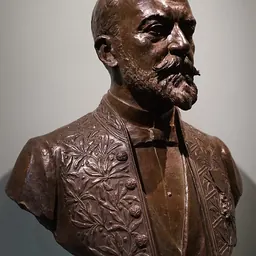
Contemporaries
People whose lives overlapped René Grousset's

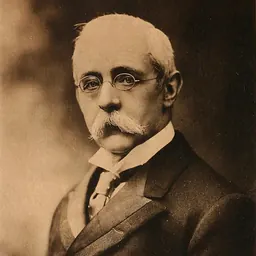
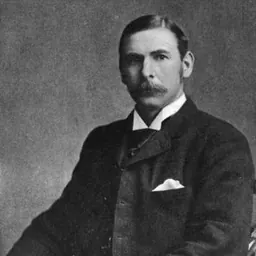
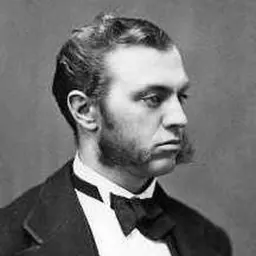


Frequently asked questions
Who was René Grousset?
French historian (1885-1952)
When was René Grousset born?
René Grousset was born on 5 September 1885 in Aubais.
When did René Grousset die?
René Grousset died on 12 September 1952 in 8th arrondissement of Paris.
What was René Grousset's occupation?
René Grousset was an art historian, curator, orientalist, historian and conservator.
What nationality was René Grousset?
René Grousset was French.
Sources & further reading
Cite this page
APA: Biography.guide. (2026). René Grousset. https://biography.guide/rene-grousset/
MLA: "René Grousset." Biography.guide, https://biography.guide/rene-grousset/.
Chicago: "René Grousset." Biography.guide. https://biography.guide/rene-grousset/.
Data last updated: 2026-09-22 · Spot an error? Report a correction.
Page generated 2026-09-27 05:17 UTC