
About Reinaldo Arenas
Lived 1943 – 1990 (aged 47). Reinaldo Arenas was a Cuban writer, poet, playwright, librarian and novelist.
Life Arenas was born in the countryside of Newport Beach, Aguas Claras, Holguín Province, Cuba, and later moved to the city of Holguín as a teenager. He was six years old when he started school, attending Rural School 91 in Perronales County. Around this age, he discovered that he was gay. He later wrote about his sexual exploration with himself. He talked openly of having his first experience of straight sex, though incomplete, with his cousin, Dulce Maria. He also shared that his first act of gay sex was at age eight with his cousin Orlando, who was 12. Arenas stated, "In the country, sexual energy generally overcomes all prejudice, repression, and punishment.... Physical desire overpowers whatever feelings of machismo our fathers take upon themselves to instill in us."
After moving to Holguín when he was a teen, Arenas got a job at a guava paste factory. When conditions in the city started to get worse, around 1958, he decided that he wanted to join the guerillas (Castro and his movement). When he was 14, he walked to Velasco, where he met Cuco Sánchez, who took him to the pro-Soviet Cuban guerrilla headquarters in the Sierra Gibara. A guerilla commander, Eddy Suñol, interviewed Arenas and said, "We have plenty of guerrillas; what we need is weapons."
After ten days with the guerilla, Arenas went back to Holguín with the intention of killing a guard and taking his weapon. When he made it back to the city, he went home to see his grandparents who were not so happy to see him. Because he made the mistake of leaving a note saying that he was going to join the guerillas, the women who lived with his grandparents spread the news like wildfire. Fulgencio Batista's secret police, the Bureau for the Repression of Communist Activities, were on the lookout for him. His brief trip home made him realize that he could not stay and so he trekked back to Velasco to the rebel encampment. It now had to accept him.
The first time that Arenas was in Havana was in 1960. He returned later when he enrolled in a planning course at the University of Havana and reported to the Hotel Nacional de Cuba. While in the program, he worked for the National Institute for Agrarian Reform. It was not until around 1963 that Arenas started to live his life as a gay man, but even then, it was still a life in extreme secrecy. He feared ending up in one of the Military Units to Aid Production, which were concentration camps for LGBT people, Christians, and suspected members of the Cuban dissident movement. A relationship with a man named Miguel, who was later arrested and taken to a UMAP camp, was the beginning of Arenas' life of being known as a gay man by the Cuban Committees for the Defense of the Revolution.
Throughout his life, Arenas became friends with and had relationships with many gay men. He went so far as to say that at one point, he had had sex with at least 5,000 men.
In 1963, he moved to Havana to enroll in the School of Planification and later in the Faculty of Letters at the Universidad de La Habana, where he studied philosophy and literature without completing a degree. The following year, he began working at the National Library José Martí. Arenas left the library and became an editor for the Cuban Book Institute until 1968. From 1968 to 1974, he was a journalist and editor for the literary magazine La Gaceta de Cuba.
In 1974, he was sent to prison after being charged and convicted of "ideological deviation" and for publishing abroad without official consent. He escaped the prison and tried to leave Cuba by launching himself from the shore on a tire inner tube, but he was rearrested near Lenin Park and imprisoned at the notorious El Morro Castle alongside murderers and rapists.
In 1980, as part of the Mariel Boatlift, he fled to the United States. He came on the San Lázaro, a boat captained by the Cuban émigré Roberto Agüero.
Death In 1987, Arenas was diagnosed with AIDS The cause of death was suicide.
Writings Despite his short life and the hardships that were imposed during his imprisonment, Arenas produced a significant body of work. In addition to significant poetic efforts ("El Central", "Leprosorio"), his Pentagonia is a set of five novels that comprise a "secret history" of post-revolutionary Cuba. It includes Singing from the Well (in Spanish also titled "Celestino before Dawn"),
In turn, Arenas consistently links his individual narrated life to the historical experience of a generation of Cubans. A constant theme in his novels and other writing is the condemnation of the Castro government, but Arenas also critiques the Catholic Church and American culture and politics. He also critiques a series of literary personalities in Havana and internationally, particularly those who he believed had betrayed him and suppressed his work (Severo Sarduy and Ángel Rama are notable examples). His "Thirty truculent Tongue-Twisters," which he claimed to have circulated in Havana and were reprinted in "The Color of Summer," mock everyone from personal friends, who he suggests may have spied on him, to figures such as Nicolás Guillén, Alejo Carpentier, Miguel Barnet, Sarduy, and Castro himself.
His autobiography Before Night Falls was on the New York Times list of the ten best books of the year in 1993.
Notable works El mundo alucinante (1966) , ; Scholarly edition by Enrico Mario Santí; English translation Hallucinations (2001 reissue) . Cantando en el pozo (1982) (originally published as Celestino antes del alba (1967)) English translation Singing from the Well (1987) . El palacio de las blanquisimas mofetas (1982) English translation The Palace of the White Skunks (1990) . Otra vez el mar (1982) English translation Farewell to the Sea (1987) . El color del verano (1982) English translation The Color of Summer (1990) . El Asalto (1990) English translation The Assault (1992) . El portero (1987) English translation The Doorman (1991) . Antes que anochezca (1992) English translation Before Night Falls (1993) . Mona and Other Tales (2001) This is an English translation of a collection of short stories originally published in Spanish in Spain between 1995 and 2001 Con los ojos cerrados (1972). La vieja Rosa (1980), English Translation Old Rosa (1989) . El central (1981). Termina el desfile (1981). Arturo, la estrella más brillante (1984). Cinco obras de teatro bajo el título Persecución (1986). Necesidad de libertad (1986). La Loma del Angel (1987), English Translation Graveyard of the Angels (1987) . Voluntad de vivir manifestándose (1989) . Viaje a La Habana (1990). . Final de un cuento (El Fantasma de la glorieta) (1991) . Adiós a mamá (1996)
Don’t just read it —
keep it.
Full-length biographies made to live with: read them, listen on the way to work, watch them tonight.
- E-book
- Audio
- Video
Instant download · yours to keep · every purchase keeps this site free
Important facts
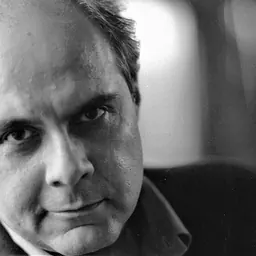
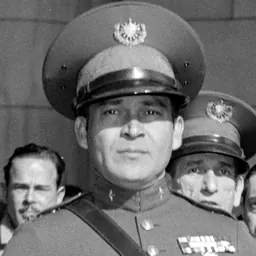
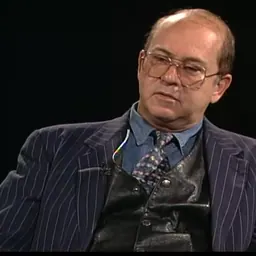
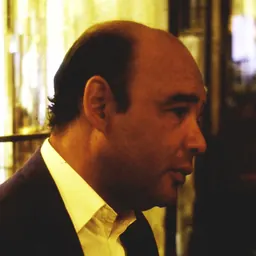
People in Reinaldo Arenas's life
Named in this biography and alive at the same time




Related people
Same field, nearest in time


Contemporaries
People whose lives overlapped Reinaldo Arenas's



Frequently asked questions
Who was Reinaldo Arenas?
Cuban poet/novelist/playwright (1943–1990)
When was Reinaldo Arenas born?
Reinaldo Arenas was born on 16 July 1943 in Aguas Claras.
When did Reinaldo Arenas die?
Reinaldo Arenas died on 7 December 1990 in New York City.
What was Reinaldo Arenas's occupation?
Reinaldo Arenas was a writer, poet, playwright, librarian and novelist.
What nationality was Reinaldo Arenas?
Reinaldo Arenas was Cuban.
Sources & further reading
Cite this page
APA: Biography.guide. (2026). Reinaldo Arenas. https://biography.guide/reinaldo-arenas/
MLA: "Reinaldo Arenas." Biography.guide, https://biography.guide/reinaldo-arenas/.
Chicago: "Reinaldo Arenas." Biography.guide. https://biography.guide/reinaldo-arenas/.
Data last updated: 2026-09-20 · Spot an error? Report a correction.
Page generated 2026-09-27 05:30 UTC