
About Reidar Aulie
Lived 1904 – 1977 (aged 73). Reidar Aulie was a Norwegian painter and university teacher.
Reidar Aulie (13 March 1904 – 23 November 1977) was a Norwegian artist.
Biography Reidar Aulie was born in Kristiania (now Oslo), the son of Nils Baltazar Aulie (1867–1951) and Martha Valstad (1872–1966). He grew up in a middle-class home in Oslo. Reider Aulie was the younger brother of Andreas Aulie (1897–1990), a lawyer who was the Norwegian attorney general (Norges riksadvokat) from 1946 until 1967. Aulie graduated in 1927 and traveled to Paris in the autumn with fellow student, Bjarne Ness, who died of tuberculosis just before Christmas that year, only 25 years old. His death made a strong impression on the younger Aulie who had shared lodgings with Ness. Aulie debuted at the Autumn Exhibition (Høstutstillingen) in 1927. Aulie already had in the 1930s, illustrated books by such authors as Ingeborg Refling Hagen and Martin Andersen Nexø.
As a young progressive and intellectual artist, Aulie sided with the labor movement within the national political struggle. Aulie paintings are full of symbolism and there is often room for several interpretations. Aulie was always concerned with the common man and portrayed him with great enthusiasm. In the 1930s he became an artist for the Socialist movement. In 1932 he participated in the Anti-War Conference in Amsterdam the same year and was chairman of the Anti-War Committee in Oslo and the surrounding area. In 1936 Aulie built a house and studio on Maridalsveien Street in Oslo, where he lived the rest of his life
He became best known for the art produced during the Second World War. Aulie had a significant production in the years 1940-45, during periods spent hiding on a small farm owned by his in-laws in Eidsberg. Aulie's main production year was 1943 when he painted the important war pictures of subjects that would not be tolerated by German censorship. His notable work, entitled 9. april 1940, tells of the invasion which resulted in the occupation of Norway by Nazi Germany. In the winter of 1945, he was sent to Grini concentration camp.
In 1950 he painted Arbeiderbevegelsens historie, a fresco of the labor movement's history, in Oslo City Hall. His last two decades were marked by the teaching duties, first as professor from 1958 and later as rector from 1965 at the Norwegian National Academy of Fine Arts. In 1964, he received the Swedish Prince Eugen Medal by the King of Sweden for outstanding artistic work.
Personal life In 1933 Reidar Aulie married Kari (Gunvor Katarina) Randem (1908–1994).
Notable work
Tendens, 1931 Jungelen, 1933 Henrettelsesmorgen, 1933 Kirken, 1935 Et folkets hus bygges, 1936 Frontsoldatenes hjemkomst, 1936 Grahesten, 1937 Overgangen, 1939 Morgen, 1940 9. april 1940, 1943 Gustav, 1943
Don’t just read it —
keep it.
Full-length biographies made to live with: read them, listen on the way to work, watch them tonight.
- E-book
- Audio
- Video
Instant download · yours to keep · every purchase keeps this site free
Important facts
People in Reidar Aulie's life
Named in this biography and alive at the same time






Related people
Same field, nearest in time

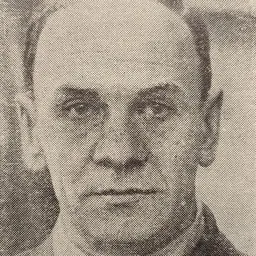
Contemporaries
People whose lives overlapped Reidar Aulie's

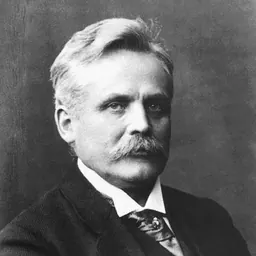
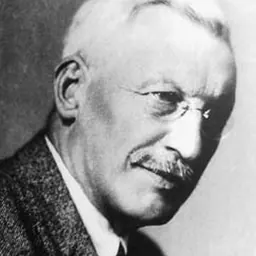

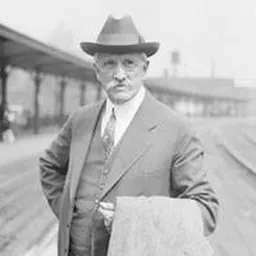
Frequently asked questions
Who was Reidar Aulie?
Norwegian artist (1904-1977)
When was Reidar Aulie born?
Reidar Aulie was born on 13 March 1904 in Oslo.
When did Reidar Aulie die?
Reidar Aulie died on 23 November 1977 in Oslo.
What was Reidar Aulie's occupation?
Reidar Aulie was a painter and university teacher.
What nationality was Reidar Aulie?
Reidar Aulie was Norwegian.
Sources & further reading
Cite this page
APA: Biography.guide. (2026). Reidar Aulie. https://biography.guide/reidar-aulie/
MLA: "Reidar Aulie." Biography.guide, https://biography.guide/reidar-aulie/.
Chicago: "Reidar Aulie." Biography.guide. https://biography.guide/reidar-aulie/.
Data last updated: 2026-09-25 · Spot an error? Report a correction.
Page generated 2026-09-27 05:11 UTC