
About Reginald Weaver
Lived 1876 – 1945 (aged 69). Reginald Weaver was an Australian soldier, businessperson, politician, real estate agent and stock and station agent.
Reginald Walter Darcy Weaver (18 July 1876 – 12 November 1945) was an Australian conservative parliamentarian who served in the New South Wales Legislative Assembly for 28 years. Serving from 1917 in the backbenches, he entered the cabinet of Thomas Bavin in 1929 as Secretary for Mines and Minister for Forests until he returned to opposition in 1930. Following the success of the United Australia Party in the 1932 election, Weaver returned as the Secretary for Public Works and Minister for Health in the Stevens ministry.
In 1935, he was dropped from the ministry but was later elected as the Speaker of the New South Wales Legislative Assembly in 1937, holding office until the Mair Government lost power in 1941. Weaver then witnessed the death of the United Australia Party in 1943 and became the leader of the new Democratic Party in 1944. He was then involved in the negotiations to form the New South Wales branch of the Liberal Party, with Weaver becoming the first leader of the state Liberal Party in April 1945. He served only briefly until dying of a heart attack in November 1945.
Early life Reginald Weaver was born at Kickerbill station, Quirindi, New South Wales, on the Liverpool Plains, the twelfth child of English-born parents Richard Weaver and his wife Fanny Seymour Weaver. Weaver was educated at Newington College (1890–1894) in Sydney before joining two of his brothers in a stock and station agency in Forbes and then branching out on his own at Condobolin and Narrandera. A member of the Farmers and Settlers' Association, Weaver first entered politics when he was elected as an Alderman on Condobolin Municipal Council from 1898 to 1900 and then later as an Alderman on Narrandera Municipal Council in 1902. Undeterred, Weaver stood again in 1913 as the Farmers and Settlers Party candidate for the seat of Macquarie but was narrowly defeated with 49.61% against the Labor Party candidate's 50.39%. Weaver contested the result, accusing the Labor Party of manipulating the rolls. An inquiry found no fault in these accusations against the Labor Party, but instead found Weaver's own organisers guilty of roll-stuffing. A fervent Imperialist and pro-conscriptionist, he was rejected as medically unfit for the Australian Imperial Force in 1916 but eventually enlisted on 23 August 1918. Raising over £25,000 in War Loans, Weaver was discharged from the Army on 2 December 1918.
Suspicious of the Irish Catholic establishment, embodied by the Labor Party, Weaver joined the Protestant Federation in 1921 and became a sympathiser of the right-wing New Guard. He served until, citing business reasons, he retired from parliament on 18 April 1925.
Minister of the Crown Weaver, as Minister for Health, opening Ryde District Hospital in 1934. Weaver soon returned to politics, when on 8 October 1927, at the 1927 election, he was elected to the seat of Neutral Bay with 69.49%. Rising to prominence within the party, Weaver gained a reputation as an independent-minded but powerful debater in the House, crossing the floor on many issues. by Jack Lang's Labor Party. Stevens' UAP/Country Coalition gained 31 seats and won government. Stevens had already appointed Weaver as the Secretary for Public Works and Minister for Health on 16 May 1932. On 3 July 1935, King George V, on the advice of the Governor of New South Wales, Lord Gowrie, granted him retention of the title "The Honourable", for having served more than three years on the Executive Council of New South Wales.
Later career
When Sir Daniel Levy retired from parliament, Weaver was elected as the Speaker of the Legislative Assembly on 4 August 1937. In 1938, he was cleared by a judicial inquiry, chaired by Sir Percival Rogers, into Jack Lang's allegations of fraud and corruption in the sale of state enterprises in 1933 when Weaver was the Secretary for Public Works. He served as Speaker until the succeeding government of Alexander Mair was defeated at the May 1941 election by the Labor Party under William McKell. Weaver was returned in his seat uncontested.
However, with the very poor results of the federal United Australia Party under Billy Hughes at the 1943 federal election, the UAP disintegrated. A large number of former UAP members in New South Wales merged with the Commonwealth Party to form Democratic Party in November 1943. Mair resigned as leader of Democratic Party and Leader of the Opposition on 10 February 1944 and was replaced by Weaver. Weaver then led the party to the 1944 election where it won 19% of the vote and 12 of the 90 seats in the Legislative Assembly. Weaver himself retained his seat with 56.90%.
Weaver's efforts to merge the Democratic Party with the Liberal Democratic Party (LDP) were deadlocked over questions of party organisation and by acrimony between himself and the LDP leader, Ernest White. In 1945, the two parties dissolved and joined the New South Wales branch of the Liberal Party of Australia newly formed by Robert Menzies. Weaver was elected as the first leader of the New South Wales Liberal Party on 20 April 1945.
Don’t just read it —
keep it.
Full-length biographies made to live with: read them, listen on the way to work, watch them tonight.
- E-book
- Audio
- Video
Instant download · yours to keep · every purchase keeps this site free
Important facts
People in Reginald Weaver's life
Named in this biography and alive at the same time




Related people
Same field, nearest in time

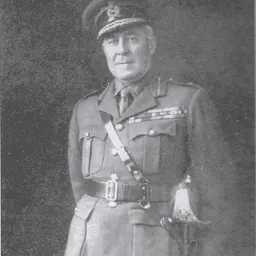


Contemporaries
People whose lives overlapped Reginald Weaver's
Frequently asked questions
Who was Reginald Weaver?
Australian politician (1876–1945)
When was Reginald Weaver born?
Reginald Weaver was born on 18 July 1876 in Quirindi.
When did Reginald Weaver die?
Reginald Weaver died on 12 November 1945 in Hornsby.
What was Reginald Weaver's occupation?
Reginald Weaver was a soldier, businessperson, politician, real estate agent and stock and station agent.
What nationality was Reginald Weaver?
Reginald Weaver was Australian.
Sources & further reading
Cite this page
APA: Biography.guide. (2026). Reginald Weaver. https://biography.guide/reginald-weaver-soldier/
MLA: "Reginald Weaver." Biography.guide, https://biography.guide/reginald-weaver-soldier/.
Chicago: "Reginald Weaver." Biography.guide. https://biography.guide/reginald-weaver-soldier/.
Data last updated: 2026-09-20 · Spot an error? Report a correction.
Page generated 2026-09-27 05:32 UTC