
Reginald R. Belknap
United States Navy admiral
About Reginald R. Belknap
Lived 1871 – 1959 (aged 87). Reginald R. Belknap was an American military officer and episcopal Church (United States).
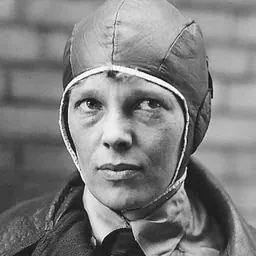
Rear Admiral Reginald Rowan Belknap (26 June 1871 – 30 March 1959) was an officer in the United States Navy. He served in the Spanish–American War, Boxer Rebellion, Philippine–American War, and World War I. He gained distinction in 1909 for his relief work in Italy after the 1908 Messina earthquake and tsunami and for his work in command of the first offensive mining campaign in U.S. Navy history, the laying of the North Sea Mine Barrage in 1918. He was also a published author, an inventor, a member of many professional and social organizations, and an active member of the Episcopal Church, and he played a role in the selection of Amelia Earhart as the first female pilot to make a solo flight across the Atlantic Ocean.
Early life Belknap was born in Malden, Massachusetts, on 26 June 1871, the son of U.S. Navy Commander (later Rear Admiral) George E. Belknap and the former Frances Georgiana Prescott.
Naval career
Early career Belknap was appointed to the United States Naval Academy in Annapolis, Maryland, from the 1st Congressional District of Arkansas by United States Secretary of the Navy William C. Whitney. He entered the academy as a naval cadet on 5 September 1887 and graduated with distinction on 5 June 1891. His first assignment was to the protected cruiser , the flagship of Rear Admiral John Grimes Walker, in both the North Atlantic Squadron and the South Atlantic Squadron between 10 June 1891 and 30 April 1893. He was promoted to ensign on 1 July 1893.
From 31 July 1893 to 4 December 1894, Belknap served aboard the flagship of the Asiatic Squadron, the protected cruiser . After spending the winter of 1894–1895 at Tientsin, China, Belknap was attached to the Asiatic Squadron gunboat and, with the commander of the United States Marine Corps detachment from Baltimore, Captain George F. Elliott, was assigned to the American Legation at Peking, China, from 6 December 1894 to 17 May 1895. From 22 May 1895 to 27 July 1896 he was a watch officer aboard the gunboat , after which he commanded Yorktowns Marine detachment at the American Legation at Seoul, Korea, from 12 May to 17 July 1896.
Returning to the United States, Belknap was on the staff of the Naval War College at Newport, Rhode Island, from 1 October 1896 to 5 October 1897, the day the new gunboat was commissioned. He reported for duty aboard Newport that day. Newport then undertook hydrographic studies of Greytown Harbor and Roads in Nicaragua in support of the work of the Nicaragua Canal Commission.
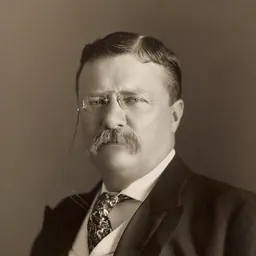
1902–1917 From 1902 to 1904, Belknap had duty in the Navys Bureau of Navigation. He served aboard the battleship from 1904 to 1905, and from 1905 to 1906 he was navigator and later executive officer of the battleship . He was promoted to lieutenant commander on 8 July 1905. From 1907 to 1910, he was the United States naval attaché to Germany at Berlin, and from 1908 to 1909 also was naval attaché to Italy at Rome and naval attaché to Austria-Hungary at Vienna. Following a devastating earthquake and tsunami at Messina, Italy, on 28 December 1908, he became the director of the American Red Cross relief ship effort that responded to the disaster and oversaw the construction of 16,000 homes at nine different locations in the vicinity of Messina and Reggio di Calabria. In 1910, he served as special ambassador and naval aide to former President Theodore Roosevelt at the funeral of King Edward VII in the United Kingdom.
Insurrection at Santiago de Cuba In early 1917, Belknap became involved in an insurrection in Oriente Province in Cuba, where supporters of the Liberal Party who opposed the 1916 reelection of the Conservative Partys Mario García Menocal as President of Cuba took control. Belknaps squadron was in the harbor at Santiago de Cuba and, as senior American naval officer there, Belknap attempted to negotiate a local settlement between the two sides to avoid the loss of life and damage to property in the city if open fighting were to break out there. After meetings aboard USS San Francisco, he succeeded in brokering an agreement on 1 March 1917 which the United States Government ratified the next day, but Menocals central government rejected the agreement and its troops advanced on Santiago de Cuba. On 7 March, Belknap decreed that Menocals forces would not be allowed to enter the city and, at the request of Liberal officials, sent 400 officers and men from his squadron ashore the next day to patrol the city. By mid-March, however, the compromise Belknap had brokered had collapsed, and the commander-in-chief of the Atlantic Fleet, Admiral Henry Thomas Mayo, reprimanded him for exceeding his authority in demanding that Menocals forces not enter Santiago de Cuba. On 25 March, the Americans patrolling the city were withdrawn to their ships and Menocals troops took control of Santiago de Cuba, with Belknap lamenting that "our Government has made up its mind to let the Cuban Government put the insurrection down irregardless [sic] of losses as a good precedent. It will discourage other revolutions to have this one fail."
World War I
Belknap was still in command of the Mining and Minesweeping Division when the United States entered World War I in April 1917. He transferred to duty in the Plans Section of the Office of the Chief of Naval Operations that year. In 1918, promoted to captain, he invented and patented a collapsible antisubmarine net and in the spring became commander of Mine Squadron One, which was tasked with laying the North Sea Mine Barrage, a primarily American effort to end use of the North Sea by German submarines as a transit route between Germany and the Atlantic Ocean by laying a dense minefield between the Orkney Islands and Norway. After taking command, Belknap organized and trained the squadron, which was made up of ten large ships capable of carrying a combined total of 6,000 naval mines.
Under Belknaps command, Mine Squadron One deployed to its bases in Scotland at Inverness and Invergordon in May 1918. He personally commanded the activities of the squadron during its first foray into the North Sea on 2 June 1918, beginning the first offensive mining campaign in the history of the U.S. Navy and one of the largest U.S. Navy contributions to the Allied naval effort during the war. He commanded the squadron on nine more excursions, the last of them in the last week of October 1918, by which time it had laid 56,611 Mark 6 "antenna" mines in 13 groups, with each group consisting of rows of mines across set at three preset depths of between , covering an area of 6,000 square miles. The British Royal Navy also contributed, laying 16,652 additional mines along the flanks of the American minefield. The war ended on 11 November 1918 before Mine Squadron One could finish a complete antisubmarine barrier, but the Barrage nonetheless is credited with sinking at least three German submarines and perhaps three more, as well as damaging three or four others. It also had a large psychological effect on German submarine crews, one of which mutinied when ordered to pass through the Barrage.
In 1925, Admiral Henry Thomas Mayo, who had been the commander-in-chief of the Atlantic Fleet in 1918, said: "The Navy and our country owe to Captain Belknap a debt which can hardly be over-estimated; for it was the knowledge and experience acquired and the doctrine and methods established in the Mine Force under command of Commander [sic] Belknap that enabled the Navy to, first, fit out improvised by very efficient minelaying vessels and, second, to operate them under war conditions in a manner which brought commendation from all." In 1919 and 1920 he was commanding officer of Destroyer Submarine Base Squantum at Squantum, Massachusetts. He then returned to the Naval War College as the chairman of its Strategy Department from 1921 to 1923. Upon the commissioning of the new battleship on 30 August 1923, he became her first commanding officer.
Relinquishing command of Colorado in 1925, Belknap became commanding officer of the receiving ship at San Francisco, California. In 1926 he moved on to his final tour, in which he was commanding officer of Naval Training Station Norfolk in Norfolk, Virginia.
Honors and awards In 1919, Belknap received the Distinguished Service Medal for his achievements in the North Sea Mine Barrage effort the previous year. He also received the Spanish Campaign Medal, the World War I Victory Medal, and the Marine Corps Expeditionary Medal during his career. In 1920, Belgium made him an Officer of the Order of Leopold and France made him an Officer of the Legion of Honor. He received various medals for his 1909 relief work at Messina and Reggio di Calabria, including the American Red Cross Gold Medal.
Retirement Belknap had a long and active retirement and was a member of many military orders and societies.
He was elected a Hereditary Companion of the New York Commandery of the Military Order of the Loyal Legion of the United States on 17 November 1937 (insignia number 19,131) and served as the Orders national commander-in-chief from 15 October 1947 to 9 October 1951. He was also a member of the Naval Order of the United States and served as its commander general from 1931 to 1937. In 1897 he became an Hereditary Companion of the Military Order of Foreign Wars and became a Veteran Companion after his service in the Spanish–American War.
He was commander of the New York Chapter of the Military Order of the World War from 1931 to 1935 and served as the Orders national vice commander-in-chief from 1933 to 1936 and national commander-in-chief from 1936 to 1937. He served as president of the Naval Academy Graduates Association of New York in 1943.
Published works In 1910, G. P. Putnams Sons in New York City published Belknaps account of his 1909 relief work in Italy, American House Building in Messina and Reggio. In 1920, the United States Naval Institute in Annapolis, Maryland, published his book The Yankee Mining Squadron about the North Sea Mine Barrage operations he commanded during World War I. Belknap also wrote Introduction to the Life and Letters of Rear Admiral George Collier Remey, U.S.N., 1841–1928, published in Washington, D.C., in 1940.
Personal life Belknap married the former Julia Pomeroy Averill (1875–1971) on 3 or 31 March 1900 (sources differ). They had seven children: Averill Belknap (1903–1994), Frances Georgiana Belknap (1904–1996), Emilia Field Belknap (1906–1982), Rexane Belknap (1912–1922), Mary Rowan Belknap (1917–2003), Barberie Ann Belknap (1922–1977), and Marshall S. Edgar Belknap (1931–1931). He is buried with his wife and near his father and mother at Arlington National Cemetery, Arlington, Virginia. The rear of Reginald and Julia Belknaps headstone is etched in memory of their grandson, Lieutenant Commander Robert Belknap Mack.
Namesake The U.S. Navy guided-missile frigate (later guided-missile cruiser) (later CG-26), was co-named for Reginald Belknap and his father, Rear Admiral George E. Belknap. Reginald Belknaps daughter Mary Rowan Belknap Howard visited the ship at Gaeta, Italy, in 1994 while Belknap was flagship of the United States Sixth Fleet.
Gallery
Don’t just read it —
keep it.
Full-length biographies made to live with: read them, listen on the way to work, watch them tonight.
- E-book
- Audio
- Video
Instant download · yours to keep · every purchase keeps this site free
Important facts
People in Reginald R. Belknap's life
Named in this biography and alive at the same time




Related people
Same field, nearest in time



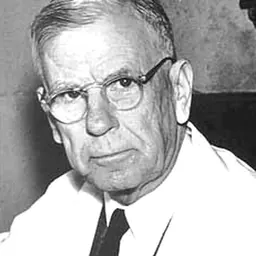
Contemporaries
People whose lives overlapped Reginald R. Belknap's

Frequently asked questions
Who was Reginald R. Belknap?
United States Navy admiral (1871-1959)
When was Reginald R. Belknap born?
Reginald R. Belknap was born on 26 June 1871 in Malden.
When did Reginald R. Belknap die?
Reginald R. Belknap died on 30 March 1959 in West Haven.
What was Reginald R. Belknap's occupation?
Reginald R. Belknap was a military officer and episcopal Church (United States).
What nationality was Reginald R. Belknap?
Reginald R. Belknap was American.
Sources & further reading
· Wikipedia: Reginald R. Belknap
· DBpedia: Reginald R. Belknap
Cite this page
APA: Biography.guide. (2026). Reginald R. Belknap. https://biography.guide/reginald-r-belknap/
MLA: "Reginald R. Belknap." Biography.guide, https://biography.guide/reginald-r-belknap/.
Chicago: "Reginald R. Belknap." Biography.guide. https://biography.guide/reginald-r-belknap/.
Data last updated: 2026-09-20 · Spot an error? Report a correction.
Page generated 2026-09-27 05:28 UTC