
About Reginald Herbold Green
Lived 1935 – 2021 (aged 86). Reginald Herbold Green was an American and British economist.
Reginald Herbold Green (May 4, 1935 – October 16, 2021) was an American development economist who focused on African economic issues. His research focus included studying the economies of eastern and southern Africa, South African Development Community (SADC), international organizations and aid disbursement, and the Economic Commission on Africa, specializing in poverty alleviation, development enablement, and economic liberalization.
His study for UNICEF of the economic impact of South Africa's apartheid policies on children in countries such as Angola and Mozambique was influential in stimulating western countries to put pressure on South Africa to end the apartheid regime.
Early life Reginald Herbold Green was born on May 4, 1935, in Walla Walla, Washington, to Marcia Herbold and Reginald Green. His father was a professor and a clergyman. Green studied at the Whitman College, a private liberal arts college in Walla Walla, and then went on to Harvard University, from which he received his doctorate in 1961.
Career Green started his career at the Economic Growth Center in Yale University and later at the University of Ghana and then at the Makerere University, a public university in Uganda.
As a development economist, Green's focus was on studying the economies of eastern and southern Africa, specifically those of Tanzania, Mozambique, and Namibia. He also focused on studying the South African Development Community (SADC), an organization focused on socio-economic cooperation between 16 countries in Southern Africa.
Through the 1960s and early 1970s, Green was the advisor to Julius Nyerere, the first president of Tanzania. During the 1980s, he served as an economic advisor to the South West Africa People's Organisation (SWAPO), a liberation organization based in Namibia, and also served with the United Nations Institute of Namibia leading up to the country's independence in 1991.
One of Green's most influential works was a study that he did for UNICEF in the 1980s. In a paper titled Children on the Front Line in 1987, he estimated that South Africa's apartheid-linked economic and social policies targeted at countries like Angola and Mozambique, had resulted in the death of more than two million children under the age of five. The study brought worldwide attention to the apartheid policies in the country. It was cited in the US Congress and helped drive changes in attitudes of some of the western countries to the South African apartheid regime.
Select works
Don’t just read it —
keep it.
Full-length biographies made to live with: read them, listen on the way to work, watch them tonight.
- E-book
- Audio
- Video
Instant download · yours to keep · every purchase keeps this site free
Important facts
People in Reginald Herbold Green's life
Named in this biography and alive at the same time


Related people
Same field, nearest in time


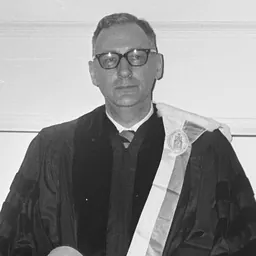
Contemporaries
People whose lives overlapped Reginald Herbold Green's



Frequently asked questions
Who was Reginald Herbold Green?
American development economist
When was Reginald Herbold Green born?
Reginald Herbold Green was born on 4 May 1935 in Walla Walla.
When did Reginald Herbold Green die?
Reginald Herbold Green died on 16 October 2021 in Louth.
What was Reginald Herbold Green's occupation?
Reginald Herbold Green was an economist.
What nationality was Reginald Herbold Green?
Reginald Herbold Green was American and British.
Sources & further reading
· Wikipedia: Reginald Herbold Green
· DBpedia: Reginald Green (economist)
Cite this page
APA: Biography.guide. (2026). Reginald Herbold Green. https://biography.guide/reginald-herbold-green/
MLA: "Reginald Herbold Green." Biography.guide, https://biography.guide/reginald-herbold-green/.
Chicago: "Reginald Herbold Green." Biography.guide. https://biography.guide/reginald-herbold-green/.
Data last updated: 2026-09-20 · Spot an error? Report a correction.
Page generated 2026-09-27 05:30 UTC