
Reginald H. Thomson
Civil engineer, responsible for "virtually all of Seattle’s infrastructure"
About Reginald H. Thomson
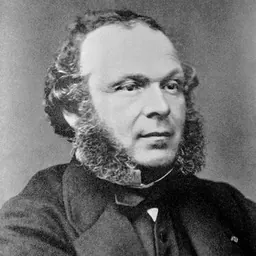
Lived 1856 – 1949 (aged 92–93). Reginald H. Thomson was an American civil engineer and surveyor.
Reginald Heber Thomson (usually R.H. Thomson; 1856 – January 7, 1949) was a self-taught American civil engineer. He worked in Washington state, mainly in Seattle, where he became city engineer in 1892 and held the position for two decades. Alan J. Stein wrote that Thomson "probably did more than any other individual to change the face of Seattle" and was responsible for "virtually all of Seattle's infrastructure".
Despite the scope of his work, no major portion of Seattle's infrastructure has ever carried Thomson's name. He was supposed to have been memorialized by the R.H. Thomson Expressway, proposed in 1960 but never built.
Among his achievements were the railway route through Snoqualmie Pass, the Lake Washington Ship Canal, much of the paving of Seattle's roads and sidewalks, numerous bridges over rivers and valleys, and major improvements to Seattle's sewer system, as well as straightening and deepening the Duwamish River and developing the Cedar River watershed, now one of Seattle's major sources of drinking water. He was also responsible for much of the regrading of Seattle, taking down hills and filling in the mudflats, After his baccalaureate, he worked as a surveyor, then followed his father to Healdsburg Institute in Healdsburg, California, where his father served as principal and Thomson as a mathematics teacher.
In 1886, he resigned to work for the Seattle, Lake Shore & Eastern railroad, for whom he plotted the route from the northern end of Lake Washington (now Kenmore) east through Snoqualmie Pass to Lake Keechelus. Before returning to become a consulting engineer in Seattle, he spent some time in Spokane, near the state's eastern border, where he was responsible for several railway terminals and two bridges. As during his earlier work for Seattle, he continued at this time to work in the private sector, along with George F. Cotterill, who would soon work with Thomson for the city of Seattle and later go on to be Seattle's mayor.
He applied in January 1891 for the job of King County surveyor. He was appointed in the position in May. However, after Edwin Hall Warner declined an appointment in May 1892 as Seattle city engineer, Thomson was again appointed to the city engineer position and resigned from his county position in July 1892.
Seattle city engineer
The regrades
Thomson became Seattle city engineer in 1892, three years after the Great Seattle Fire had destroyed more than half of the city's downtown, followed immediately by an unprecedented construction boom. He began the process of paving roads, building sidewalks, and adding sewer lines (often through areas that earlier engineers could not work out how to plumb). With his assistant Cotterill, he laid out Lake Washington Boulevard, initially conceived as a path for bicycles.
Later life
Overlapping his tenure as city engineer, Thomson was president of the University of Washington board of managers (1905–1915). He also became increasingly interested in Seattle's waterways, which led him to resign as city engineer in 1911 to lobby the state legislature and otherwise help organize the Port of Seattle, for which he became chief engineer. Among his achievements for the port were the acquisition of Smith Cove and the land at the foot of Bell Street which is now home to the Port's headquarters. He was also largely responsible for dredging and straightening the Duwamish River delta, and for obtaining federal money for the Ballard Locks, now the Hiram M. Chittenden Locks. while continuing to work as a civil engineer. After leaving the council, he continued working various places in the Pacific Northwest and Alaska. He consulted on Oregon's Rogue River Valley Irrigation Canal; built hydroelectric plants in Eugene, Oregon and surveyed plant sites in Southeastern Alaska; planned the water supply of Bellingham, Washington and consulted on the system for Wenatchee; briefly, in his seventies, he returned, temporarily, as Seattle city engineer in 1930 to finish the Diablo Dam on the Skagit River consulted to the Inter-County River Improvement Commission for King and Pierce Counties (the counties containing Seattle and Tacoma, respectively), and consulted on the construction of the Lake Washington Floating Bridge (now Lacey V. Murrow Memorial Bridge, carrying Interstate 90 across Lake Washington) and for the foundations of the Tacoma Narrows Bridge.
Legacy In a sense, Thomson's chief legacy is the physical contours of the city of Seattle as it exists today, including the lay of the land, the transportation system, and the municipal utilities.
Thomson was, without a doubt, Seattle's most important city engineer; in 1911 he had served in the office 19 of the 37 years it had existed. He was also often one of the most controversial: in February 1894, less than two years into his second period in the office, the Board of Public Works removed him from office; mayor James T. Ronald removed two members of the Board and reinstated Thomson. "A technical man with a streak of imagination... his disdain for those who did not share his vision also made him many enemies." As late as the 1970s, the neighborhood was merely "serviceable but seedy", then increasingly a center of Seattle's bohemian life, while also seeing a growth in condominium and office development.
Memorials
R.H. Thomson Expressway An early map of the proposed R.H. Thomson Expressway, here "Empire Expressway" Thomson was supposed to have been memorialized by the R.H. Thomson Expressway,
Mount Thomson Mount Thomson was named for him. The prominent peak is located approximately 40 miles east of Seattle in eastern King County.
Don’t just read it —
keep it.
Full-length biographies made to live with: read them, listen on the way to work, watch them tonight.
- E-book
- Audio
- Video
Instant download · yours to keep · every purchase keeps this site free
Important facts
People in Reginald H. Thomson's life
Named in this biography and alive at the same time

Related people
Same field, nearest in time



Contemporaries
People whose lives overlapped Reginald H. Thomson's


Frequently asked questions
Who was Reginald H. Thomson?
Civil engineer, responsible for "virtually all of Seattle’s infrastructure"
When was Reginald H. Thomson born?
Reginald H. Thomson was born in 1856 in Hanover.
When did Reginald H. Thomson die?
Reginald H. Thomson died on 7 January 1949.
What was Reginald H. Thomson's occupation?
Reginald H. Thomson was a civil engineer and surveyor.
What nationality was Reginald H. Thomson?
Reginald H. Thomson was American.
Sources & further reading
· Wikipedia: Reginald H. Thomson
· DBpedia: Reginald H. Thomson
Cite this page
APA: Biography.guide. (2026). Reginald H. Thomson. https://biography.guide/reginald-h-thomson/
MLA: "Reginald H. Thomson." Biography.guide, https://biography.guide/reginald-h-thomson/.
Chicago: "Reginald H. Thomson." Biography.guide. https://biography.guide/reginald-h-thomson/.
Data last updated: 2026-09-20 · Spot an error? Report a correction.
Page generated 2026-09-27 05:24 UTC