
About Edwin Hall
Lived 1855 – 1938 (aged 83). Edwin Hall was an American physicist and university teacher, known for Hall effect.
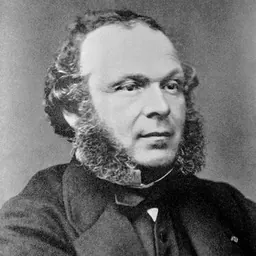
Edwin Herbert Hall (November 7, 1855 – November 20, 1938) was an American physicist who discovered the Hall effect. He also conducted thermoelectric research and wrote numerous physics textbooks and laboratory manuals.
Education and career Born in Gorham, Maine, Hall did his undergraduate work at Bowdoin College, Brunswick, Maine, graduating in 1875. He was the Principal of Gould Academy (1875–76) and the Principal of Brunswick High School (1876–77). After returning to the Physics Department, Hall retired in 1921 and died in Cambridge, Massachusetts, in 1938.
Hall effect
The Hall effect was discovered by Hall in 1879, while working on his doctoral thesis in physics under the supervision of Henry Augustus Rowland. Hall's experiments in electromagnetics consisted of exposing thin gold leaf (and, later, using various other materials) on a glass plate and tapping off the gold leaf at points down its length. The effect is a potential difference (Hall voltage) on opposite sides of a thin sheet of conducting or semiconducting material (the Hall element) through which an electric current is flowing. This was created by a magnetic field applied perpendicular to the Hall element. The ratio of the voltage created to the amount of current is known as the Hall resistance, and is a characteristic of the material in the element. In 1880, Hall's experimentation was published as a doctoral thesis in the American Journal of Science and in the Philosophical Magazine.
Hall effect sensors use his Hall effect to detect the magnetic field. Hundreds of millions are sold every year and are present in a large number of devices, including high efficiency electric propulsion systems on spacecraft.
In the presence of large magnetic field strength and low temperature, one can observe the quantum Hall effect, the quantization of the Hall resistance and in 1990 became a calibration standard for electrical resistance due to its low uncertainty (see ).
Works Hall made various contributions to scientific journals on the thermal conductivity of iron and nickel, the theory of thermoelectric action, and on thermoelectric heterogeneity in metals. His publications include: A Text-Book of Physics (1891; third edition, 1903), with J. Y. Bergen Elementary Lessons in Physics (1894; 1900) The Teaching of Chemistry and Physics (1902), with Alexander Smith College Laboratory Manual of Physics (1904; revised edition, 1913) Elements of Physics (1912)
Don’t just read it —
keep it.
Full-length biographies made to live with: read them, listen on the way to work, watch them tonight.
- E-book
- Audio
- Video
Instant download · yours to keep · every purchase keeps this site free
Important facts
People in Edwin Hall's life
Named in this biography and alive at the same time
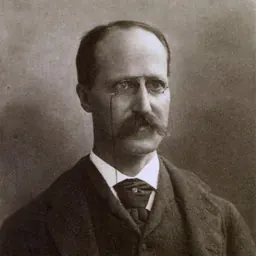


Related people
Same field, nearest in time
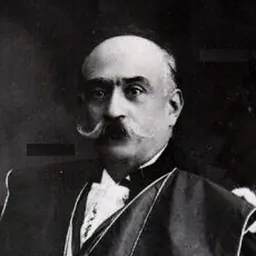


Contemporaries
People whose lives overlapped Edwin Hall's
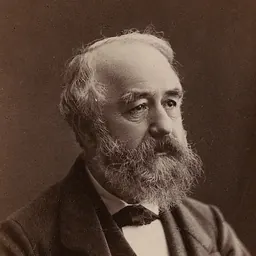
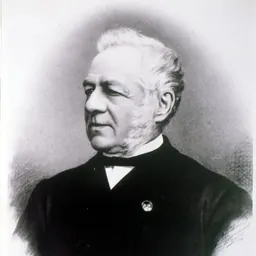



Frequently asked questions
Who was Edwin Hall?
American physicist (1855–1938)
When was Edwin Hall born?
Edwin Hall was born on 7 November 1855 in Gorham.
When did Edwin Hall die?
Edwin Hall died on 20 November 1938 in Cambridge.
What was Edwin Hall's occupation?
Edwin Hall was a physicist and university teacher.
What was Edwin Hall known for?
Edwin Hall was known for Hall effect.
What nationality was Edwin Hall?
Edwin Hall was American.
Sources & further reading
Cite this page
APA: Biography.guide. (2026). Edwin Hall. https://biography.guide/edwin-hall-physicist/
MLA: "Edwin Hall." Biography.guide, https://biography.guide/edwin-hall-physicist/.
Chicago: "Edwin Hall." Biography.guide. https://biography.guide/edwin-hall-physicist/.
Data last updated: 2026-09-20 · Spot an error? Report a correction.
Page generated 2026-09-27 05:31 UTC