
Reginald Claude Sprigg
Australian geologist
About Reginald Claude Sprigg
Lived 1919 – 1994 (aged 75). Reginald Claude Sprigg was an Australian paleontologist, geologist and conservation movement, known for Arkaroola, South Australia, Flinders Ranges and Pre-Cambrian.
Reginald Claude Sprigg (1 March 1919 – 2 December 1994) was an Australian geologist and conservationist. At 17, sponsored by Walter Howchin,
Early life and education Reginald Claude Sprigg was born 1 March 1919 on South Australia's Yorke Peninsula, where his family were living in the small town of Stansbury. His parents were Claude Augustus Sprigg and Pearl Alice Irene (née Germein), who married on 17 September 1913 in Stansbury. Reg was their third and youngest child, a brother to D'Arcy Kingsley and Constance Vera.
His father's family were pastoralists, whilst the Germein family were mariners. The Sprigg family relocated to the Yorke Peninsula after being "forced off their pastoral lease at Oulnina because of drought". The Germein family were ship chandlers in Mutton Cove, Devonport, Plymouth, England: three brothers came to Australia. One, Ben Germein is remembered as a hero of the Admella rescue mission.
Before he was five years old, the family relocated to the Adelaide suburb of Goodwood, and Reg started collecting shells and fossils from local beaches. This boyhood hobby developed into a serious interest in geology, which brought him into contact with the geoscientists at the University of Adelaide, to whom he took collected samples for identification.
In addition to pursuing his studies in geology, Reg developed drawing skills, which gained him credit in the South Australian School of Arts and Crafts merit lists for 1934 and 1935.
He matriculated from the Adelaide Technical High School in 1938.
At the University of Adelaide, he was a pupil of Douglas Mawson, who said that Sprigg was "his best-ever student". Sprigg completed the requirements for his Bachelor of Science and then graduated Master of Science in 1942, receiving the science faculty's highest award, the Tate Medal.
Career In 1940 he enlisted in the Royal Australian Engineers, and worked with munitions from 1941 to 1942. He transferred to the soils division of the CSIRO until 1943, when he joined the South Australian Geological Survey, which sent him to reopen the Radium Hill uranium field in 1944, and to map the Mount Painter uranium field, new sources being required for the Manhattan Project.
Sprigg was sent by the South Australian Government in 1946 to inspect abandoned mines in the Ediacara Hills, to ascertain whether old mines could be reworked profitably using new technologies. When he discovered the fossils, apparently while eating his lunch, he realised that they were very ancient, either of Early Cambrian, or possibly even of Precambrian age. He thought that the organisms had probably been jellyfishes. He submitted a paper to the journal Nature, but it was rejected. He travelled to London and presented his findings to the 1948 International Geological Congress, but failed to excite either interest or belief. Subsequent work by Prof Martin Glaessner at the University of Adelaide demonstrated that they were indeed of latest Precambrian age. Although Precambrian animal fossils had been reported before, they had not been accepted universally as organic. This discovery resulted ultimately in the definition in 2004 of the Ediacaran period, the first new geological period created in more than one hundred years.
Of other significance, Sprigg helped establish Santos (an acronym for South Australia Northern Territory Oil Search), which discovered gas deposits in the Cooper Basin, including the Moomba Gas Field, which supplies natural gas to South Australia, New South Wales and Canberra. In 1954 Sprigg formed the company Geosurveys of Australia, which was a consulting and contracting company for geological and geophysical work. They prospected for uranium in the Northern Territory and nickel in the north west corner area of South Australia as well as working for Santos.
In 1962 Geosurveys became incorporated into Beach Petroleum, of which Sprigg was general manager.
In 1968, Sprigg purchased the pastoral lease of Arkaroola, a property and important uranium exploration field of in the Flinders Ranges of South Australia, and converted it into a wildlife refuge and tourist attraction. A governing board of Reg Sprigg, his wife Griselda and Dennis Walter, a mineralogist and old friend, oversaw the creation of Arkaroola Village out of existing buildings and the opening to tourists in October 1968.
Australian Energy Producers Sprigg served as the founding chair of the Australian Energy Producers (AEP), which was originally established as the Australian Petroleum Exploration Association (APEA) and rebranded as the Australian Petroleum Production and Exploration Association (APPEA) in 1996, before adopting its current name in 2023.
Sprigg acknowledged the potential harm of burning fossil fuels as early as 1969, warning in the Australian Fisheries journal about changes to the atmosphere's chemical composition.
On 3 February 1951, Sprigg married Griselda A. Findlay Paterson, daughter of Robert Findlay Paterson and Grace (née Dreghorn), born December 1921 in Paisley, Scotland. Griselda had studied in Glasgow and qualified as a radiographer.
In 1952, a daughter, Margaret Douglas In 1962 the entire family completed the first vehicular crossing of the Simpson Desert. In 2001, Griselda published an account of those travels in Dune is a four-letter word.
Reg Sprigg died on 2 December 1994 whilst on holiday in Glasgow, Scotland. His ashes were scattered at Arkaroola.
Griselda Sprigg died 20 March 2003.
Don’t just read it —
keep it.
Full-length biographies made to live with: read them, listen on the way to work, watch them tonight.
- E-book
- Audio
- Video
Instant download · yours to keep · every purchase keeps this site free
Important facts
People in Reginald Claude Sprigg's life
Named in this biography and alive at the same time






Related people
Same field, nearest in time


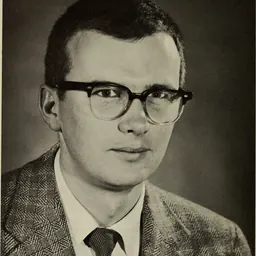

Contemporaries
People whose lives overlapped Reginald Claude Sprigg's
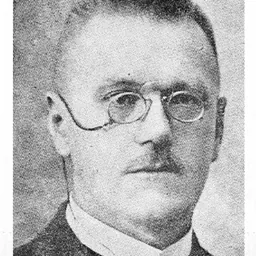



Frequently asked questions
Who was Reginald Claude Sprigg?
Australian geologist (1919–1994)
When was Reginald Claude Sprigg born?
Reginald Claude Sprigg was born on 1 March 1919 in Yorke Peninsula.
When did Reginald Claude Sprigg die?
Reginald Claude Sprigg died on 2 December 1994 in Glasgow.
What was Reginald Claude Sprigg's occupation?
Reginald Claude Sprigg was a paleontologist, geologist and conservation movement.
What was Reginald Claude Sprigg known for?
Reginald Claude Sprigg was known for Arkaroola, South Australia, Flinders Ranges, Pre-Cambrian and South Australia.
What nationality was Reginald Claude Sprigg?
Reginald Claude Sprigg was Australian.
Sources & further reading
· Wikipedia: Reginald Claude Sprigg
Cite this page
APA: Biography.guide. (2026). Reginald Claude Sprigg. https://biography.guide/reginald-claude-sprigg/
MLA: "Reginald Claude Sprigg." Biography.guide, https://biography.guide/reginald-claude-sprigg/.
Chicago: "Reginald Claude Sprigg." Biography.guide. https://biography.guide/reginald-claude-sprigg/.
Data last updated: 2026-09-22 · Spot an error? Report a correction.
Page generated 2026-09-27 05:31 UTC