
About Regina M. Anderson
Lived 1901 – 1993 (aged 91). Regina M. Anderson was an American librarian and playwright.
Regina M. Anderson (May 21, 1901 – February 5, 1993) was an American playwright and librarian. Influenced by Ida B. Wells and the lack of Black history teachings in school, Anderson became a key member of the Harlem Renaissance.
Biography Regina Anderson was born in the Hyde Park section of Chicago, Illinois, to Margaret Simons Anderson and William Grant "Habeas Corpus" Anderson. Her mother was a ceramicist, and her father was an attorney. (She is identified by Whitemore as an African American, but the heritage information in the JSTOR article is incorrect, based upon census records for Regina and her parents in 1900 and 1910.) There was a man from Sweden named William G. Anderson from Chicago, but his wife was Charlotte Olivia Jungblom. Due to the success of her father, Anderson grew up in an upper-middle-class family. After her parents' divorce, she was sent to live with her grandparents from her mother's side in Normal, Illinois. After spending a few years in Normal, she journeyed back to Chicago and graduated from Hyde Park High School in 1919. Anderson studied at the historically black college Wilberforce University and worked in its Carnegie Library.
After studying there for a year, Anderson returned home to Chicago and was hired as a junior library assistant at the Chicago Public Library in 1921. A short time after, she vacationed in New York where decided to stay. Eventually, she first settled in downtown Manhattan living at a YWCA. While staying at the YWCA, she applied to be a librarian at the 135th Street branch of the New York Public Library, working under the supervision of Ernestine Rose.
She shared an apartment in the Sugar Hill district of Harlem with Ethel Ray and Louella Tucker. The women opened the space to the community, hosting salons, events, and gatherings for artists. Her apartment became a place where writers such as Claude McKay and Alain Locke would work.
Anderson and Du Bois co-founded the Krigwa Players (later Negro Experimental Theatre), a Black theater company that originally performed in the library's basement.
Anderson outlived virtually all of the other members of the Harlem Renaissance. She died at the Bethel Nursing Home in Ossining, a suburb of New York City. In her will, she left thousands of dollars to organizations in New York, including the National Urban League, the NAACP, the National Council of Women of the United States, the American Council for Nationalities Services, and the Washington Heights Branch of the NYPL.
Career as a librarian Anderson moved to New York in 1922, at the age of 21, to apply for a librarian position at the New York Public Library. Previously, she had worked in various libraries in and around Chicago. Her first position in New York was at the 135th Street branch of the New York Public Library. She started her position as a full-time clerk in 1923 under the leadership of Ernestine Rose, who wanted to make sure the community was served by librarians that reflected their diversity.
During this time, the library hosted meetings by groups like the NAACP and the Anti-Lynching Crusaders. Anderson also organized lectures by individuals like Hubert Harrison and Margaret Sanger. In 1948, Anderson began working at the Washington Heights branch with the title of Supervising Librarian, and while there, she created a community outreach program called "Family Night at the Library." The program focused on African, Caribbean, Latin American, Southeast Asian, and African-American culture, politics, and history. Guest speakers, such as artists, writers, and government representatives, participated. Art exhibitions, artifacts, and annotated biographies often supplemented programming.
Over the 44 years of her career as a librarian, Anderson worked at the 135th Street, Hamilton Fish Park, Woodstock, Rivington, 115th Street, and Washington Heights branch libraries. Anderson retired from the NYPL in 1966 but continued to remain active in her community.
Works Climbing Jacob's Ladder (1931, play) Underground (1932, play) A Public Library Assists in Improving Race Relations (1946, thesis) Intergroup Relations in the United States: A Compilation of Source Material and Service Organizations (1959, article) Chronology of African-Americans in New York, 1621–1966 (1971, co-editor) The Man Who Passed: A Play in One Act (published posthumously in 1996, play) The Black New Yorkers (published posthumously, book) Matilda (one-act play) The Prince and the Porker (1955, children's book) The Rabbit Who Saw the World Outside (children's book) The Shoeshoe Rabbit (children's book) The Words of Regina Andrews (1974, published chapter in Voices of the Black Theater (edited by Loften Mitchell)
Don’t just read it —
keep it.
Full-length biographies made to live with: read them, listen on the way to work, watch them tonight.
- E-book
- Audio
- Video
Instant download · yours to keep · every purchase keeps this site free
Important facts
People in Regina M. Anderson's life
Named in this biography and alive at the same time


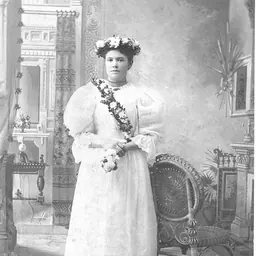


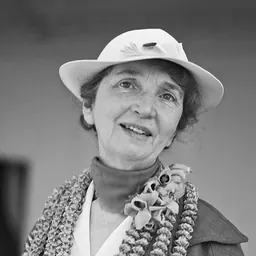


Related people
Same field, nearest in time
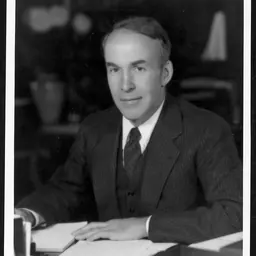
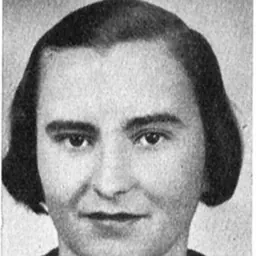


Contemporaries
People whose lives overlapped Regina M. Anderson's


Frequently asked questions
Who was Regina M. Anderson?
Multi-racial playwright/librarian (1901–1993)
When was Regina M. Anderson born?
Regina M. Anderson was born on 21 May 1901 in Chicago.
When did Regina M. Anderson die?
Regina M. Anderson died on 5 February 1993 in Ossining.
What was Regina M. Anderson's occupation?
Regina M. Anderson was a librarian and playwright.
What nationality was Regina M. Anderson?
Regina M. Anderson was American.
Sources & further reading
· Wikipedia: Regina M. Anderson
Cite this page
APA: Biography.guide. (2026). Regina M. Anderson. https://biography.guide/regina-m-anderson/
MLA: "Regina M. Anderson." Biography.guide, https://biography.guide/regina-m-anderson/.
Chicago: "Regina M. Anderson." Biography.guide. https://biography.guide/regina-m-anderson/.
Data last updated: 2026-09-22 · Spot an error? Report a correction.
Page generated 2026-09-27 05:31 UTC