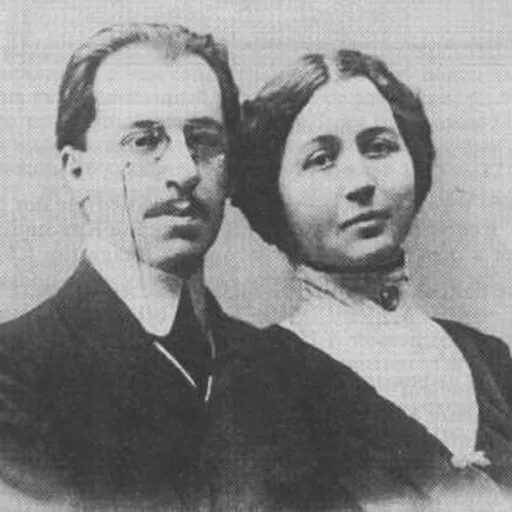
About Razumnik Ivanov-Razumnik
Lived 1878 – 1946 (aged 67). Razumnik Ivanov-Razumnik was a Russian literary critic, philosopher, writer, literary historian, sociologist and translator.
Razumnik Vasilyevich Ivanov (24 December 1878 – 9 July 1946), known as Ivanov-Razumnik, was a Russian writer, philosopher and literary critic, best known for his book History of Russian Social Thought (1907, in two volumes) and the series of essays on post-Revolution literary life in the Soviet Russia.
Biography
Razumnik Vasilyevich Ivanov was born in Tiflis, Georgia to a family of impoverished Russian nobleman. After graduating the 1st Saint Petersburg gymnasium he joined the faculty of Mathematics at Saint Petersburg University. In 1901 for taking part in the students' unrest he was arrested, expelled and a year later deported from the capital to Simferopol.
Ivanov-Razumnik's first article (on Nikolay Mikhaylovsky) was published in Russkaya Mysl in 1904. His History of Russian Social Thought in two volumes came out in 1907 and became popular with the Russian left. In 1912 Ivanov-Razumnik joined the staff of Narodnik magazine Zavety (Testaments) where he became the head of a literary department and friends with Sergey Mstislavsky, Victor Chernov and several other authors, members of the Socialist Revolutionary party. As the SR party broken into two, he continued to actively cooperate with its left flank, for which he was arrested by Cheka in February 1919, but released on instructions from Felix Dzerhinsky. He was the literary section editor of Znamya Truda (Flag of Labour), which belonged to the Left Socialist Revolutionary Party (PLSR), and literary section chief of Nash Put (Our Way), and made it sure that Andrey Bely, Alexander Blok and Sergey Yesenin were published there regularly.
In 1919–1925 he was among the leaders (a vice-chairman) of the Free Philosophical Association, bound to "investigate philosophical aspects of culture and creativity in the Socialist society." In 1933, he was accused of propagating the narodnik ideas, arrested and deported to Siberia for three years, living in poverty and without proper work. He was arrested and exiled again in September 1937, but released in 1939. After his release he obtained work in the State Museum of Literature in Pushkin, near Leningrad (St Petersburg) and was there when the town was overrun by the German army, in September 1941. The following month, he was sent to a camp in Eastern Prussia where he stayed up until the summer of 1943. After the liberation he moved first to Lithuania, then back to Germany where he settled to write about his life in the Soviet Union (Life in Prisons and Exile) and published essays on Soviet authors (The Writers' Fates). On 9 July 1946 Ivanov-Razumnik died in Munich, Germany.
Ideas Ivanov-Razumnik developed his own system of literary analysis, dividing the history of modern Russian literature into several periods marked by ideological paradigms: the "mystical theory of progress" (1820–1830), then the "positive theory of progress" (1840s), "immanent subjectivism" (Hertzen, 1850s), "vulgar immanent subjectivism" (utilitarianism, nihilism, 1860s), "immanent subjectivism" again (Lavrov and Mikhaylovsky, narodniks; 1870s), the revived "positive theory of progress" (Russian Marxism, 1890s), the return of "mystical theory of progress" (1900s) and again return to "immanent subjectivism" (1910s onwards).
According to Ivanov-Razumnik, immanent subjectivism (which he saw himself as belonging to) "rejected the objective expediency, objective meaning of life and gives priority to the subjective systems of reasonability, declaring man as the one subjective goal of development." For meaning of life it holds achieving "the fullness of being", comprising so called 'elements of reality': 'reality of senses', 'reality of beauty', 'reality of justice' and 'reality of truth').
Warning against the misinterpretation of the term, Ivanov-Razumnik wrote in The History of Russian Social Thinking: "The Subjectivism is neither a method nor a means to an end, it is a kind of sociological mindset, in fact, not only sociological, but epistemological, psychological and ethical. Subjectivism might be defined as the ethical and sociological individualism." "The immanent subjectivism amounts to a vigorous, active mindset charged with vitality and giving to both an individual and humanity as a whole a new, subjectively-orientated meaning of life," he stated in another work, "Of the Life’s Meaning" (1910).
Don’t just read it —
keep it.
Full-length biographies made to live with: read them, listen on the way to work, watch them tonight.
- E-book
- Audio
- Video
Instant download · yours to keep · every purchase keeps this site free
Important facts
People in Razumnik Ivanov-Razumnik's life
Named in this biography and alive at the same time
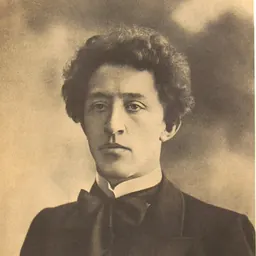
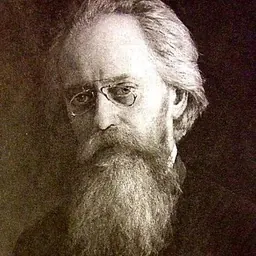

Related people
Same field, nearest in time
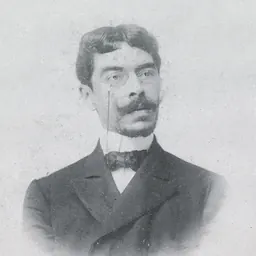


Contemporaries
People whose lives overlapped Razumnik Ivanov-Razumnik's





Frequently asked questions
Who was Razumnik Ivanov-Razumnik?
sociologist, literary critic (1878–1946)
When was Razumnik Ivanov-Razumnik born?
Razumnik Ivanov-Razumnik was born on 24 December 1878 in Tbilisi.
When did Razumnik Ivanov-Razumnik die?
Razumnik Ivanov-Razumnik died on 9 July 1946 in Munich.
What was Razumnik Ivanov-Razumnik's occupation?
Razumnik Ivanov-Razumnik was a literary critic, philosopher, writer, literary historian, sociologist and translator.
What nationality was Razumnik Ivanov-Razumnik?
Razumnik Ivanov-Razumnik was Russian.
Sources & further reading
· Wikipedia: Razumnik Ivanov-Razumnik
Cite this page
APA: Biography.guide. (2026). Razumnik Ivanov-Razumnik. https://biography.guide/razumnik-ivanov-razumnik/
MLA: "Razumnik Ivanov-Razumnik." Biography.guide, https://biography.guide/razumnik-ivanov-razumnik/.
Chicago: "Razumnik Ivanov-Razumnik." Biography.guide. https://biography.guide/razumnik-ivanov-razumnik/.
Data last updated: 2026-09-20 · Spot an error? Report a correction.
Page generated 2026-09-27 05:10 UTC