
About Raymond W. Gibbs, Jr.
Born 1954. Raymond W. Gibbs, Jr. is an American psychologist.
Raymond W. Gibbs Jr. is a former psychology professor and researcher at the University of California, Santa Cruz. His research interests are in the fields of experimental psycholinguistics and cognitive science. His work concerns a range of theoretical issues, ranging from questions about the role of embodied experience in thought and language, to looking at people's use and understanding of figurative language (e.g., metaphor, irony, idioms). Raymond Gibbs's research is especially focused on bodily experience and linguistic meaning. Much of his research is motivated by theories of meaning in philosophy, linguistics, and comparative literature.
Education
Gibbs received his Bachelor of Arts in Cognitive Science from Hampshire College in 1976. Then he went on to study at the University of California, San Diego and received his master's degree in Experimental Psychology in 1978, and his Ph.D. in Cognitive Psychology and Psycholinguistics in 1980.
Professional positions
(1991–1995) Chair, Department of Psychology, University of California, Santa Cruz (2013–2017) Distinguished Professor of Psychology, University of California, Santa Cruz (1990–2013) Professor of Psychology, University of California, Santa Cruz (1986–1990) Associate Professor of Psychology, University of California, Santa Cruz (1982–1986) Assistant Professor of Psychology, University of California, Santa Cruz (1981–1982) Postdoctoral Fellow in Cognitive Science, Stanford University (1980–1981) Postdoctoral Research Associate in Cognitive Science, Yale University
Services
Former Editor of Metaphor and Symbol (2001–2018) Associate Editor of the Journal of Mental Imagery
Current member of editorial boards for these scholarly journals
Cognitive Linguistics Discourse Processes Journal of Pragmatics Intercultural Pragmatics Psychologia Poetics International Journal of Cognitive Linguistics Pragmatics and Society Metaphor in the Social World Scientific Study of Literature Israeli Journal of Humor Research Lodz Papers in Pragmatics
Editorial boards for book series
Human Cognitive Processing (Benjamins) Linguistic Approaches to Literature (Benjamins) Mouton Series in Pragmatics (Mouton) Cognitive Linguistic Studies of Language Cognition in Cultural Contexts (Benjamins) Metaphor in Language Cognition, and Communication (Benjamins) Topics in Humor Research (Benjamins)
Previous services
Senior Editor for Cognitive Science Editorial board member for Journal of Memory and Language Co-editor of book series: Human Cognitive Processing (Benjamins)
Research
Embodied experience in thought and language
One of Gibbs' main focuses of his research is on embodiment. His 2006 book Embodiment and Cognitive Science provides a large body of evidence to support the embodiment premise. This concept of embodiment "refers to understanding the role of an agent's own body in its everyday, situated cognition". Gibbs promotes a dynamic framework of embodiment that differs from the more traditional reductionist model of cognition. Gibbs says that embodiment refers not only to neural events but also to cognitive unconscious and to phenomenological experience. The real originality of the embodied metaphor view is the claim that something of the embodied nature of the original experience still operates whenever an abstract concept is used. Gibbs states that the original experience persists in a schematic form called an image schema. He defines image schemas as analog representations of spatial relations and movements in space.
Gibbs and Marlene Johansson Falck, in order to help solidify his position on embodiment of metaphorical meanings also used other studies to demonstrate this. The results of two specific studies of his show how bodily experiences with real world items partly constrains not only how specific metaphors emerge, but also how different metaphorical understandings are applied in speech about abstract entities. The first of these two studies was on people's imagery for both "paths" and "roads". By asking participants to imagine themselves being on a path or being on a road and then asking them questions about their mental image such as: "Is it likely that there will be obstacles along your way? Or is it likely to be paved?". It can be seen that people give different answers to these questions depending on whether they were asked to imagine being on a road or being on a path. This was done so that it could be determined what types of properties are associated with each paths and roads. The results of this study found that most people think of paths as being more problematic to travel on, more aimless in their direction, something that stops are more frequent on, and most likely traveled on by foot as opposed to a vehicle of some sort. Roads were found to be thought of as complete opposite, viewed as straight, wide, paved, and having a specific destination that they lead to. Gibbs states this shows that people's understanding of paths and roads leans more towards the central aspects of their bodily actions. He then did the same thing but this time without metaphorical phrases and found that pragmatic messages associated with understand non-metaphors is about the same as those associated with interpreting metaphors. A comparison view says that people begin processing a metaphor by first lining up the representations of both the source and the target concepts. He also mentions that there is an alternative view that claims metaphors are understood better when using class-inclusion categorization processes instead of comparison statement. Gibbs mentions that it is not yet clear to present a theories that is better than the others to explain his interpretive results. However he does say that it is clear that "any future theoretical proposal on XYZ metaphors must deal with the complexity of people's interpretations, and not simply assume that all XYZ metaphors express the same type of meaning at the same level of detail." Gibbs proposes a dynamical view of intentional action that explains more thoroughly the psychological complexities of how ironic acts are created and understood. There are many different types of irony but ironic speech is very much a deliberate way to communicate. Speakers chose to use these ironic statements for a variety of social reasons. Gibbs however, says that there are cases in which a speaker's speech is understood as ironic even though there is clear recognition that the comment was not meant to be taken in that manner.
Publications
Books and edited collections
Gibbs, R. (1994). The poetics of mind: Figurative thought, language, and understanding. New York: Cambridge University Press. (also translated into Italian, Korean, Spanish, and Japanese). Gibbs, R. (1999). Intentions in the experience of meaning. New York: Cambridge University Press. Gibbs, R. (2006). Embodiment and cognitive science. New York: Cambridge University Press. (also translated into Portuguese). Gibbs, R., & Colston, H. (2012). Interpreting figurative meaning. New York: Cambridge University Press. Katz, A., Cacciari, C., Gibbs, R., & Turner, M. (1998). Figurative language and thought. New York: Oxford University Press. Gibbs, R. (Ed.) (2008). Cambridge handbook of metaphor and thought. New York: Cambridge University Press. Gibbs, R., & Steen, G. (Eds.). (1999). Metaphor in cognitive linguistics. Amsterdam: Benjamins. Gibbs, R., & Colston, H. (Eds.) (2007). Irony in language and thought: A cognitive science reader. New York: Erlbaum. Gibbs, R., & Gerrig, R. (Eds.) (1989). Special invited issue: Context and metaphor comprehension. Metaphor and Symbolic Activity, 3, 123–201.
Selected articles
Gibbs, R. (1980). "Spilling the beans on understanding and memory for idioms in conversation". Memory & Cognition, 8, 149–156. Gibbs, R. (1982). "A critical examination of the contribution of literal meaning to understanding nonliteral discourse". Text, 2, 9–27. Gibbs, R. (1984). "Literal meaning and psychological theory". Cognitive Science, 8, 275–304. Gibbs, R. (1986). "On the psycholinguistics of sarcasm". Journal of Experimental Psychology: General, 115, 3–15. Reprinted In R. Gibbs & H. Colston (Eds.), Irony in language and thought: A cognitive science reader. Mahwah, N.J.: Erlbaum. Gerrig, R., & Gibbs, R. (1988). "Beyond the lexicon: Creativity in language production". Metaphor and Symbolic Activity, 3, 1–19. Gibbs, R. (1990). "The process of understanding literary metaphor". Journal of Literary Semantics, 19, 65–94. Gibbs, R. (1992). "Metaphor, mental imagery, and dream cognition". Journal of Mental Imagery, 16, 103–108. Gibbs, R., & Kearney, L. (1994). "When parting is such sweet sorrow: The comprehension and appreciation of oxymora". Journal of Psycholinguistic Research, 23, 75–89. Gibbs, R. (1996). "Why many concepts are metaphorical". Cognition, 61, 309–319. Colston, H., & Gibbs, R. (1998). "Analogy and irony: Rebuttal to 'rebuttal analogy'". Metaphor and Symbol, 13, 69–76. Gibbs, R. (2000). "Irony in talk among friends". Metaphor and Symbol, 15, 5–27. Reprinted In R. Gibbs & H. Colston (Eds.), Irony in language and thought: A cognitive science reader. Mahwah, N.J.: Erlbaum. Colston, H., & Gibbs, R. (2002). "Are irony and metaphor understood differently?" Metaphor and Symbol, 17, 57–60. Steen, G., & Gibbs, R. (2004). "Questions about metaphor in literature". European Journal of English Studies, 8, 337–354. Gibbs, R., Gould, J., & Andric, M. (2005–2006). "Imagining metaphorical actions: Embodied simulations make the impossible plausible". Imagination, Cognition, and Personality, 25, 221–238. Gibbs, R., & Bryant, G. (2008). "Striving for optimal relevance in answering questions". Cognition, 106, 345–369. Gibbs, R. (2010). "Stability and variation in linguistic pragmatics". Pragmatics and Society, 1, 32–49. Okanski, L., & Gibbs, R. (2010). "Art is the sex of the imagination: Explaining the meanings of XYZ metaphors". Textus, 23, 699–720. Gibbs, R. (2012). "The social nature of embodied cognition: A view from the world of metaphor". Intellectica, 56, 81–98.
Don’t just read it —
keep it.
Full-length biographies made to live with: read them, listen on the way to work, watch them tonight.
- E-book
- Audio
- Video
Instant download · yours to keep · every purchase keeps this site free
Important facts
Related people
Same field, nearest in time



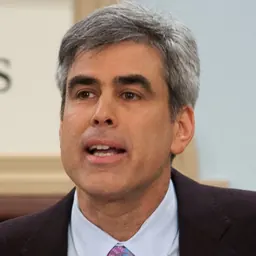


Contemporaries
People whose lives overlapped Raymond W. Gibbs, Jr.'s



Frequently asked questions
Who is Raymond W. Gibbs, Jr.?
American psychologist
When was Raymond W. Gibbs, Jr. born?
Raymond W. Gibbs, Jr. was born in 1954.
What is Raymond W. Gibbs, Jr.'s occupation?
Raymond W. Gibbs, Jr. is a psychologist.
What nationality is Raymond W. Gibbs, Jr.?
Raymond W. Gibbs, Jr. is American.
Sources & further reading
· Wikipedia: Raymond W. Gibbs, Jr.
· DBpedia: Raymond W. Gibbs Jr.
Cite this page
APA: Biography.guide. (2026). Raymond W. Gibbs, Jr.. https://biography.guide/raymond-w-gibbs-jr/
MLA: "Raymond W. Gibbs, Jr.." Biography.guide, https://biography.guide/raymond-w-gibbs-jr/.
Chicago: "Raymond W. Gibbs, Jr.." Biography.guide. https://biography.guide/raymond-w-gibbs-jr/.
Data last updated: 2026-09-20 · Spot an error? Report a correction.
Page generated 2026-09-27 05:21 UTC