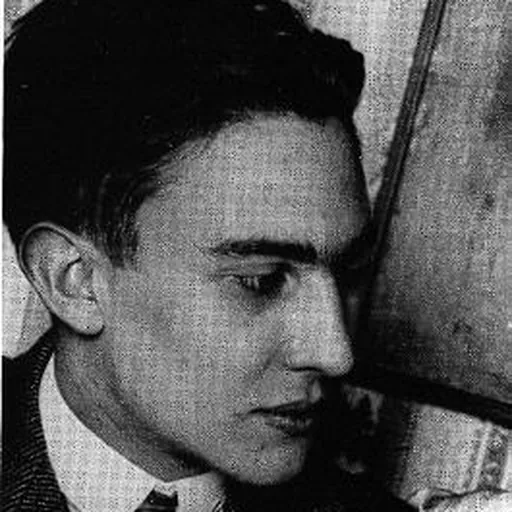
About Raymond Radiguet
Lived 1903 – 1923 (aged 20). Raymond Radiguet was a French writer, journalist, poet, novelist, playwright and librettist, known for Le Diable au corps (novel) and Le bal du Comte d'Orgel.
Raymond Radiguet (; 18 June 1903 – 12 December 1923) was a French novelist and poet. His two novels are notable for their psychological complexity and classical aesthetics, as well as for their controversial subject matter. Radiguet died unexpectedly at the age of twenty after contracting typhoid fever.
Radiguet completed his best-known novel, Le Diable au corps (1923), at the age of seventeen. A succès de scandale upon its publication, the novel is a semi-autobiographical account of an affair with the wife of a soldier during World War I. A second novel, Le Bal du comte d'Orgel (1924), was published posthumously.
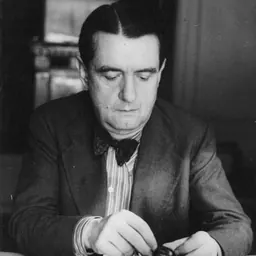
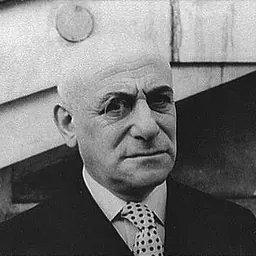
Radiguet associated with many of the important artists of his time, including composers such as Erik Satie and Georges Auric, painters such as Modigliani and Picasso, and writers such as Max Jacob. Most notable among these connections was his intense, likely romantic relationship with Jean Cocteau.
Early life Raymond Maurice Radiguet was born in Saint-Maur-des-Fossés, Val-de-Marne, close to Paris. He was the eldest of the seven surviving children born to (1866-1941), a successful caricaturist, and Marie Radiguet (, 1884-1958), who taught at a boarding school. When asked about his mother, Radiguet once said, [] His father was a much more significant presence in his life, and Maurice Radiguet's mixture of permissiveness and near-rivalry with his eldest son heavily influenced the paternal dynamic in Le Diable au corps. Radiguet was also close with his paternal aunt, Eugénie Cordonnier, who provided a steady and sensible presence in the life of the family.
On his mother's side, his family hailed from Martinique; his maternal grandfather had died in a shipwreck off the coast of Havana.
Radiguet's paternal relatives were mainly involved in the sciences. His great-grandfather had founded Radiguet & Fils, a company that manufactured precision scientific instruments. The management of this firm stayed in the family for several generations. A notable relative was (1850-1905), head of Radiguet & Fils and innovator in the field of radiography, who died of radiodermatitis in one of the first such cases observed in France.
Radiguet recounted his earliest memory in the autobiographical Île de France, Île d'Amour:
In the same work, he sets down two childhood memories of death. In one, also drawn on at the beginning of Le Diable au corps, a neighbor's maid commits suicide by throwing herself from a rooftop. In the other, a moment of erotic fascination gives way to horror as, watching a young couple on a swing, he sees the woman fall and break her neck. He later wrote of this incident: . In 1917, he entered the Lycée Charlemagne on a scholarship. Once there, however, he began neglecting his schoolwork in order to pursue his own interests in classic literature and was eventually expelled. His father, concerned about his academic indifference, had him enrolled in classes in Latin and Greek, but Radiguet was more interested in the grand siècle (La Princesse de Clèves was especially formative for him Salmon helped him find work at several newspapers; years later, recalling his impressions on first reading Radiguet's poetry, he writes: [] Radiguet's first published poem, again under the pseudonym "Raimon Rajky," was "Aiguilles des secondes," which appeared in the September 1918 edition of L'Instant. His first publication under his real name was "Ligne d'horizon," which appeared two months later, in Le Canard enchaîné. In December, he published a short story "Tohu" in the avant-garde journal SIC. In February 1919, he met Max Jacob, with whom he became close at this time. Some contemporaries speculated about the nature of this relationship, with Salmon writing that after only two days Radiguet was addressing Jacob using the familiar tu pronoun. thumb An early poem published under the pseudonym "Raimon Rajky." The reference to "un édredon rouge" offended Guillaume Apollinaire.As one of the few writers in the immediate postwar milieu who had been too young to fight, Radiguet found himself an outsider in the generational struggle between modernists who were firmly established prior to World War I—Jacob and Salmon, along with SIC and its editor Pierre Albert-Birot, were among these—and the younger generation, most of whom had fought in the war and many of whom were still mobilized. This younger generation found a voice in Pierre Reverdy's magazine Nord-Sud, and then in Dada. Radiguet made an attempt to ingratiate himself with this new avant-garde without alienating his older connections. This was partly successful (Radiguet is hailed as one of the "Parisian friends" [] of Dada in a poem by Tristan Tzara), but social miscalculations and a poor impression on Louis Aragon damaged these inroads. An example of such a miscalculation was a poem Radiguet sent to Guillaume Apollinaire, which alluded through its incipit [] to a line of Apollinaire's "Zone": [] This gesture offended Apollinaire rather than endearing Radiguet to him.
Radiguet's relationship with Jean Cocteau began in 1919. Despite Cocteau's characteristically dramatic account of their first meeting, it is uncertain at which literary soirée they first made personal contact. On Radiguet's first being introduced at Cocteau's home, the butler announced him this way: "Monsieur, c'est un enfant avec une canne." [] The nature of their relationship has been the source of much speculation. Cocteau was famously homosexual, and Radiguet was only the most significant in a series of eroticized mentor-mentee relationships in Cocteau's life. While there is no positive evidence that the two were ever romantically or sexually involved, Radiguet's biographer Monique Nemer concludes that: [] Cocteau was possessive toward his protégé: during a long absence from Paris, he dispatched friends like Georges Auric to watch over Radiguet and keep him from [] Cocteau's correspondence with Radiguet during this period, entailing letters sent almost daily despite the infrequency of Radiguet's responses, resulted in Maurice Radiguet demanding explanations from Cocteau.
In 1920, Radiguet and Cocteau collaborated several times, notably on the one-act play Le Gendarme incompris and on the libretto for Paul et Virginie, a comic opera adaptation of Bernardin de Saint-Pierre's novel; Erik Satie composed the music. They also co-founded a literary review called Le Coq, which became defunct eight months later after four issues containing works by artists and writers such as Paul Morand, Roger de La Fresnaye, Georges Auric and Tristan Tzara. Radiguet inserted into the first issue an article captioned: []. This article denounces French artists' self-conscious innovation and search for novelty, which he represents as part of the legacy of Voltaire, and declares that Ronsard and Racine, []. He praises La Fresnaye and Auric for not spurning familiar subjects, and applies to both of them what he says in the article of Cocteau: [].
In early 1923, Radiguet published his first and most famous novel, Le Diable au corps [The Devil in the Flesh]. Its scandalous content, along with its autobiographical links, set off a literary . The novel was a great commercial success. Due in part to an intense marketing campaign by its publisher, Bernard Grasset of Éditions Grasset, it sold over 100,000 copies in three months. The moral outcry against the novel was spearheaded by FIDAC. tapped into an unacknowledged but profound national anxiety over the fidelity of soldiers' wives, some of whom had staved off loneliness through affairs with older men or adolescent boys. According to Radiguet family friend Yves Krier, it was Maurice Radiguet that Alice Serrier , the model for the character of Marthe, initially intended to seduce. Alice Serrier's husband, Gaston Serrier, was a soldier in the war. The scandal followed the couple for decades, and the paternity of their child was called into question by the press. Gaston always maintained his wife's fidelity. An anecdote reported by Ernest Hemingway has Cocteau charging Radiguet (known in the Parisian literary circles as "Monsieur Bébé" – Mister Baby ) with decadence for this behavior, applying the feminine form of the adjective vicieux to Radiguet: [] Radiguet, Hemingway implied, employed his sexuality to advance his career: being a writer "who knew how to make his career not only with his pen but with his pencil."
By the age of 20, Radiguet was drinking extremely heavily and working on his second novel, Le bal du Comte d'Orgel (Count d'Orgel's Ball). This novel, also dealing with adultery, was published posthumously in 1924 and also proved controversial. Cocteau's significant alterations to the text of the novel have caused controversy of a different order: in the introduction to the 1984 Flammarion edition of the book, literary historian Bruno Vercier refers to Cocteau as []. Radiguet was a self-consciously classicist writer; this is visible in the mythological influence present in much of his work, the stylistic aspirations toward simplicity and purity of expression,
In addition to his two novels, Radiguet's works include a few poetry volumes and a play. Critics are divided on the merits of Radiguet's poetry and the seriousness of his poetic efforts. Clément Vautel, writing in 1925 in response to Le Figaro 's review of Radiguet's poetry collection Les Joues en feu (Cheeks on Fire), referred to the poems as [] In his preface to Radiguet's Poetic Works, Georges-Emmanuel Clancier praises [] Roger Martin du Gard criticizes those who, patronizingly in his view, praise Radiguet's poetry for its precociousness and redolence of childhood, offering this assessment:
Death Tomb of Raymond Radiguet, Poet and Novelist, Père-Lachaise Cemetery, Paris. On 12 December 1923, Radiguet died in Paris of typhoid fever, which he contracted after a trip he took with Cocteau. He was 20 years old. When he fell ill, Radiguet was staying at a hotel associated with the Restaurant Foyot. It has been suggested that Cocteau's jealousy over Radiguet's engagement to Perlmutter caused him to neglect his care; Cocteau's failure to watch over Radiguet during the last night of his illness, and then to attend his funeral, formed [], according to Radiguet's friend Valentine Hugo, writing on the thirtieth anniversary of his death.
Both Maurice Radiguet and Jean Cocteau recounted an anecdote in which Radiguet declares, shortly before his death, that he is going to be [] Maurice Radiguet said it occurred the evening before his death, whereas Cocteau said it occurred three days prior. In reaction to Radiguet's death, Poulenc wrote, "For two days I was unable to do anything, I was so stunned". Several other friends of Radiguet's reported premonitions prior to his death. Jean Hugo writes that during a séance, a spirit giving its name as "Beauharnais"—Radiguet traced his lineage back to a relative of Joséphine de Beauharnais
In her 1932 memoir Laughing Torso, British artist Nina Hamnett describes Radiguet's funeral:
Radiguet left behind plans for a novel based on the life of the poet Charles d'Orléans.
Legacy Avenue Raymond Radiguet, Saint-Maur-des-Fossés.In 1945, Stead and Blake wrote that admirers of Le Diable au corps "include the most discriminating of critics." Aldous Huxley is quoted as declaring that Radiguet had attained in his short life a literary control that others required a long career to reach. François Mauriac said that Le Diable au corps is "unretouched and seems shocking, but nothing so resembles cynicism as clairvoyance. No adolescent before Radiguet has delivered to us the secret of that age: we have all falsified it."
Radiguet is the last entry in André Gide's Anthologie de la Poèsie Française; Gide selects for inclusion "Amélie" from Devoirs de vacances and "Avec la mort tu te maries..." from Les Joues en feu. A character in Gide's Les Faux-monnayeurs, Léon Ghéridanisol, may have been named after Radiguet, the first three syllables of the character's surname anagramming phonetically to "Radiguet."
Numerous portraits of Radiguet exist, by artists such as Pablo Picasso, Amedeo Modigliani, Man Ray, and Valentine Hugo, along with many drawings of him by Jean Cocteau. An avenue in Saint-Maur-des-Fossés is named after him.
Works Les Joues en feu (1920) – poetry, translated by Alan Stone as Cheeks on Fire: Collected Poems Le Gendarme incompris (1921) – play, with Jean Cocteau Devoirs de vacances (1921) – poetry, translated as Holiday Homework Les Pelican (1921) – drama, translated by Michael Benedikt and George Wellworth as The Pelicans Le Diable au corps (1923) – novel, translated by Kay Boyle as The Devil in the Flesh Le Bal du comte d'Orgel (1924) – novel, variously translated as The Count's Ball, Count d'Orgel Opens the Ball, Oeuvres completes (1952) – complete works
Film adaptations In 1947, Claude Autant-Lara released his film Le diable au corps, based on Radiguet's novel and starring Gérard Philipe. Coming just after World War II, the movie caused controversy in its turn. Among the other cinematic versions of Radiguet's story, the heavily adapted version by Marco Bellocchio, Il diavolo in corpo (1986), was notable as being among the first mainstream films to show unsimulated sex.
In 1970, Le Bal du comte d'Orgel was adapted into a film, starring Jean-Claude Brialy as Comte Anne d'Orgel. It was the last movie directed by Marc Allégret. In 2000, Radiguet's life and work were examined by Jean-Christophe Averty in Les deux vies du chat Radiguet, for the TV series Un siècle d'écrivains.
Don’t just read it —
keep it.
Full-length biographies made to live with: read them, listen on the way to work, watch them tonight.
- E-book
- Audio
- Video
Instant download · yours to keep · every purchase keeps this site free
Important facts
Family & relationships
People in Raymond Radiguet's life
Named in this biography and alive at the same time


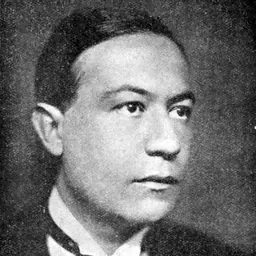

Related people
Same field, nearest in time
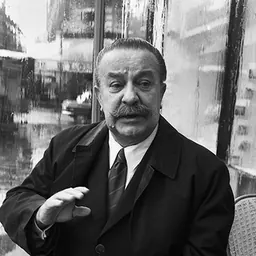


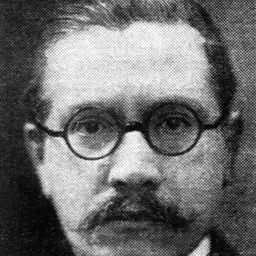

Contemporaries
People whose lives overlapped Raymond Radiguet's
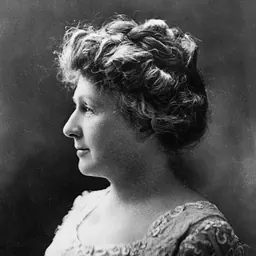
Frequently asked questions
Who was Raymond Radiguet?
French writer (1903–1923)
When was Raymond Radiguet born?
Raymond Radiguet was born on 18 June 1903 in Saint-Maur-des-Fossés.
When did Raymond Radiguet die?
Raymond Radiguet died on 12 December 1923 in rue Piccini.
What was Raymond Radiguet's occupation?
Raymond Radiguet was a writer, journalist, poet, novelist, playwright and librettist.
What was Raymond Radiguet known for?
Raymond Radiguet was known for Le Diable au corps (novel) and Le bal du Comte d'Orgel.
What nationality was Raymond Radiguet?
Raymond Radiguet was French.
Sources & further reading
Cite this page
APA: Biography.guide. (2026). Raymond Radiguet. https://biography.guide/raymond-radiguet/
MLA: "Raymond Radiguet." Biography.guide, https://biography.guide/raymond-radiguet/.
Chicago: "Raymond Radiguet." Biography.guide. https://biography.guide/raymond-radiguet/.
Data last updated: 2026-09-23 · Spot an error? Report a correction.
Portrait: Wikimedia Commons · author & licence
Page generated 2026-09-27 05:05 UTC