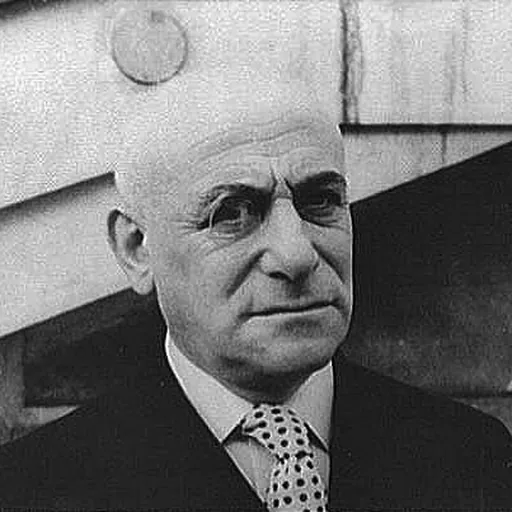
About Max Jacob
Lived 1876 – 1944 (aged 67). Max Jacob was a French painter, poet, writer, literary critic, art critic and essayist.
Max Jacob (; 12 July 1876 – 5 March 1944) was a French poet, painter, writer, and critic. Pablo Picasso, 1921, Three Musicians, oil on canvas, 200.7 × 222.9 cm, Museum of Modern Art, New York. Acquired through the Lillie P. Bliss Bequest; the figure on the right (holding the sheet music) represents Max Jacob.
Life and career
After spending his childhood in Quimper, Brittany, he enrolled in the Paris Colonial School, which he left in 1897 for an artistic career. He was one of the first friends Pablo Picasso made in Paris. They met in the summer of 1901, and it was Jacob who helped the young artist learn French. Later, on the Boulevard Voltaire, he shared a room with Picasso, who remained a lifelong friend (and was represented as the monk in his painting Three Musicians, which Picasso painted in 1921). Jacob introduced him to Guillaume Apollinaire, who in turn introduced Picasso to Georges Braque. He would become close friends with Jean Cocteau, Jean Hugo, Christopher Wood and Amedeo Modigliani, who painted his portrait in 1916. He also befriended and encouraged the artist Romanin, otherwise known as French politician, and future Resistance leader Jean Moulin. Moulin's famous nom de guerre Max is presumed to be selected in honor of Jacob.
Jacob, who was Jewish, claimed to have had a vision of Christ in 1909, and converted to Catholicism. He was hopeful that this conversion would alleviate his homosexual tendencies.
Max Jacob is regarded as an important link between the symbolists and the surrealists, as can be seen in his prose poems Le cornet à dés (The Dice Box, 1917 – the 1948 Gallimard edition was illustrated by Jean Hugo) and in his paintings, exhibitions of which were held in New York City in 1930 and 1938.
His writings include the novel Saint Matorel (1911), the free verses Le laboratoire central (1921), and La défense de Tartuffe (1919), which expounds his philosophical and religious attitudes.
The famous psychoanalyst Jacques Lacan attributed the quote "The truth is always new" to Jacob.
Liane de Pougy (1869–1950)'s diaries from 1919 to 1941, published as Mes cahiers bleus in French in 1977, and My Blue Notebooks in English in 1979, describe Jacob.
Death Having moved outside Paris in May 1936, to settle in Saint-Benoît-sur-Loire, Loiret, Max Jacob was arrested on 24 February 1944 by the Gestapo, and interned at Orléans prison (prisoner #15872). Jewish by birth, Jacob's brother Gaston had been previously arrested in January 1944, and deported to the concentration camp Auschwitz along with their sister Myrthe-Lea; her husband was also deported by the Nazis at this time. A cousin, Andrée Jacob, survived by living under an assumed name and worked in the Resistance movement Noyautage des administrations publiques. Following his incarceration at Orléans, Max was then transferred to Drancy internment camp from where he was to be transported in the next convoy to Auschwitz. However, said to be suffering from bronchial pneumonia, Max Jacob died on 5 March in the infirmary of La Cité de la Muette, a former housing block which served as the internment camp known as Drancy.
First interred in Ivry after the war ended, his remains were transferred in 1949 by his artist friends Jean Cassou and René Iché (who sculpted the tomb of the poet) to the cemetery at Saint-Benoît-sur-Loire in the Loiret département. T. R. Knight portrays Jacob in the 2018 season of the television series Genius, which focuses on the life and career of Pablo Picasso.
Gallery
Don’t just read it —
keep it.
Full-length biographies made to live with: read them, listen on the way to work, watch them tonight.
- E-book
- Audio
- Video
Instant download · yours to keep · every purchase keeps this site free
Important facts
more
Cyprien Max Jakob, Léon David (ps.), Jacob Max, Léon David, Morven le Gaëlique, Morven le Gaelique, Maximus Jacob, Max-Cyprien Jacob, le Gaëlique Morven, Léeon DavidPeople in Max Jacob's life
Named in this biography and alive at the same time
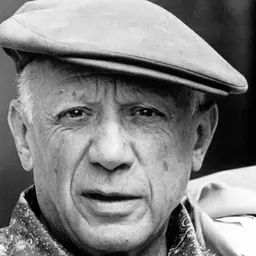

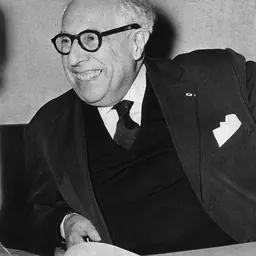
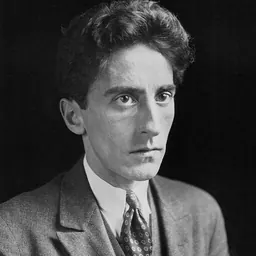

Related people
Same field, nearest in time

Contemporaries
People whose lives overlapped Max Jacob's
Frequently asked questions
Who was Max Jacob?
French poet, painter, writer and critic (1876-1944)
When was Max Jacob born?
Max Jacob was born on 12 July 1876 in Quimper.
When did Max Jacob die?
Max Jacob died on 5 March 1944 in Drancy concentration camp.
What was Max Jacob's occupation?
Max Jacob was a painter, poet, writer, literary critic, art critic and essayist.
What nationality was Max Jacob?
Max Jacob was French.
Sources & further reading
Cite this page
APA: Biography.guide. (2026). Max Jacob. https://biography.guide/max-jacob-painter/
MLA: "Max Jacob." Biography.guide, https://biography.guide/max-jacob-painter/.
Chicago: "Max Jacob." Biography.guide. https://biography.guide/max-jacob-painter/.
Data last updated: 2026-09-23 · Spot an error? Report a correction.
Portrait: Wikimedia Commons · author & licence
Page generated 2026-09-27 05:05 UTC