
About Raymond F. Schinazi
Born 1951. Raymond F. Schinazi is an American chemist and researcher.
Raymond F. Schinazi (born 21 March 1950) is an Egyptian-born organic medicinal chemist. He is the Frances Winship Walters Professor of Pediatrics at Emory University. He has expertise in antiviral agents, pharmacology, and biotechnology. His research focuses on developing treatments for infections caused by human immunodeficiency virus (HIV), hepatitis B (HBV), hepatitis C (HCV), herpes, dengue fever, zika, chikungunya, and other emerging viruses. These treatment options include antiviral agents as well as synthetic, biochemical, pharmacological and molecular genetic approaches, including molecular modeling and gene therapy.
Early life and education
Schinazi was born on March 21, 1950, in Alexandria, Egypt to Jewish parents. In 1962, his family was sequestered by the Nasser regime and in 1964 they immigrated to Naples, Italy as refugees. Schinazi went to boarding school in England where he completed his early education, before being admitted as an undergraduate at the University of Bath in 1968. He received his BSc in chemistry in 1972, and remained at Bath to complete his PhD in 1976. In 2006 he was awarded an honorary doctorate in Biotechnology from the University of Bath. In 1976, he moved to Yale University's department of pharmacology and trained as a postdoctoral fellow with William Prusoff.
He also completed postdoctoral trainings in virology at the University of Chicago with Bernard Roizman and at University of North Carolina with Yung-Chi Cheng, and virology/immunology at Emory University with André Nahmias.
Career Schinazi is currently the Frances Winship Walters Professor of Pediatrics, Director of the Laboratory of Biochemical Pharmacology, in Atlanta, Georgia. He has served at Emory University since 1978. He also holds Adjunct Professor positions at both University of Georgia (Atlanta, GA) and University of Miami (Miami, Florida). He worked part-time for the Emory University affiliated Atlanta VA for 35 years while maintaining his Emory University appointment, retiring from the VA in 2016.
He began his work as a herpes virologist with a specific focus on developing drug therapeutics for orolabial and genital herpes and severe life-threatening infections like herpes encephalitis. When HIV was identified as a virus in the 1980s, Schinazi and his fellow researchers directed their attention towards the problem. He was able to translate his knowledge gained through his work on the herpes viruses towards addressing HIV and HBV. He is credited for setting up the first-ever HIV laboratory at Emory University complete with a protocol on how to handle the dangerous virus in the laboratory setting so he and his team could pursue the development of novel antiviral drugs. In 1987, he helped Prusoff's laboratory discover that d4T, a nucleoside analog, had selective activity against HIV.
Schinazi is best known for his involvement in the discovery and development of innovative anti-HIV, HBV, and HCV drugs on the market. To date, he has been involved in the development of five FDA-approved drugs of which three are used in eight different drug combinations.
Discovery and development of lamivudine (3TC) Among the first drugs discovered and developed for treatment of HIV came through the collaboration between Dennis C. Liotta (Emory) and Schinazi. In 1992, they first published on lamivudine (3TC) in Antimicrobial Agents and Chemotherapy. This drug became one of the most successful antiviral agents used to combat HIV as part of fixed-dose combinations (including Combivir, Trizivir, Epzicom, and Triumeq). Combination therapies incorporating 3TC quickly became the standard of care, with safe and effective nucleoside reverse transcriptase (RF) inhibitors, such as 3TC and its related cousins, serving as the cornerstones of combination chemotherapy. 3TC was also found to be active against HBV in collaboration with Drs. Dennis Liotta, Philip Furman and Yung-Chi Cheng.
Discovery and development of emtricitabine [(-)-FTC or FTC] Schinazi's work led to the discovery of a second nucleoside analog, emtricitabine (FTC), subsequently resulting in a potent, safe nucleoside analog commonly used in treatment regimens. The discovery of FTC was first published in 1992 in Antimicrobial Agents and Chemotherapy as another new anti-HIV compound. The mechanism of action of FTC is by incorporation of FTC-TP into the growing viral DNA strand results in chain termination, disrupting viral DNA synthesis. Disruption of this process results in rapid reduction of systemic viral loads to undetectable in HIV-infected individuals, effectively allowing for significant rebound of CD4+ T-cells, effectively providing a tandem mechanism resulting in control of systemic viremia and restoration of functional immunity.
In addition, FTC in combination with tenofovir disoproxil fumarate (Truvada) was approved as a prophylactic drug (part of PrEP) to prevent transmission of HIV, further broadening its use beyond HIV-positive people to that of prophylaxis, underscoring a novel and previously unmet need with ramifications for global health worldwide. Today, this drug is widely used as part of fixed-dose combination drug regimens, including Truvada, Atripla, Complera, Stribild, Descovy, Genvoya, Odefsey, Descovy, Biktarvy, and Symtuza.
Sofosbuvir (Sovaldi) In 2004, Schinazi was one of the founders of Pharmasset, a company that would later go on to develop sofosbuvir. The name Pharmasset was derived from 'pharmaceutical assets' and the original business plan was to create assets that would be sold to other companies. The company raised around $45M in its 2007 IPO at $9 per share. It would later be taken over at $137 per share. In November 2011, Gilead Sciences announced a takeover bid for Pharmasset for approximately $11.4 billion.
Schinazi's contribution to the discovery of sofosbuvir is contentious. He is the co-author of a 2005 paper that discovered a precursor to the drug. Jean-Pierre Sommadossi, a principal founder of Idenix and a co-founder of Pharmasset, is a former business partner who no longer speaks to Schinazi.
In litigation between Idenix and Gilead/Pharmasset, there was an Order denying Idenix's motion for enhanced damages where the court noted that Schinazi "violated his confidentially obligations to Idenix, and shared with Pharmasset scientists Idenix's proprietary discoveries relating to treatment of HCV". However, even “fully accepting Idenix’s view of the evidence,” it was the company Schinazi founded, Pharmasset, not Idenix, that synthesized the key “compound that led to a cure for HCV.”. Even accepting that Idenix discovered a component of the compound, the cure for HCV was discovered only after Pharmasset/Gilead's ”revolutionary refinement of that invention.” Patent law, according to the order, reflects a balance between protection “and the importance of facilitating the imitation and refinement through imitation that are necessary to invention itself and the very lifeblood of a competitive economy.”
In 2014, Schinazi, working with the Egyptian government and Gilead Sciences, agreed to provide Egypt with the drug Sofosbuvir (Sovaldi) for about US$1,000, which is only one percent of its market price. Also working with Pharco, an Egyptian Pharmaceutical company Sovaldi is now available for less than US$120 per cure.
Prior to the implementation of a nationwide screening and treatment program for hepatitis C in 2014, there were over 6 million Egyptians infected and living with the disease. But between 2014 and 2018, over 60 million people were screened and more than 4.1 million treated.
Other drugs Schinazi has also had a hand in the development of the other FDA-approved drugs stavudine and telbivudine. Established in 1802 by Napoleon Bonaparte, it is the highest decoration bestowed in France and recognizes outstanding service to the French Republic.
In the years before and since, he has the recipient of numerous other awards, including: the Bruce Witte (Blumberg) Annual Distinguished Award- Hepatitis B Foundation (2000); the Georgia Biomedical Industry Growth Award (2003), Distinguished Scientist Award- Hepatitis B Foundation (2006); Emory University's Dean's Distinguished Faculty Lecture and Award (2008); Inductee- Technology Hall of Fame of Georgia (2011); Intellectual Property Legends Award - Georgia State University (2012); Charter Fellow- National Academy of Inventors (2013); Distinguished Medical Science Award- Friends of the National Library of Medicine (2013); Distinguished Scientific Achievement Award- American Liver Foundation (2014); Research & Hope Award for Excellence in Academic Research- PhRMA Foundation (2014); William S. Middleton Award- US Veterans Affairs (2015); Tom Glaser Leadership Award- Connexx Eagle Star Awards (2015); Lifetime Achievement Award- Scrip Award, London (2016); Lifetime Achievement Award for Public Service- Institute of Human Virology (2016); ; Global Hepatitis Award from the International Symposium on Viral Hepatitis and Liver Disease (ISVHLD) 2018;
Schinazi became a Fellow of the American Association for the Advancement of Science (AAAS) in 2020, and received an Honorary Doctorate (Doctor Philosophiae Honoris Causa) from the Hebrew University of Jerusalem in 2023. In the same year, Schinazi and colleagues received the "Deal of the Year" award from Emory's Office of Technology Transfer for their licensing agreement with Pfizer, Inc.
In 2025, he received the Antonín Holý Memorial Award from the International Society for Antiviral Research (ISAR) in recognition of his career-long prominence and achievements in antiviral drug discovery and development . In the same year, he was also inducted into the Georgia Technology Hall of Fame and received an Honorary Doctorate in Medicine from Uppsala University. .
In 2026, he received the Emory University President's Medal alongside his colleagues Dennis Liotta and Woo-Baeg Choi, in recognition of their transformative contributions to global public health via life-saving HIV medications - estimated to be taken by over 90% of people living with HIV in the United States and by millions more worldwide.
Podcast, radio, and online interviews Schinazi has discussed his life, career and research in numerous podcast, radio, and video interviews, including the BBC Radio 4 programme The Life Scientific , The Road From Carmel , and the IAS-USA series Going Anti-Viral. He has also been featured in a two-part interview series for the University of Miami Miller School of Medicine's Inside U Miami Medicine podcast and a video interview with Dr. Michael Lederman and Dr. Neil Greenspan, Senior Editors of Pathogens and Immunity discussing his career in antiviral research.
Schinazi's role in developing the hepatitis C cure has also been discussed in broader media coverage of the sofosbuvir story, including a profile published in 2015 the journal Science entitled King of the Pills; , and a 2020 CNN interview with Pharco CEO Dr Sherine Helmy, which references Schinazi's role in hepatitis C eradication in Egypt.
Founder Schinazi has been a founder of: Triangle Pharmaceuticals, which was taken over by Gilead Sciences Pharmasset, also acquired by Gilead for $11.4 billion in 2011 Idenix Pharmaceuticals, taken over by Merck for $3.85 billion RFS Pharma, which merged with Cocrystal Pharma in 2014. RFS are the initials of Schinazi's name.
Philanthropy
Schinazi has made substantial philanthropic contributions to various academic and cultural institutions. In 2022, he endowed the Raymond F. Schinazi and Family Endowed Chair in Biomedicine at the University of Miami Miller School of Medicine, installing visionary molecular virologist - and longtime friend and colleague - Dr. Mario Stevenson in support of his ongoing research toward a cure for HIV/AIDS. In 2023, Schinazi donated £2 million to the University of Bath, where he completed his undergraduate and doctoral degrees, to establish the Raymond Schinazi and Family Chair of Life Sciences - the first such chair in the university's new Department of Life Sciences.
He has also endowed multiple named chairs and professorships at Emory University, including the Nahmias-Schinazi Distinguished Professorship, the Schinazi Family Distinguished Professorship in Biomedical Research, the Barbara Stoll- and Lucky Jain-Raymond Schinazi Distinguished Professorships in Pediatrics, the Raymond F. Schinazi Distinguished Research Chair in Jewish Bioethics at the Emory Center for Ethics, and the Raymond F. Schinazi Scholarship in Bioethics and Jewish Thought,
Outside of academia, Schinazi funded the construction of the Eliyahu HaNavi Jewish Center in Cabo San Lucas, Mexico, named in honor of the historic synagogue in Alexandria, Egypt, that his family attended before being forced to flee in 1964. The center, which opened in November 2018, houses a synagogue, kosher dining, and accommodations for observant visitors.
Don’t just read it —
keep it.
Full-length biographies made to live with: read them, listen on the way to work, watch them tonight.
- E-book
- Audio
- Video
Instant download · yours to keep · every purchase keeps this site free
Important facts
People in Raymond F. Schinazi's life
Named in this biography and alive at the same time

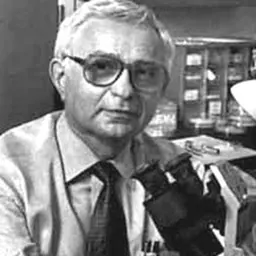




Related people
Same field, nearest in time

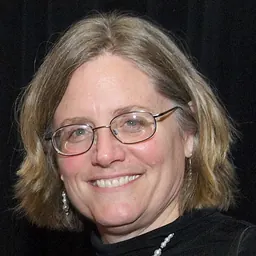

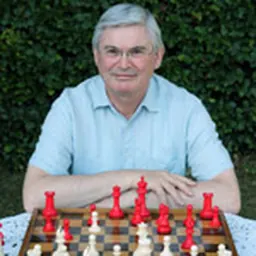


Contemporaries
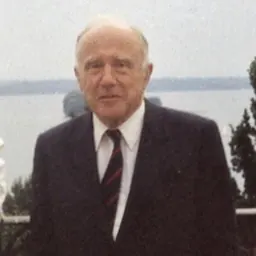
People whose lives overlapped Raymond F. Schinazi's


Frequently asked questions
Who is Raymond F. Schinazi?
American pediatrician
When was Raymond F. Schinazi born?
Raymond F. Schinazi was born in 1951 in Alexandria.
What is Raymond F. Schinazi's occupation?
Raymond F. Schinazi is a chemist and researcher.
What nationality is Raymond F. Schinazi?
Raymond F. Schinazi is American.
Sources & further reading
· Wikipedia: Raymond F. Schinazi
Cite this page
APA: Biography.guide. (2026). Raymond F. Schinazi. https://biography.guide/raymond-f-schinazi/
MLA: "Raymond F. Schinazi." Biography.guide, https://biography.guide/raymond-f-schinazi/.
Chicago: "Raymond F. Schinazi." Biography.guide. https://biography.guide/raymond-f-schinazi/.
Data last updated: 2026-09-20 · Spot an error? Report a correction.
Page generated 2026-09-27 05:32 UTC