
About Raymond E. Murphy
Lived 1898 – 1963 (aged 64). Raymond E. Murphy was a civil servant.
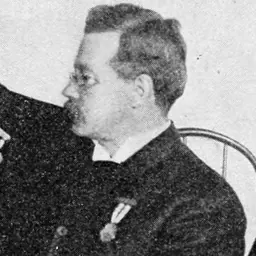
Raymond E. Murphy (1896 – July 28, 1963) was an American official in the United States Department of State, known for investigating foreign infiltration including Nazis and Communists, who first brought information about Whittaker Chambers to Richard Nixon.
Background
Raymond Edward Soon after, he took a clerk position at the United States Department of State, moved to Washington, DC, and attended Georgetown University's law school.
By the start of World War II, Murphy ran a "secretive EUR/X unit" as an "embryonic intelligence service" within the State Department. On June 2, 1945, he wrote a report that interpreted an April 1945 critique by French communist Jacques Duclos as an attack on Earl Browder's American Communist Party, signaling a return to earlier communist drive for world revolution. According to historian Ted Morgan: Ostensibly, there were two camps inside the State Department, one of which, led by Acheson and McCormack, wanted to build up a centralized intelligence unit. The other camp, led by the officers in charge of the geographical divisions, fought to maintain their existing intelligence capacities. But what was presented as a jurisdictional dispute had a strong security component. [US Secretary of State] Byrnes had named, as his assistant secretary in charge of administration, his law partner and South Carolina crony, Donald Russell. With his direct line to Byrnes, Russell has precedence over Acheson. J. Anthony Panuch, an anti-Communist hard-liner, was Russell's assistant in charge of security. Panuch worked closely with Raymond E. Murphy, who ran a mysterious State Department Office called EUR/X, devoted to the study of worldwide Communist subversion. This Wizard of Oz-like character, known only to a handful inside State, performed such tasks as debriefing Soviet defectors. Murphy warned Panuch that, prior to the demise of the wartime agencies, the Communist-controlled United Public Workers of America had only one member inside the State Department. After the transfer, the membership rose to between one hundred and two hundred. The chairman of the UPWA local, Peveril Meigs, advocated striking against the federal government. "This means that the Department now has a first-class headache," Murphy wrote Panuch, since Congress was placing riders on all appropriates bills, stating that no part of the funds could be used to pay the salaries of employees who sanction the right to strike against the federal government. After hearing from a TIME magazine colleague on secondment to State (Samuel Gardner Welles), Murphy visited Whittaker Chambers twice at the Pipe Creek Farm, first on March 20, 1945, then on August 28, 1946. A report that Murphy filed thereafter contributed to the decision by Alger Hiss to leave State. National Socialism: Basic Principles (1942) "Possible Resurrection of Communist International, Resumption of Extreme Leftist Activities, Possible Effect on United States," Foreign Relations of the United States: The Conference of Berlin (The Potsdam Conference) (1945)
Don’t just read it —
keep it.
Full-length biographies made to live with: read them, listen on the way to work, watch them tonight.
- E-book
- Audio
- Video
Instant download · yours to keep · every purchase keeps this site free
Important facts
People in Raymond E. Murphy's life
Named in this biography and alive at the same time

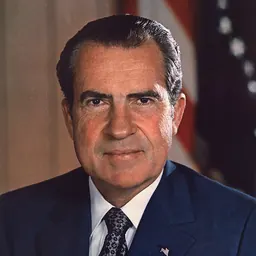
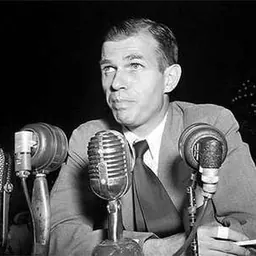

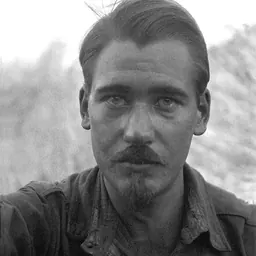

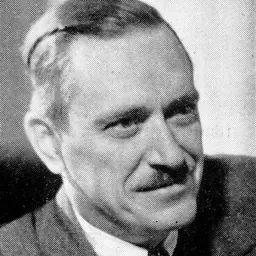
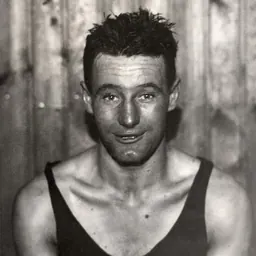
Related people
Same field, nearest in time

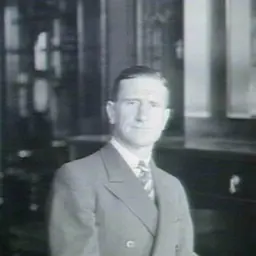
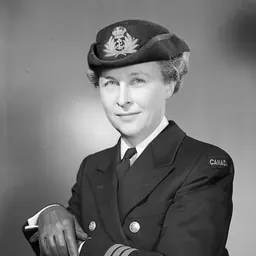
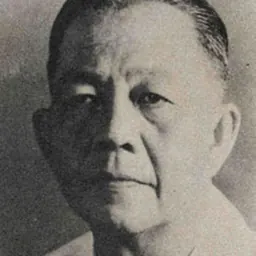

Contemporaries
People whose lives overlapped Raymond E. Murphy's



Frequently asked questions
Who was Raymond E. Murphy?
American government official
When was Raymond E. Murphy born?
Raymond E. Murphy was born on 31 August 1898.
When did Raymond E. Murphy die?
Raymond E. Murphy died on 28 July 1963.
What was Raymond E. Murphy's occupation?
Raymond E. Murphy was a civil servant.
Sources & further reading
· Wikipedia: Raymond E. Murphy
Cite this page
APA: Biography.guide. (2026). Raymond E. Murphy. https://biography.guide/raymond-e-murphy/
MLA: "Raymond E. Murphy." Biography.guide, https://biography.guide/raymond-e-murphy/.
Chicago: "Raymond E. Murphy." Biography.guide. https://biography.guide/raymond-e-murphy/.
Data last updated: 2026-09-20 · Spot an error? Report a correction.
Page generated 2026-09-27 05:03 UTC