
Raymond Chow Kwok Cheung
American mobster
About Raymond Chow Kwok Cheung
Born 1960. Raymond Chow Kwok Cheung is a British arms trafficker.
Raymond "Shrimp Boy" Kwok-Cheung Chow (; born December 31, 1959) is a Hong Kong-born felon with ties to a San Francisco Chinatown street gang and an organized crime syndicate, including the American branch of the Hong Kong-based triad Wo Hop To and the Hop Sing Boys.
In 2006, Chow became the leader of the Ghee Kung Tong (CKT), a Chinese fraternal association based in San Francisco, California. In 2014, Chow along with 28 other defendants including former California State Senator Leland Yee, were indicted for racketeering, money laundering, and a host of other alleged criminal activities. Leland Yee pleaded guilty to racketeering in July 2015 for conspiring with his campaign fundraiser to defeat donation limits through money laundering. Despite initial press releases, Chow was not indicted in a racketeering conspiracy with Leland Yee. Chow was indicted in a racketeering conspiracy which alleged that he oversaw a criminal faction of the Ghee Kung Tong. Chow is the only co-defendant of 29 to publicly profess his innocence and ask for an expedited jury trial. His trial began on November 9, 2015. On January 8, 2016, Chow was found guilty on all 162 charges, including one count of murder. He was sentenced to life in prison without parole, plus 20 years.
Personal life Chow was born on December 31, 1959, in Hong Kong, then a British colony. He is of Taishanese descent, and had three brothers:
His father owned a barbershop, but lost his business to gambling debts when Chow was eight. The family moved into a single room shack for a year, until it burned down. After joining the gang, he intervened in a fight involving his gang mentor by striking his mentor's opponent on the head with a knife, becoming a gang hero in the process. and dropped out of high school after approximately one month
Chow has been married twice: to Anna Ma (1980–86) and Cindy Szeto (1990–92). His marriage to Szeto was not registered, but they had a reception at the Empress of China restaurant at the top of the China Trade Center, and it ended when he was arrested in 1992.
Chow wrote an autobiography entitled Shrimp Boy: The Sun of the Underworld (2011); the title was later updated to Shrimp Boy: Life of Crime, Violence and Redemption Inside the Chinatown Underworld (2013). The manuscript remains unpublished under a restraining order served to Lo in August 2016 after Chow was sentenced to two life terms in prison; no one may publish or profit from it until the government recovers approximately $255,000 in seized assets and fines.
Criminal activity Chow stated he carried a letter of introduction from the leader of his gang in Hong Kong when he emigrated to San Francisco, joining the Hop Sing Boys. In an early incident, when he was 17, he was dropped off at a home in Hillsborough and was told to beat the resident to send a message from La Cosa Nostra; he finished the beating with the help of a two-by-four in two minutes and earned $3,000. Wah Ching leader Danny Wong called for a cease-fire at the Harbor Village, and was toasted by Chong for his peacemaking efforts. The toast for peace was later repeated at Chow's wedding, who called Chong "Uncle to us all." Despite the apparent cease-fire, the violence continued, culminating in the assassination of Wong in April 1991.
Chong was summoned to testify before the United States Senate on November 5, 1991, and was asked if he was the head of the Wo Hop To, and if he was responsible or involved in the murder of Danny Wong. Chong declined to answer each question, citing his Fifth Amendment rights.
Firearms trafficking and racketeering Chow was arrested on May 31, 1992 and Chong fled the United States a few days ahead of the racketeering indictment. Chow was later tried in two separate proceedings. The first trial was for illegal gun sales and the second was for racketeering. Two of his co-defendants had earlier pleaded guilty in exchange for reduced sentences. A year and a half after his conviction, Chow was sentenced to more than 23 years; sentencing for the 1995 conviction had been delayed while he was undergoing his second trial. An appeal in 1998 was unsuccessful; the Ninth Circuit ruled "the evidence against Chow was so overwhelming that it is unlikely the jury would have reached any other verdict".
Chow's second trial (for racketeering) started in March 1996 and was dismissed as a mistrial in May 1996. At the outset, the defense portrayed him as a Buddhist and practitioner of kung fu, rather than a criminal mastermind trying to consolidate organized crime in Chinatowns nationwide. The defense strategy also claimed the government's case was simply not credible, as most of the evidence was produced by criminals who were testifying in exchange for reduced sentences. Two jurors said there was "no chance of reaching a unanimous verdict" after six days of deliberation. The lead lawyer for Chow's defense, Maureen Kallins, bragged that authorities had "spent $10 million to get this guy and they couldn't get him on any of the 38 counts."
After Chong was captured and extradited to the United States in 2000, Chow became an informant and testified against his former boss in exchange for a reduced sentence. He was first released to U.S. Immigration and Customs Enforcement in May 2002, and then put into supervised release from prison in January 2003.
As part of the deal to win early release in 2003, Chow testified against Chong. In addition, Chow's application for a resident visa was supported by the government. In addition, he was granted a monthly allowance of $2,000.
Murder of Allen Leung Leung's White Crane, just inside the entrance to St. Louis Alley Shortly after Chow was released from prison, in late 2003, Allen Leung approached the FBI saying that Chow intended to "clean up Chinatown" by removing him and the head of another tong, according to testimony at Chow's 2015 trial from William Wu, the agent handling Chow. Leung was a prominent Chinatown leader, who had founded (with his two brothers) the Leung's White Crane Dragon and Lion Dance Association in 1971 and had served as president of the Hop Sing Tong (HST) four times, beginning in 1994 after the previous Hop Sing leadership (Chong and Chow) were in exile or imprisoned.
Leung approached the FBI again in the wake of the Hop Sing shooting, and said that Chow had personally demanded $100,000 at the Hop Sing headquarters in late 2004. Since Chow was still on supervised release, the FBI questioned him about the incident, and Chow countered that Hop Sing had instead approached him and "wanted him to loan-shark the money." Leung stated that Chow or his associates "will try to get him and the [Hop Sing] board members" in retaliation for the failed demand for money, but Leung refused to wear a listening device, and the extortion case died for lack of evidence. Chanthavong was tasked with driving by Leung's shop at 603 Jackson to watch Leung's movements. According to the police, the gunman entered Leung's office and demanded cash; although Leung offered it to him, the unknown suspect shot Leung in "an execution slaying" before Leung could hand over any money. During Chow's subsequent trial, Cam testified this was the third attempt on Leung's life; the first attempt was called off after Chanthavong withdrew, and the second attempt failed when Cam was unable to intercept Leung as he was leaving a banquet. but died in July 2018 from metastatic lung cancer before he could be tried.
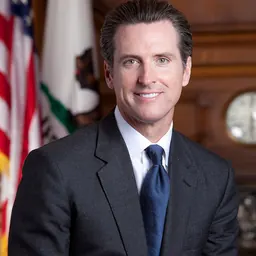
Head of Ghee Kung Tong Chow led a Freemason salute to Leung at his funeral on March 18, The government's probe of Chow was dubbed 'Operation White Suit' after Chow visibly and uniquely wore a white mourning suit to Leung's funeral. Although Chow had previously supported Lei as dragon head, they argued after Leung's funeral; Lei told Chow that no one respected him because of his conduct. According to a mayor's aide, Chow "[showed] up at events and [tried] to get pictures with politicians", eventually posting a picture he took with Gavin Newsom on his Facebook page.
Meanwhile, for 'Operation White Suit', an undercover FBI agent (identified either as UCE 4599 or by the alias "David Jordan") had been introduced to Chow in May 2010 as an East Coast emissary from La Cosa Nostra. Chow told "Jordan" he would be withdrawing his protection from Kong. Chow testified at his 2015 trial that he had expelled Kong from HST because Kong had used Chow's name and reputation to recruit new youth drug dealers. Although expelling Kong effectively stripped him of protection, Chow intended that "[Kong was] gonna get his ass whupped", but said he never meant to kill Kong. Although "Jordan" warned Chow that "someone's going to smoke [Kong]" after he lost protection from the HST, Chow replied "It's all good, you know; in the gangland, their own nature would take care of their own." Although Chow would be tried and convicted for conspiracy to murder Kong, authorities would later indict Wing Wo "Fat Mark" Ma in 2017 for the pair's murder. Ma was a carpenter who built greenhouses and other structures for Kong's marijuana-growing operation. Ma was also a police informant who had bribed Harry Hu, an investigator for the Alameda County District Attorney's office, between 2008 and 2013 to shield Ma's criminal activities from prosecution, including the murders of Kong and Chen. Ma had called and met Hu for help shortly after Ma was questioned about the murders on October 22, 2013. Ma was convicted for the murders, bribery, and marijuana-related charges in November 2019 after a three-week trial.
Leland Yee dragnet On March 26, 2014, Raymond Chow was arrested during an FBI raid in connection with an investigation into official corruption by State Senator Leland Yee. Chow faced charges of money laundering and conspiracy to deal stolen property. He was accused of operating a faction, or subgroup in the CKT, a benevolent association, as a racketeering enterprise that trafficked in drugs, weapons, and stolen items. Federal authorities alleged Chow's reformation was a façade, and charged him with seven counts of money laundering, two counts of conspiring to transport and receive stolen liquor, and one count of conspiracy to traffic untaxed cigarettes. He faced a maximum of 20 years imprisonment for each money laundering count.
In April 2014, trial lawyer Tony Serra joined Chow's defense team. Serra blasted the sting operation that led to Chow's arrest as entrapment: "They tempted my client in every fashion to commit a substantive crime." One of the key defense strategies, to present possible exculpatory evidence to the public, was denied by U.S. District Court Judge Charles Breyer in May 2014 on the grounds that it could disclose the identity of the undercover FBI agent known as "David Jordan".
A superseding 228-count indictment filed in July 2014 expanded the crimes to include racketeering, money laundering, unlicensed firearms dealing, fraud, narcotics conspiracy, murder for hire, wire fraud, and conspiracy to receive and transport stolen property. Chow pleaded not guilty to the added racketeering charge and Serra welcomed the new charges as a measure of the government's desperation: "They obviously want to target him. They obviously have a weak case or they wouldn’t target him in this manner. So we are delighted to confront them."
In September 2014, Chow sued the City of San Francisco and Mayor Edwin Lee, asking them to disclose records which Chow claimed would show that an undercover FBI agent, identified as UCE 4773 alias "Michael Anthony King", paid a total of $20,000 in bribes to Lee as campaign contributions. "King" and "Jordan" had worked together on the investigation into Leland Yee; "King" was the lead undercover agent until he was removed, allegedly for financial misconduct. According to FBI wiretaps, the bribes were solicited by others on behalf of Lee, but it was not clear if Lee was aware of their source. Keith Jackson was one of a trio charged with soliciting the bribe; by 2017, many of the charges had been dismissed and the remaining defendants accepted a no-contest plea deal in 2019 that resulted in no additional time served in prison. Judge Breyer ordered a separate trial for Yee and Jackson on the political bribery and illegal firearms importation charges following a hearing in November 2014.
On July 7, 2015, Chow declined to take a plea deal from prosecutors on the racketeering charges and was ordered to stand trial with seven other defendants in November. Yee and three other defendants had all pleaded guilty to racketeering on July 1; of the three associates, two also admitted to participating in illegal activities through CKT, including narcotics distribution, firearms sales, and murder-for-hire. None of the four who accepted the plea deal were required to testify against Chow.
Chow's defense team continued to excoriate the government investigation as entrapment, filing a motion to dismiss in August 2015 that claimed "the investigation stagnated quickly [shortly after it started in 2009] and is characterized by literally years of attempting to lure Chow into breaking the law to no avail"; prosecutors countered the motion included documents that had previously been sealed and the new motion to dismiss should also be sealed, but Judge Breyer disagreed, as the initial motion to dismiss had already been publicly posted. Judge Breyer threw out the motion to dismiss in late August, stating that Chow's defense had failed to prove the selective prosecution standard established in United States v. Armstrong. All seven of Chow's fellow defendants pleaded guilty in September, and were removed from the upcoming trial per a defense motion to sever the other defendants. Chow's defense team also claimed the trial date of November 2 would result in ineffective representation due to inadequate time to prepare, after receiving more than 100 gigabytes of evidence in discovery after August 25.
After announcing they had uncovered new evidence in September, on October 15, 2015, federal prosecutors formally added charges of conspiracy to murder in connection with the deaths of Allen Leung and Jim Tat Kong. No charges had been filed previously for Leung's murder until one of Chow's racketeering co-defendants said they had heard Chow ordered the killing. The defense for Chow argued that Kong had murdered Leung in an attempt to take over the HST and the deaths of Kong and Chen in 2013 were a double suicide. which meant Chow potentially faced two trials: one for the earlier charges of racketeering and money laundering under his 2014 indictment, and a second one for the murder charges. Prosecutors issued a third superseding 162-count indictment, and Chow pleaded not guilty to the new charges of murdering Leung and conspiracy to commit the murder of Kong in "aid of racketeering". Prosecutors stated the murder charges were required to carry the potential for a death penalty because of Chow's criminal history, and the charges could not be added without the approval of Attorney General Loretta Lynch; and prosecutors announced they would not seek the death penalty.
Racketeering and murder trial Chow's latest trial began on November 9, 2015.
I would get back in the [criminal] business anytime, but my freedom is very important to me at this time. I'm just one step away. If I truly am not able to make it, I will go back into the shady business. — Raymond "Shrimp Boy" Chow, Recorded conversation with undercover FBI agent "Jimmy Chen" Chanthavong decided to testify against Chow in 2013 after hearing secret recordings made by the FBI in which Chow advised his driver that Chanthavong and another associate of Chow, "Andy" Man Lai Li, should continue making drug and gun deals with the undercover agent posing as "David Jordan"; Chanthavong testified that he and Li were being used as bait: "I felt like I was getting thrown under the bus, that I was expendable". Other witnesses for the prosecution included "Kevin" Cam,
The testimony phase of the trial was temporarily delayed during the illness of one of the defense lawyers; during the delay, defense lead lawyer Serra pushed to have "Jordans identity revealed so they could conduct a background investigation. In addition, Serra asked to put one of the prosecution lawyers on the witness stand to impeach the credibility of "Andy" Li.
"Chens testimony supported Chow's assertion that he had reformed. During their conversations, Chow would steer the topic away from illegal activities towards the book he was writing, at one point telling "Chen" that "money is not a big deal as long as one is happy", and he advised "Chen" to stay away from the criminal life. Chow's lawyers filed for a new trial, alleging the number of defense witnesses was unfairly limited and previous testimony in 2002 regarding the 1991 murder of Danny Wong had been wrongfully used against him. Judge Breyer denied the motion for a new trial on June 2, 2016. He was sentenced to two life terms (one for racketeering, and one for murder) plus twenty years for the other convictions on August 4, 2016. He is serving his sentence at Terre Haute USP.
In May 2019, a panel of three judges from the 9th U.S. Circuit Court of Appeals upheld his conviction and rejected his appeal. The United States District Court for the Northern District of California denied his motion for compassionate release in 2020, with Judge Breyer noting "The Court therefore cannot conclude that 'he defendant is not a danger to the safety of any other person or to the community.
Don’t just read it —
keep it.
Full-length biographies made to live with: read them, listen on the way to work, watch them tonight.
- E-book
- Audio
- Video
Instant download · yours to keep · every purchase keeps this site free
Important facts
People in Raymond Chow Kwok Cheung's life
Named in this biography and alive at the same time



Related people
Same field, nearest in time


Contemporaries
People whose lives overlapped Raymond Chow Kwok Cheung's


Frequently asked questions
Who is Raymond Chow Kwok Cheung?
American mobster
When was Raymond Chow Kwok Cheung born?
Raymond Chow Kwok Cheung was born in 1960 in British Hong Kong.
What is Raymond Chow Kwok Cheung's occupation?
Raymond Chow Kwok Cheung is an arms trafficker.
What nationality is Raymond Chow Kwok Cheung?
Raymond Chow Kwok Cheung is British.
Sources & further reading
· Wikipedia: Raymond Chow Kwok Cheung
· DBpedia: Raymond "Shrimp Boy" Chow
Cite this page
APA: Biography.guide. (2026). Raymond Chow Kwok Cheung. https://biography.guide/raymond-chow-kwok-cheung/
MLA: "Raymond Chow Kwok Cheung." Biography.guide, https://biography.guide/raymond-chow-kwok-cheung/.
Chicago: "Raymond Chow Kwok Cheung." Biography.guide. https://biography.guide/raymond-chow-kwok-cheung/.
Data last updated: 2026-09-26 · Spot an error? Report a correction.
Page generated 2026-09-27 05:14 UTC