
About Raymond Bayless
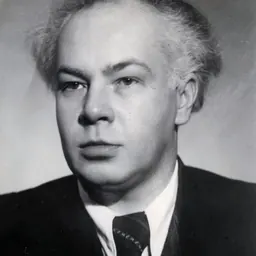
Lived 1920 – 2004 (aged 84). Raymond Bayless was an American and English illustrator and painter.
Raymond Gordon Bayless (1920 – May 25, 2004) was an American artist, author and parapsychologist.
Biography
Bayless was born in Oakland, California. As a teenager he worked in book and magazine illustration. He later became an artist and landscape painter specialising in oil paintings. Bayless did not graduate from college, but instead became a self-taught artist and illustrator.
He is also known for his science fiction fantasy paintings and drawings some of which were featured as cover arts on fantasy fiction books such as his Cthulhu artwork. His artwork was included in the role-playing game supplement H.P. Lovecraft's Dreamlands.
Bayless also provided paintings to the American government contributing paintings of ships and landscapes to the Air Force, Navy, State Department and the Pentagon. Bayless later built an amplifying system with a medium named Attila von Szalay to listen to what they believed were sounds made by the dead. Raymond Buckland in 2005 wrote about how Bayless and Rogo wrote the book "after a two-year investigation into phantom phone calls. The authors were surprised to find that a large number of people had received phone calls from friends and relatives who had died. In some cases the call was received before the recipient knew of the death of the caller. In other cases, the caller was long deceased. In 1956, Bayless became interested in the work of Attila von Szalay, who had done extensive work on spirit voices. The two worked together and in 1959 published their initial findings in The Journal of the American Society for Psychical Research."
He is most well known for his book written with D. Scott Rogo titled Phone Calls From The Dead (1979) in which they describe an alleged paranormal phenomenon in which people report that they receive simple, brief, and usually single-occurrence telephone calls from spirits of deceased relatives, friends, or strangers. Susan L. Nickerson for Library Journal in 1979 wrote that "There is something very humorous in the idea of the dead contacting us by telephone, but Rogo and Bayless are quite serious about their two-year investigation, the first systematic study in a field that most parapsychologists have evidently laughed away. The author's compilation of cases and their attempts towards an explanation are impressive. They also give some background on other attempts to communicate with the dead by electronic means. Although they try to report objectively, a certain bias toward belief in survival after death is evident. For parapsychology collections."
The book The Spiritual Anatomy of Emotion notes that Bayless in 1980 covered a case in which he inferred a mechanism for how auroral sounds can become audible: the phone and paging systems in a factory would stop working or become drowned out by high-frequency sound in the presence of a young female worker, which also caused malfunctions in her electric typewriter and calculator, and the tape recorder of Bayless. Bayless noted that another worker had experienced similar conditions there a year earlier so Bayless thought that the two women "modulated radio waves into a form that could be picked up physically on electronic equipment."
Bayless also co-wrote The Case for Life After Death: Parapsychologists Look at the Evidence (1981) with Elizabeth E. McAdams, of which Library Journal reviewer Michael Schuyler said "Despite the promise of the title, this book is merely a collection of anecdotal material including out-of-body experiences, ghosts, animal hauntings, mysterious telephone calls, and the like. These accounts span the last 100 years, with many of the cases comfortably out of reach of verification. Most have been reported elsewhere in parapsychological literature. The subject deserves serious treatment, but this book does little to further research in the area. There is nothing new here." George P. Hansen of the Journal of Parapsychology said that "This is a popularly written book meant for persons with no previous familiarity with psychical research. The topics include near-death experiences, ghosts, poltergeists, OBEs, tape-recorded voice phenomena, spirit photography, mediumistic communications, and others. The book is primarily a collection of cases recounted in three or four sentences to a page or two. It contains a fair list of references for a book of its scope. The book will probably not be of any interest to persons even slightly familiar with the literature. A very credulous tone is adopted; for instance, Margery and ectoplasm are both accepted as legitimate without adequate indication of the extremely controversial nature of both. The reader is not given much guidance as to care required in investigations of psychical research. It cannot be recommended because of the credulous approach."
His wife Marjorie said that before he died in 2004, he told her he would return.
Published works
The Enigma of the Poltergeist (1967) Animal Ghosts (1970) Experiences of a Psychical Researcher (1972) Other Side of Death (1972) Voices from Beyond (1976) Phone Calls from the Dead (1979) with D. Scott Rogo The Case for Life After Death: Parapsychologists Look at the Evidence (1981) with Elizabeth E. McAdams Apparitions and Survival of Death (1989)
Don’t just read it —
keep it.
Full-length biographies made to live with: read them, listen on the way to work, watch them tonight.
- E-book
- Audio
- Video
Instant download · yours to keep · every purchase keeps this site free
Important facts
People in Raymond Bayless's life
Named in this biography and alive at the same time


Related people
Same field, nearest in time





Contemporaries
People whose lives overlapped Raymond Bayless's





Frequently asked questions
Who was Raymond Bayless?
American illustrator
When was Raymond Bayless born?
Raymond Bayless was born on 13 February 1920.
When did Raymond Bayless die?
Raymond Bayless died on 25 May 2004.
What was Raymond Bayless's occupation?
Raymond Bayless was an illustrator and painter.
What nationality was Raymond Bayless?
Raymond Bayless was American and English.
Sources & further reading
Cite this page
APA: Biography.guide. (2026). Raymond Bayless. https://biography.guide/raymond-bayless/
MLA: "Raymond Bayless." Biography.guide, https://biography.guide/raymond-bayless/.
Chicago: "Raymond Bayless." Biography.guide. https://biography.guide/raymond-bayless/.
Data last updated: 2026-09-20 · Spot an error? Report a correction.
Page generated 2026-09-27 05:13 UTC