
Ray Rayburn
American audio engineer, author and standards analyst
About Ray Rayburn
Lived 1948 – 2021 (aged 72). Ray Rayburn was an American engineer, electrical engineer, audio engineer, university teacher and standards organization.
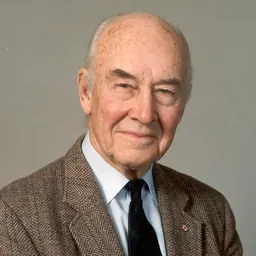
Ray Arthur Rayburn (August 21, 1948 – January 31, 2021) was an American audio engineer, author and standards analyst who co-developed nine audio standards with the Audio Engineering Society (AES), including CobraNet for digital audio. Rayburn was noted for sound system installations in churches, but he was also well known for radio and television studio engineering, upgrading Saturday Night Live to stereophonic sound in 1984. During 1992–94, Rayburn redesigned the sound system in the United States Senate chamber, implementing the world's first fully digital audio system based on digital signal processing. Rayburn contributed chapters for Glen Ballou's audio engineering textbook, and for John M. Eargle's The Microphone Book. He was an emeritus member of the Acoustical Society of America.
Career Rayburn attended New York Institute of Technology from 1966 to 1970, studying applied science and engineering. His first job after leaving college was in Ithaca, New York, with the Christian Broadcasting Network (CBN). Rayburn built the radio station's studios, and he engineered The Scott Ross Show, an interview-style program by CBN reporter Scott Ross, which won Billboard award for best syndicated radio program. CBN was nearly bankrupt and unable to pay Rayburn, so he returned to New York City to work for Telectro, a tape recorder manufacturer. At the first opportunity, he shifted to work in a large recording studio complex: Sonart / db Studios in Chicago, founded by Chuck Lishon and Hans Wurman. On the side, Rayburn helped the Christian Resurrection Band with their sound, befriending many members of Jesus People USA.
Rayburn returned to New York to work for A & R Recording under chief engineer Irv Joel. Rayburn was hired by RCA for remote recording assignments, including several symphonies and a 1977 Halloween performance by Frank Zappa. Rayburn also maintained gear for Electric Lady Studios. Phil Ramone recommended Rayburn to Lorne Michaels, and Michaels hired Rayburn to design systems for Broadway Video, creating Saturday Night Live first musical studio in stereo. Peak Audio and other contractors built and tested the system offsite, then installed it incrementally over two years because the Senate meetings could not be interrupted. The first full operation of the digital sound system was in 1994, with adjustments and improvements continuing through January 1995. It operated successfully for twelve years at which time the equipment control room was moved much farther away, requiring another complete redesign, with Rayburn again consulting.
Rayburn joined Peak Audio in 1997 and stayed with them for four years, helping to develop the CobraNet digital audio format, and working to establish the Senate DSP system as an independent product, licensed to Peavey Electronics who branded it MediaMatrix. Upon joining Peak Audio, Rayburn settled in nearby Longmont, although he wintered in Texas. After Peak Audio was bought by Cirrus Logic, Rayburn continued as a consultant on digital audio and DSP.
Author and instructor Rayburn wrote many articles about running sound for churches, and he participated in online discussion forums on the topic, especially Curt Taipale's Church Sound Check, started in the 1990s as an email list server. He continued this effort on the Facebook group Church Sound & Media Techs. He spoke at many conventions and symposia, including the AES Convention, SynAudCon, Infocomm and the convention of the Institute of Electrical and Electronics Engineers. He first operated the sound equipment in his church when he was in high school. He remained an avid church-goer all his life. , relocating to Chicago at the beginning of 1973. They welcomed their first son, Tim, in October that year. Three more sons were born after they moved back to the New York borough of Queens: Chris (1976), Mark (1978) and James (1980).
Among Rayburn's hobbies were photography and ham radio; he was active in the Longmont Amateur Radio Club (LARC), a Colorado group emphasizing emergency preparedness. He was also a certified firearms instructor.
Rayburn died from complications of COVID-19 on January 31, 2021, after spending two weeks in a Texas hospital for a broken ankle. He was 72 years old.
Don’t just read it —
keep it.
Full-length biographies made to live with: read them, listen on the way to work, watch them tonight.
- E-book
- Audio
- Video
Instant download · yours to keep · every purchase keeps this site free
Important facts
People in Ray Rayburn's life
Named in this biography and alive at the same time




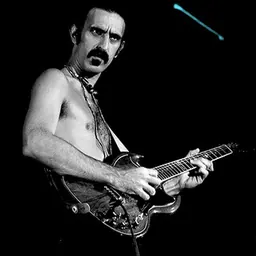

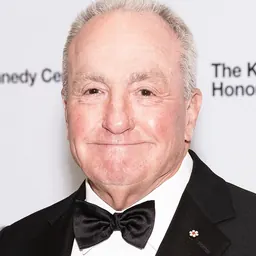
Related people
Same field, nearest in time
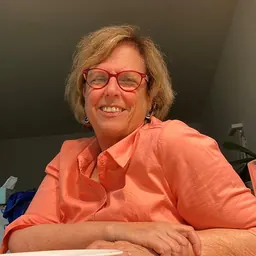

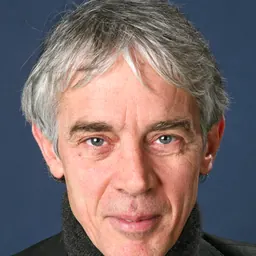
Contemporaries
People whose lives overlapped Ray Rayburn's

Frequently asked questions
Who was Ray Rayburn?
American audio engineer, author and standards analyst
When was Ray Rayburn born?
Ray Rayburn was born on 21 August 1948.
When did Ray Rayburn die?
Ray Rayburn died on 31 January 2021 in Arlington.
What was Ray Rayburn's occupation?
Ray Rayburn was an engineer, electrical engineer, audio engineer, university teacher and standards organization.
What nationality was Ray Rayburn?
Ray Rayburn was American.
Sources & further reading
Cite this page
APA: Biography.guide. (2026). Ray Rayburn. https://biography.guide/ray-rayburn/
MLA: "Ray Rayburn." Biography.guide, https://biography.guide/ray-rayburn/.
Chicago: "Ray Rayburn." Biography.guide. https://biography.guide/ray-rayburn/.
Data last updated: 2026-09-22 · Spot an error? Report a correction.
Page generated 2026-09-27 05:33 UTC