
Ray Creasey
American aerodynamicist
About Ray Creasey
Lived 1921 – 1976 (aged 54–55). Ray Creasey was an aerodynamicist.
Raymond Frederick Creasey OBE (18 December 1921 – 16 July 1976) was a British aerodynamicist with British Aircraft Corporation (previously English Electric) from 1948 until his death in 1976. He was responsible for the aerodynamics of the Lightning interceptor aircraft.
Early life and education Ray Creasey was born in Barnes, London on 18 December 1921. He won a scholarship to Hampton Grammar School. He had contracted polio as a child and this resulted in his rejection for military service at the outbreak of war. Wanting to contribute to the war effort, he joined a special projects team at Vickers-Armstrongs, rather than accepting a university place. While working full time at Vickers he studied for the Royal Aeronautical Society's Associate Fellowship Examinations, taking first place in all three subjects of Aerodynamics, Applied Mathematics, and Design (Aircraft) in 1942 at age 20. He was also awarded the Baden Powell Memorial Prize. He then took his degree at night school, graduating from the University of London with a first class honours degree in Science (Engineering) in 1944.
Career Vickers-Armstrongs The early years of his working life were with Vickers-Armstrongs, where he joined Barnes Wallis's special projects team, working on projects which included the Dam Busters' bouncing bomb, also known as Operation Chastise.
English Electric In 1946 he moved to Preston to join the aeronautical design department at English Electric, which had been set up in 1944-1945 in an expansion from aircraft manufacturing to include design. In 1960 English Electric merged with Vickers-Armstrongs and Bristol Aeroplane Company to become BAC (British Aerospace Company). Further expansion and mergers created the formation, in turn, of British Aerospace and the current BAE Systems.
Ray Creasey joined English Electric as an aerodynamicist, becoming Chief Aerodynamicist for the P1 project in 1950, when Teddy Petter left the company. He provided "a major input to the aerodynamic design of the A1 bomber (Canberra) and particularly the P1 (Lightning)". In 1959 he became Director of Engineering.
In an account of Ray Creasey's contributions to the company written by Ron Dickson and Frank Roe, who are themselves also described as "founding fathers of BAE" in the BAE publication of that name,
These ideas led to the concept of the Lightning as a supersonic fighter plane: We believe that the initiative came from Ray Creasey to think that supersonic flight was feasible (...) the personal contributions of Ray Creasey to the concept of the Lightning, and the importance of this story to the emergence of Warton as a leading design group can not be overstated.
A BAE Heritage Department booklet describes Ray Creasey's contribution to the aerodynamic design of the Lightning in some detail
BAC In his role as Director of Engineering at BAC and his later role as Director of Advanced Systems and Technology, Ray Creasey initiated many other projects and produced the early design for many other aircraft and systems: During the second phase of English Electric's history, that is from mid 1945, most project work was the responsibility of R F Creasey. In addition, he often had responsibility for many other departments. Projects included the TSR2 (notoriously cancelled); the Tornado; and the Typhoon.
TSR2 grew from Ray's ideas, a short-span wing with heavy wing loading, for low-level ground attack, then with a blown flap to give a reasonable landing run.
Frank Dickson, who later became Managing Director of BAE Military Aircraft Division, described Ray Creasey as "an aerodynamic genius".
Personal life Married in 1946, and had one daughter, born in 1948. He did not live to see the births of a granddaughter, who became a psychiatrist working for the NHS, and a grandson, who became a barrister. One of his uncles was the prolific crime writer John Creasey.
Awards
1968 appointed OBE 1970 Fellow of the American Institute of Aeronautics and Astronautics for his "long and distinguished career as a leading aeronautical engineer and his work in the field of variable geometry". 1974 Royal Aeronautical Society's Silver Medal for his "work on future military aircraft assessment, including the broader aspects of operational analysis". 1976 NATO Award for "services rendered".
Patents published in the UK
Most of the patents listed above were applied for and published in a number of other countries, notably the US, Canada and Germany. Many of the patents issued in his name were classified at the time, for reasons of national security, and it is unclear whether all of them were eventually de-classified and/or publicly published, and therefore whether the list above is complete. See also an article published in the New Scientist in respect of UK patents and secrecy orders. Most of the papers he wrote were also classified for reasons of national security.
Don’t just read it —
keep it.
Full-length biographies made to live with: read them, listen on the way to work, watch them tonight.
- E-book
- Audio
- Video
Instant download · yours to keep · every purchase keeps this site free
Important facts
People in Ray Creasey's life
Named in this biography and alive at the same time
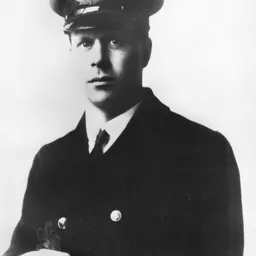


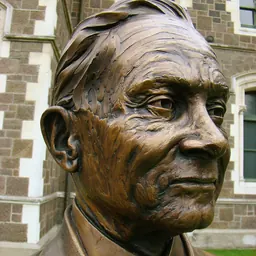
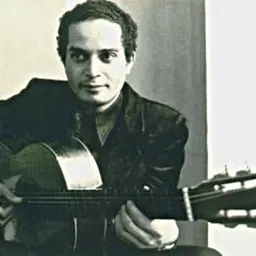

Related people
Same field, nearest in time




Contemporaries
People whose lives overlapped Ray Creasey's





Frequently asked questions
Who was Ray Creasey?
American aerodynamicist
When was Ray Creasey born?
Ray Creasey was born on 18 December 1921.
When did Ray Creasey die?
Ray Creasey died in 1976.
What was Ray Creasey's occupation?
Ray Creasey was an aerodynamicist.
Sources & further reading
Cite this page
APA: Biography.guide. (2026). Ray Creasey. https://biography.guide/ray-creasey/
MLA: "Ray Creasey." Biography.guide, https://biography.guide/ray-creasey/.
Chicago: "Ray Creasey." Biography.guide. https://biography.guide/ray-creasey/.
Data last updated: 2026-09-20 · Spot an error? Report a correction.
Page generated 2026-09-27 05:10 UTC