
About Ray Caldwell
Lived 1888 – 1967 (aged 79). Ray Caldwell was an American baseball player.
Raymond Benjamin Caldwell (April 26, 1888 – August 17, 1967) was an American professional baseball pitcher who played in Major League Baseball for the New York Yankees, Boston Red Sox, and Cleveland Indians from 1910 to 1921. He was known for throwing the spitball, and he was one of the 17 pitchers allowed to continue throwing the pitch after it was outlawed in 1920.
Caldwell was notorious during his playing career for his addiction to alcohol and partying; he possessed a self-destructive streak that many of his contemporaries believed stopped him from reaching his potential. In 1924, Miller Huggins wrote: "Caldwell was one of the best pitchers that ever lived, but he was one of those characters that keep a manager in a constant worry. If he had possessed a sense of responsibility and balance, Ray Caldwell would have gone down in history as one of the greatest of all pitchers."
Early life Caldwell was born in the (now mostly abandoned) town of Corydon, Pennsylvania, located just south of the New York state line near Cattaraugus County. He was the son of Anna (née Archer) and Walter Caldwell. The family later moved to Salamanca in the same county where Ray grew up and completed high school. Caldwell was struck by lightning while playing for the Cleveland Indians against the Philadelphia Athletics on August 24, 1919; despite being knocked unconscious, he refused to leave the game, having pitched innings, and went on to record the final out for the win. For the six starts Caldwell made that year with Cleveland, he went 5–1 with a 1.71 earned run average. This included the game where he was struck by lightning and a no-hitter against his former longtime teammates, the New York Yankees, on September 10.
In his first full season with the Indians, in 1920, Caldwell went 20–10, with a 3.86 earned run average. The Indians went on to win the World Series that year, although Caldwell's contribution to that success proved to be negligible. He started Game 3, but recorded just one out, having given up two hits, a walk, and an earned run, before being lifted by Tris Speaker (the Indians did not come back from this, and Caldwell was charged with the loss).
Caldwell's final season in the majors was in 1921, during which he primarily worked from the bullpen. His record was 6–6, with an earned run average of 4.90. After leaving the Indians, Caldwell went on to spend many years playing for various clubs in the minor leagues, including the Kansas City Blues and the Birmingham Barons. At the age of 43, Caldwell faced 21-year-old Houston Buffaloes star Dizzy Dean in the opening game of the 1931 Dixie Series, which Dean had promised to win. Writer Zipp Newman later dubbed the matchup "the strength of youth versus the guile of the years". Caldwell pitched a shutout and also knocked in the only run to give the Barons a 1–0 victory on the way to winning the series.
Caldwell's long-established reputation dissuaded any major league outfit from giving him another chance. Caldwell originally retired from professional baseball on April 20, 1933, having requested such from the Barons. However, he signed with the Charlotte Hornets in July to attempt a comeback. By September, he had been named manager of the Keokuk Indians of the Mississippi Valley League, replacing Ed Sicking.
Caldwell was a very good hitting pitcher in his career, posting a .248 batting average (289-for-1164) with 138 runs, eight home runs, 114 RBIs and 78 base on balls. He had 10 or more RBI in a season six times, with a career high 20 RBI with the 1915 New York Yankees. He also played at all three outfield positions and first base in the majors.
Later life Caldwell bought a farm in Frewsburg in 1940 and worked at the train station at Ashville as a telegrapher for the Buffalo, Rochester and Pittsburgh Railway. He later worked as a steward and bartender at the Lakewood Rod & Gun Club, where his fourth wife, Estelle, was a cook.
The Randolph, New York branch of Lions Clubs International and Caldwell's neighbors were working to raise money for surgery for Caldwell to have surgery on one eye at the cost of $500, including scheduling a chicken barbecue at the Grange Hall in Randolph on May 7, 1961. With the change of plans, the Lions Club noted that they want to be in a position to pay for all the expenses, noting they would need more than $500 because he would be in the hospital for almost three weeks and dealing with traveling expenses and living expenses attached to the surgery. High ticket demand resulted in having to move the barbecue from the Grange Hall to Randolph High School. Other Lions Club lodges offered to help, knowing their goal was an indeterminate number. In addition to the offer from the Cleveland Academy of Medicine, Cobbledick's column resulted in readers sending checks and cash to his office, which would be forwarded. The money sent to Cobbledick would then be forwarded to the Lions Club in Randolph. A doctor in Dover, Ohio also offered to perform the surgery for free, but the services of the Academy had already been accepted. Caldwell, went to War Memorial Stadium in Buffalo, New York on May 4 to attend the Buffalo Bisons home opener. Despite the cataracts blurring his vision, he felt the festive atmosphere about his upcoming surgery and the offer from the Academy. In addition to the free surgery, the Cleveland Academy of Medicine agreed to have Ray admitted as a "staff patient", meaning the costs of his time in the hospital would be lower than a regular patient. Caldwell expected that he would leave for Cleveland on May 14 for his surgery.
Dr. Thomas operated on Caldwell's right eye on May 16 at Lakeside Hospital in Cleveland. One of Caldwell's daughters told The News-Messenger, a newspaper in Fremont, that the operation had been a success and that he had good vision after the surgery was complete. She stated that Caldwell would have a second surgery in ten days time on the left eye, necessitating the 20 days in the hospital. An optical firm in Cleveland also offered to produce new glasses for the retired pitcher, ones designed for his new eyesight. At the time of surgery, Caldwell could only see large objects with his blurred vision. After the surgery, he wore a patch on his right eye, which would be removed for short periods. With a long healing process and fitting of new glasses, Caldwell would not know the full results of the surgery until later on. Caldwell was allowed to check out and spend a weekend with one of his granddaughters, Jean DeFranko of Garfield Heights, who had just gotten married. During his time in the hospital, Bill Wambsganss and George Uhle, teammates on the 1920 Cleveland Indians team, visited him at the hospital. Uhle, Wambsganss and Caldwell talked about how modern players struggled to get past the seventh inning and fall behind batters. He was also given stacks of get-well cards. The surgery on the left eye would be held off until Dr. Thomas deemed it necessary, but he could not leave Cleveland until meeting with Dr. Thomas on May 31. He also called Lefty Grove while in Norwalk, Ohio and asked him to do the baseball clinic in Fremont for 1961 as he would be unable to.
Caldwell returned to Cleveland in September 1961, having surgery on September 29 on his left eye. The results of the surgery on May 16 resulted in 20/25 vision in the right eye. Due to the high publicity around his first surgery, Caldwell also got his old Dixie Series ring from 1931 that had been in possession of a former barnstorming teammate since 1933. The second surgery was also called a success and Caldwell returned to having eyesight in both eyes. He would return to Onoville on the weekend of October 14, 1961 with new eyesight.
Caldwell died on August 17, 1967 at Salamanca District Hospital in Salamanca, New York. He was 79 years old. Caldwell had been ill since May 1967, diagnosed with lung cancer, and had spent three weeks in the hospital prior to his death at Roswell Park Memorial Hospital in Buffalo. He was survived by his wife, Estelle (née Sheppard), a son, four daughters, grandchildren and great-grandchildren. His funeral service was held at Hoitink Mortuary in Randolph, where he would also be buried. He was inducted into the Chautauqua Sports Hall of Fame in 2010.
Don’t just read it —
keep it.
Full-length biographies made to live with: read them, listen on the way to work, watch them tonight.
- E-book
- Audio
- Video
Instant download · yours to keep · every purchase keeps this site free
Important facts
People in Ray Caldwell's life
Named in this biography and alive at the same time
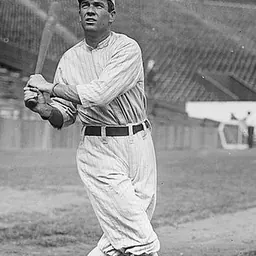







Related people
Same field, nearest in time
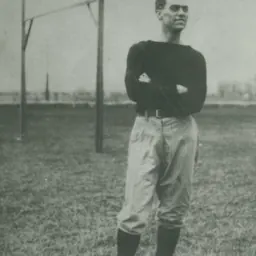

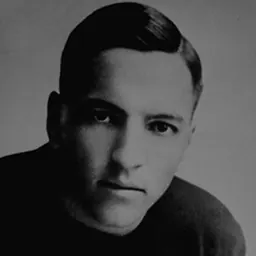
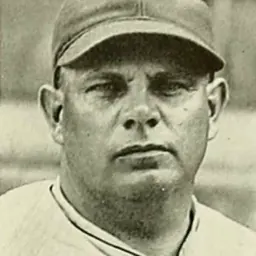

Contemporaries
People whose lives overlapped Ray Caldwell's


Frequently asked questions
Who was Ray Caldwell?
American baseball player (1888–1967)
When was Ray Caldwell born?
Ray Caldwell was born on 26 April 1888 in Corydon Township.
When did Ray Caldwell die?
Ray Caldwell died on 17 August 1967 in Salamanca.
What was Ray Caldwell's occupation?
Ray Caldwell was a baseball player.
What nationality was Ray Caldwell?
Ray Caldwell was American.
Sources & further reading
Cite this page
APA: Biography.guide. (2026). Ray Caldwell. https://biography.guide/ray-caldwell/
MLA: "Ray Caldwell." Biography.guide, https://biography.guide/ray-caldwell/.
Chicago: "Ray Caldwell." Biography.guide. https://biography.guide/ray-caldwell/.
Data last updated: 2026-09-20 · Spot an error? Report a correction.
Page generated 2026-09-27 05:27 UTC