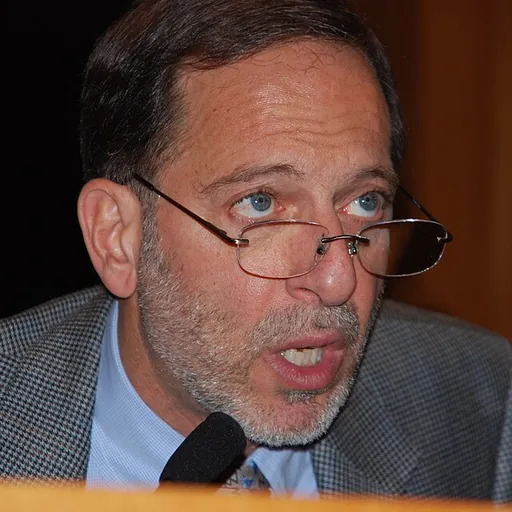
About Rashid Khalidi
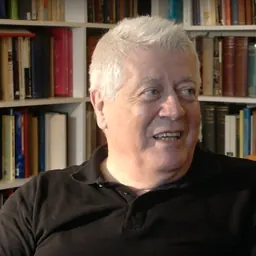
Born 1948. Rashid Khalidi is an American historian, writer, university teacher and political scientist.
Rashid Ismail Khalidi (; born November 18, 1948) is a Palestinian-American historian of the Middle East and the Edward Said Professor Emeritus of Modern Arab Studies at Columbia University.
He has authored a number of books, including The Hundred Years' War on Palestine and Palestinian Identity: The Construction of Modern National Consciousness; has served as president of the Middle East Studies Association; and has taught at the Lebanese University, the American University of Beirut, Georgetown University, and the University of Chicago. Khalidi retired from Columbia University on October 8, 2024. He is the father of playwright Ismail Khalidi and activist/attorney Dima Khalidi. He grew up in New York City, where his father, a Saudi citizen worked for the United Nations. Khalidi's mother, a Lebanese-American, was an interior decorator. Khalidi attended the United Nations International School. where he was a member of the Wolf's Head Society. He then received a D.Phil. from Oxford University in 1974. He has also taught at the Lebanese University. Khalidi was cited in the media during this period, sometimes as an official with the Palestinian News Service, Wafa, or directly with the Palestine Liberation Organization. Khalidi has said that he was not a PLO spokesman, and that he "often spoke to journalists in Beirut, who usually cited me without attribution as a well-informed Palestinian source. If some misidentified me at the time, I am not aware of it."
Returning to America, Khalidi spent two years teaching at Columbia University before joining the faculty of the University of Chicago in 1987, where he spent eight years as a professor and director of both the Center for Middle Eastern Studies and the Center for International Studies at the University of Chicago. During the Gulf War, while teaching at Chicago, Khalidi emerged "as one of the most influential commentators from within Middle Eastern Studies". In 2003 he joined the faculty of Columbia University, where he served as the Edward Said Professor of Modern Arab Studies. He has also taught at Georgetown University. He is a member of the National Advisory Committee of the U.S. Interreligious Committee for Peace in the Middle East, which describes itself as "a national organization of Jews, Christians and Muslims dedicated to dialogue, education and advocacy for peace based on the deepest teachings of the three religious traditions".
He is a member of the Board of Sponsors of The Palestine–Israel Journal, a publication founded by Ziad Abuzayyad and Victor Cygielman, prominent Palestinian and Israeli journalists. He is founding trustee of The Center for Palestine Research and Studies. He is also a member of the Council on Foreign Relations.
In October 2010, Khalidi delivered the annual Edward Said memorial lecture at the Palestine Center in Washington.
Academic work Khalidi's research covers primarily the history of the modern Middle East. He focuses on the countries of the Southern and Eastern Mediterranean, with an eye to the emergence of various national identities and the role played by external powers in their development. He also researches the impact of the media, the role of education in the construction of political identity, and the way regional narratives have developed over the past centuries. He served as president of the Middle East Studies Association of North America in 1994 and is currently co-editor of the Journal of Palestine Studies with Sherene Seikaly.
Much of Khalidi's scholarly work in the 1990s focused on the historical construction of nationalism in the Arab world. Drawing on the work of theorist Benedict Anderson who described nations as "imagined communities", he does not posit primordial national identities, but argues that these nations have legitimacy and rights. In Palestinian Identity: The Construction of Modern National Consciousness (1997), he places the emergence of Palestinian national identity in the context of Ottoman and British colonialism as well as the early Zionist effort in the Levant. Palestinian Identity won the Middle East Studies Association's top honor, the Albert Hourani Book Award as best book of 1997.
His dating of the emergence of Palestinian nationalism to the early 20th century and his tracing of its contours provide a rejoinder to Israeli nationalist claims that Palestinians had no collective claims prior to the 1948 creation of Israel. His signature work, Palestinian Identity: The Construction of Modern National Consciousness (Columbia University Press, 1997), argues that Arabs living in Palestine began to regard themselves as a distinct people decades before 1948, "and that the struggle against Zionism does not by itself sufficiently explain Palestinian nationalism".
In it, Khalidi also describes the late development, failings and internal divisions within the various elements of the Palestinian nationalist movement.
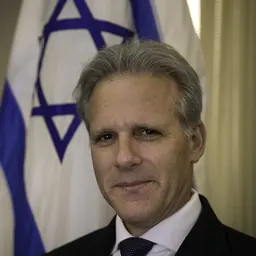
In Resurrecting Empire: Western Footprints and America's Perilous Path in the Middle East (2004), Khalidi follows the history of Western involvement in the Middle East, and describes it as colonialist in nature. He finds hat this morally unacceptable and likely to backfire. Khalidi's book, Sowing Crisis, places the United States approach to the Middle East in historical context. He is sharply critical of U.S. policies during the Cold War, writing that Cold War policies "formulated to oppose the Soviets, consistently undermined democracy and exacerbated tensions in the Middle East". Historian and Israeli Ambassador to the United States Michael Oren has stated that "Khalidi is [considered] mainstream" only because "the stream itself has changed. The criteria for scholarship have become very political." Khalidi writes, "Local patriotism could not yet be described as nation-state nationalism."
Khalidi emphasized in his work that the Palestinian identity had been fundamentally fluid and changing, woven from multiple "narratives" due to individual and family experiences. He described the identity as organically developed due to the challenges of peasants forced from their homes due to Zionist immigrant pressure, but with Palestinian nationalism also being far more complex than merely an anti-Zionist reaction. Praise for his book appeared in the journal Foreign Affairs, with reviewer William B. Quandt viewing the work as "a major contribution to historical understanding of Palestinian nationalism."
Khalidi also documents active opposition by the Arab press to Zionism in the 1880s.
The Iron Cage: The Story of the Palestinian Struggle for Statehood
In 2006, Khalidi published The Iron Cage: The Story of the Palestinian Struggle for Statehood which critically examines the Palestinian struggle for statehood during the British Mandate. It highlights both the failures of Palestinian leadership and British and Zionist roles in hindering statehood for Palestine.
Public life
Khalidi has written dozens of scholarly articles on Middle East history and politics, as well as op-ed pieces in many U.S. newspapers. He has also been a guest on radio and TV shows including All Things Considered, Talk of the Nation, Morning Edition, Worldview, The News Hour with Jim Lehrer, Charlie Rose, and Nightline, and has appeared on the BBC, the CBC, France Inter and the Voice of America. He served as president of the American Committee on Jerusalem, now known as the American Task Force on Palestine, and from 1991 to 1993 served as an official advisor to the joint Jordanian-Palestinian delegation—later transitioning to the Palestinian Liberation Organization (PLO) delegation — during the Middle East peace conference in Madrid and the ensuing Israeli-Palestinian-American negotiations in Washington.
Views on Israeli–Palestinian conflict
Khalidi has written that the establishment of the state of Israel resulted in "the uprooting of the world's oldest and most secure Jewish communities, which had found in the Arab lands a tolerance that, albeit imperfect, was nonexistent in the often genocidal, Jew-hating Christian West." Regarding the proposed two-state solution to the Israeli–Palestinian conflict, Khalidi has written that "the now universally applauded two-state solution faces the juggernaut of Israel's actions in the occupied territories over more than forty years, actions that have been expressly designed to make its realization in any meaningful form impossible." However, Khalidi also noted that "there are also flaws in the alternatives, grouped under the rubric of the one-state solution".
He supports the Boycott, Divestment and Sanctions movement.
Regarding American support for Israel, Khalidi stated in an interview, "every other single place on the face of the earth is in support of the Palestinians, yet all of them together aren't a hill of beans compared to the United States and Israel, because the United States and Israel can basically do anything they please. They are the world superpower, they are the regional superpower."
A New York Sun editorial criticized Khalidi for stating that there is a legal right under international law for Palestinians to resist what Khalidi considers to be Israeli occupation. For example, in a speech given to the American-Arab Anti-Discrimination Committee, Khalidi said, "illing civilians is a war crime. It's a violation of international law. They are not soldiers. They're civilians, they're unarmed. The ones who are armed, the ones who are soldiers, the ones who are in occupation, that's different. That's resistance." The Sun editorial argued that by failing to distinguish between Palestinian combatants and noncombatants, Khalidi implies that all Palestinians have this right to resist, which it claimed was incorrect under international law.
Khalidi has described discussions of Arab restitution for property confiscated from the Jewish refugees from Middle Eastern and North African countries after the creation of Israel as "insidious", "because the advocates of Jewish refugees are not working to get those legitimate assets back but are in fact trying to cancel out the debt of Israel toward Palestinian refugees".
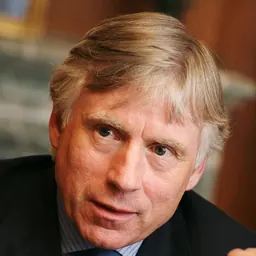
NYC teacher training program In 2005 Khalidi's participation in a New York City teacher training program was ended by the city's Schools Chancellor. Chancellor Joel I. Klein issued a statement that "Considering his past statements, Rashid Khalidi should not have been included in a program that provided professional development for Department of Education teachers and he won't be participating in the future." Following the decision, Columbia University president Lee Bollinger spoke out on Khalidi's behalf, writing: "The department's decision to dismiss Professor Khalidi from the program was wrong and violates First Amendment principles... The decision was based solely on his purported political views and was made without any consultation and apparently without any review of the facts." Some opponents of Barack Obama claimed that the relationship between Obama and Khalidi was evidence that Obama would not maintain a pro-Israel foreign policy if elected. Opponents of Republican candidate John McCain pointed out that he had served as chairman of the International Republican Institute (IRI) during the 1990s which provided grants worth $500,000 to the Center for Palestine Research and Studies, which was co-founded by Khalidi, for the purpose of polling the views of the Palestinian people.
Retirement from Columbia Khalidi announced his retirement from Columbia University in late June 2024, with the process being finalized in October that same year. In an interview with The Guardian, Khalidi cited the university's crackdown on pro-Palestinian student protests, which he had vocally supported, and the transformation of the university into a "hedge fund-cum-real estate operation, with a minor sideline in education" as reasons for his retirement. The announcement coincided with news that a throng of extremist settlers had stormed a family home on Silsila Road in Jerusalem, which had been Khalidi family property since the 18th century. After the death of a cousin, plans were made to transform it into an extension of the Khalidi library nearby, which holds over 1,200 manuscripts, some as old as the 11th century. Khalidi fears that Israeli courts will ignore their title and open the property to expropriation.
Opposition to U.S. embassy plan On 18 January 1989, the Israeli and U.S. governments signed an agreement to lease a 7.7-acre plot in West Jerusalem to the United States. The land formed part of the 13-acre Allenby Barracks site, which had previously belonged to Palestinian families before Israeli authorities confiscated it in 1950 under the Absentees' propert law. Khalidi said that he is one of the descendants of the owners of the land, and argued that the construction of the embassy violates both international law and his rights as an US citizen. Khalidi told +972 Magazine in 2026 that he had been opposed to the plan for over 30 years. 2018: World Congress for Middle Eastern Studies (WOCMES) Seville Award for Outstanding Contribution to Middle Eastern Studies
Books
1997: Middle East Studies Association (MESA) Albert Hourani Book Award for Palestinian Identity 2004: MESA Albert Hourani Book Award for Resurrecting Empire 2007: Arab American Book Award 2013: Palestine Book Awards 2014: Lionel Trilling Book Award
Don’t just read it —
keep it.
Full-length biographies made to live with: read them, listen on the way to work, watch them tonight.
- E-book
- Audio
- Video
Instant download · yours to keep · every purchase keeps this site free
Important facts
People in Rashid Khalidi's life
Named in this biography and alive at the same time






Related people
Same field, nearest in time


Contemporaries
People whose lives overlapped Rashid Khalidi's

Frequently asked questions
Who is Rashid Khalidi?
Palestinian-American historian
When was Rashid Khalidi born?
Rashid Khalidi was born in 1948 in New York City.
What is Rashid Khalidi's occupation?
Rashid Khalidi is a historian, writer, university teacher and political scientist.
What nationality is Rashid Khalidi?
Rashid Khalidi is American.
Sources & further reading
Cite this page
APA: Biography.guide. (2026). Rashid Khalidi. https://biography.guide/rashid-khalidi/
MLA: "Rashid Khalidi." Biography.guide, https://biography.guide/rashid-khalidi/.
Chicago: "Rashid Khalidi." Biography.guide. https://biography.guide/rashid-khalidi/.
Data last updated: 2026-09-23 · Spot an error? Report a correction.
Portrait: Wikimedia Commons · author & licence
Page generated 2026-09-27 05:05 UTC